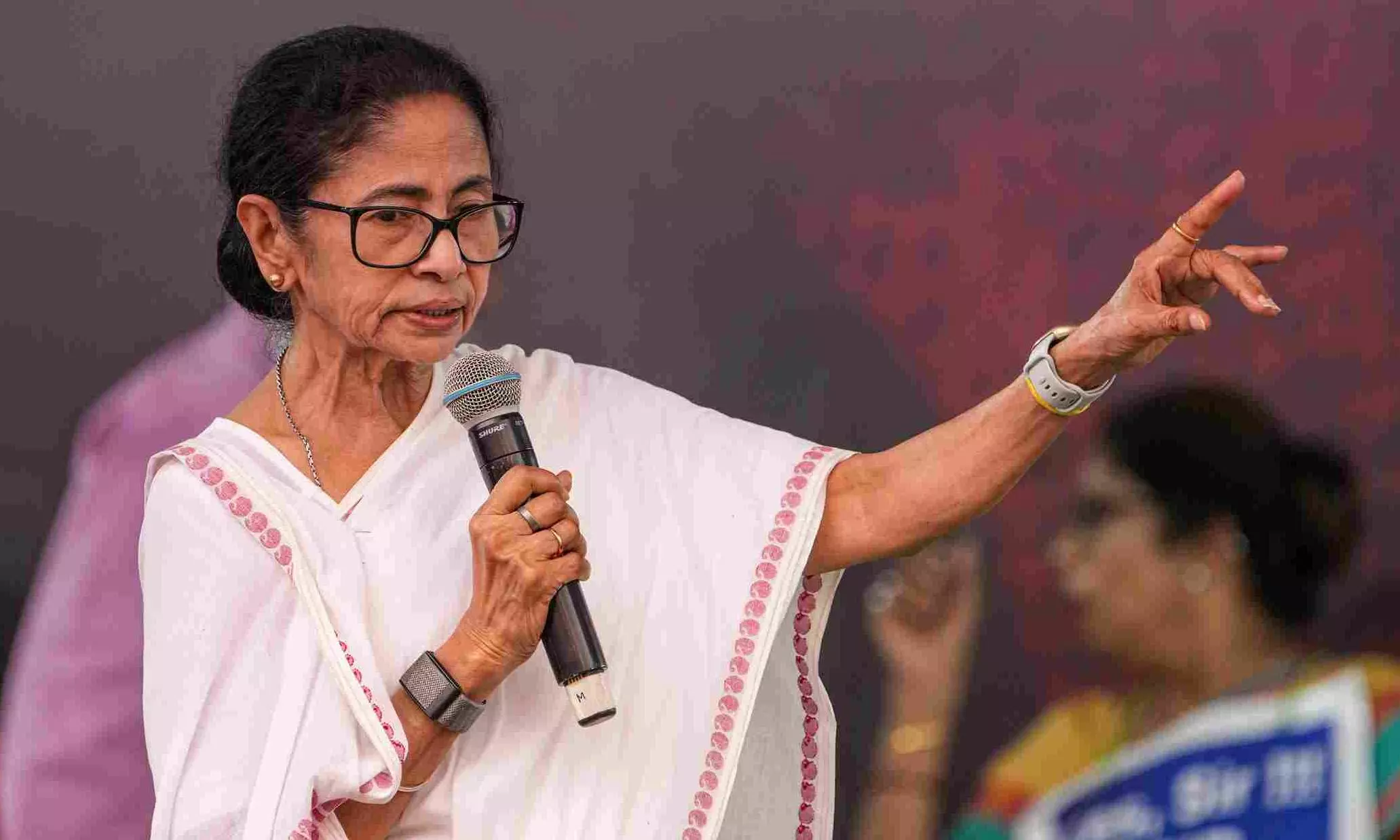
The West Bengal government is all set to draw up a standard operating procedure (SOP) to manage fuel and cooking gas supplies, as the escalating conflict in the Middle East begins to impact the state’s daily life, Chief Minister Mamata Banerjee said on Wednesday (March 12).
Mamata held an emergency meeting in Kolkata with the representatives from the three state-run oil marketing companies and gas distributors. The high-level session aimed to assess the severity of current disruptions and establish immediate protocols to safeguard the state's energy supply chain.
The meeting was attended by senior officials, including the state chief secretary Nandini Chakraborty and police chief Piyush Pandey, along with the secretaries of multiple departments.
Pressure on LPG supply
“The main problem right now is with LPG,” Mamata told reporters after the meeting. “After discussions with dealers we have learnt that there is not yet a serious issue with petroleum fuels, but there is pressure on LPG supply.”
The state government has asked dealers not to send existing LPG stocks outside West Bengal for the time being in order to stabilise supplies locally.
Mamata said a SOP would be prepared in consultation with oil companies and distributors to ensure essential sectors continue to receive gas even if shortages persist. Officials said the SOP would prioritise supplies for hospitals, school mid-day meal kitchens and Integrated Child Development Services (ICDS) centres that provide nutrition to children and mothers.
The chief minister also said she would hold another meeting with district administrations on Thursday through video conference to monitor the situation on the ground.
Impact of supply disruption
Authorities say the impact of supply disruptions is already being felt across multiple sectors.
Households across the state have reported difficulties booking LPG cylinders, with many consumers complaining that telephone bookings are failing and deliveries are delayed for more than a week after booking. As a result, crowds have been gathering at gas distribution centres.
Customers who have not completed electronic know-your-customer (e-KYC) formalities have also been lining up at agency offices, adding to the rush.
Concerns have also emerged over the continuity of the mid-day meal programme in schools. While officials said the scheme has not yet been disrupted anywhere in the state, a prolonged shortage could affect cooking operations in schools.
Hospitals that prepare meals daily for patients could also face difficulties if the shortage worsens. “Dealers have assured us that there will be no shortage in the health sector, mid-day meal kitchens and ICDS centres,” pointed out Mamata.
Transport operators hit
The ripple effects are also hitting the transport sector, where a tightening supply of Compressed Natural Gas (CNG) is putting pressure on Kolkata’s auto-rickshaws and other gas-dependent vehicles. The price of CNG rose by about 5 rupees to 62.68 rupees per unit from 57.68 rupees, according to transport operators.
Auto-rickshaw fares on some routes in Kolkata have already increased as drivers attempt to offset higher fuel costs. Long queues were reported at several CNG filling stations, including near the Bengal Chemicals area in eastern Kolkata.
Mamata blames Centre
Mamata blamed the situation partly on policy decisions by the central government, including the new rule that mandates a minimum 25-day gap between two LPG bookings. “Knowing that there is a petroleum crisis, how can the government suddenly say that people will get gas only after 25 days of booking?” she said.
Mamata said the central government should disclose how much LPG is available in national reserves and ensure that supplies are distributed evenly among states. The chief minister also alleged that the crisis had been worsened by poor planning at the central level and warned that opportunistic traders could exploit the situation through hoarding or black-marketing.
She said the state administration would take steps to prevent illegal stockpiling and ensure fair distribution. District magistrates and police superintendents have been instructed to monitor the situation.
Stabilise supplies
Mamata added that even if the state government were to provide subsidies, the problem cannot be resolved unless supply chains are restored. “I may want to give subsidies, but that will not solve the problem because the supply itself is not there,” she said.
The chief minister also signalled that the Trinamool Congress may launch political protests over the issue. She said she planned to lead a march in Kolkata next week against the gas price hike, accusing the BJP-led central government of failing to protect ordinary consumers.
“This is not just about household cooking,” Mamata said. “Auto drivers, ICDS centres, mid-day meal kitchens and small restaurants all depend on gas.”
She urged the centre to take immediate steps to stabilise supplies and restore the supply chain. “Without gas supply, how will autos run? How will hotels operate?” she asked. Mamata also said the government would prepare a long-term strategy over the next six months to address energy supply risks linked to global geopolitical developments.
“The Centre must also place alternative plans before Parliament,” she said. “People’s daily lives depend on these services.”