



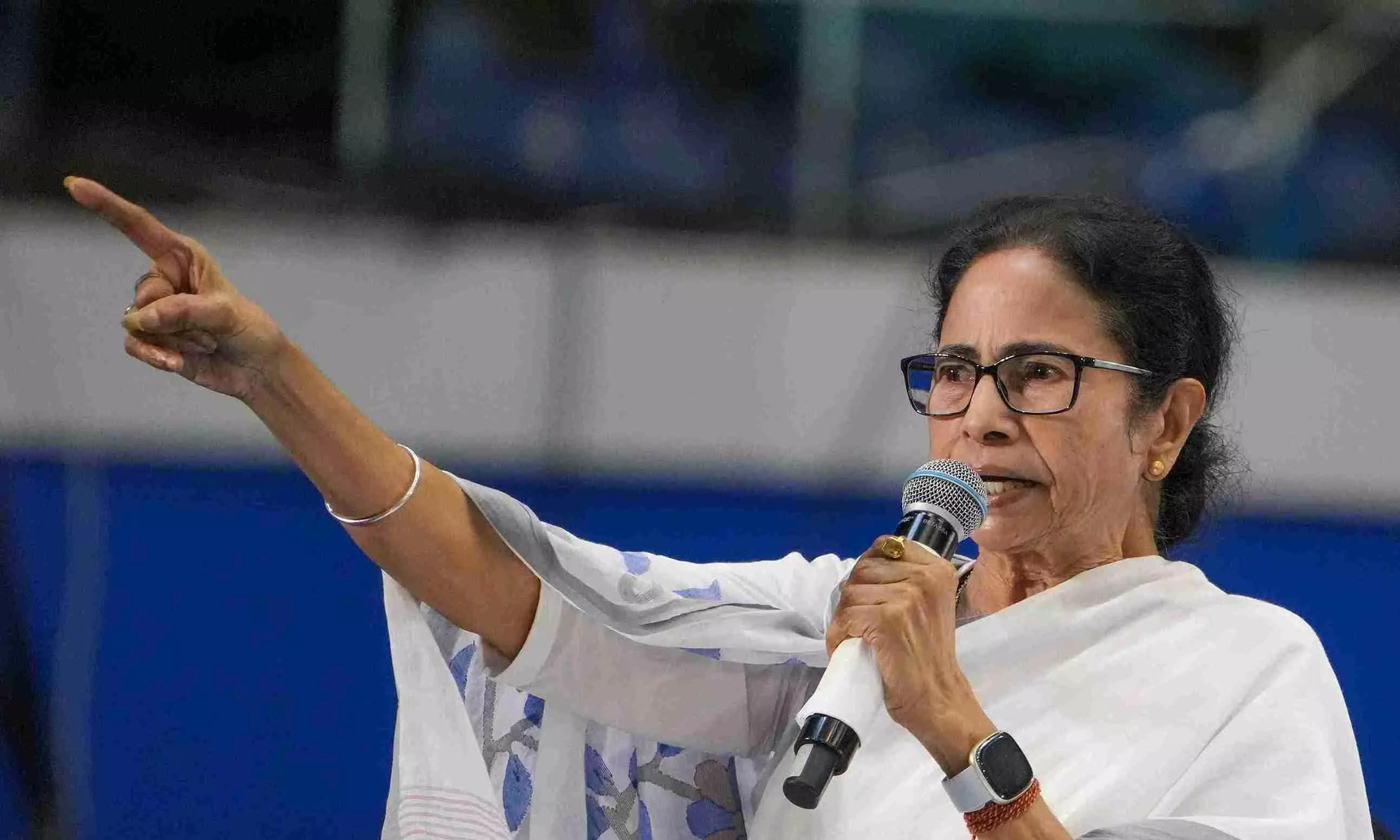
Mamata’s ‘unlucky 13’ moment: How fortnight of rebellion pushed TMC to the brink
In just 13 days, an election defeat, a 58-MLA rebellion, questions over Abhishek Banerjee's role and a succession battle plunged the TMC into crisis

A month after suffering its worst electoral setback since coming to power in West Bengal, the Trinamool Congress (TMC) is confronting a crisis even more damaging than defeat at the ballot box.
On Wednesday, dissident legislators claiming the support of 58 of the party’s 80 MLAs secured Assembly Speaker Rathindra Bose's recognition of expelled leader Ritabrata Banerjee as head of the legislature party, effectively depriving Mamata Banerjee of control over a majority of her legislators.
A rebellion takes shape
For Banerjee, whose political career has been defined by resilience and defiance, the development marks perhaps the gravest challenge she has faced since founding the TMC in 1998.
Also read | Bengal's Didi shield cracks: How Mamata Banerjee lost the state she dominated
Just a month ago, she remained the party’s undisputed leader despite a crushing defeat to the BJP and her own loss in Bhabanipur to arch rival Suvendu Adhikari. What began as an electoral setback has now evolved into an existential crisis.
The results reduced the TMC’s Assembly strength to 80 MLAs from 215 in 2021. A month later, the rebellion has pushed the party deeper into turmoil, threatening to leave Banerjee with only a fraction of those legislators under her control.
The dramatic rebellion did not emerge overnight. It was the culmination of growing tensions over leadership, succession and organisational control that had been building since the election defeat.
Over just 13 days, those simmering fault lines exploded into the biggest split in the TMC’s history.
Fault lines become rupture
An “accidental” meeting in Delhi, a signature-forgery controversy, resentment over the influence of TMC MP Abhishek Banerjee and an increasingly visible succession battle combined to produce the first split in the party’s 28-year history.
What began with an apparently chance encounter between rebel MLA Ritabrata Banerjee and Adhikari at Banga Bhavan on May 22 culminated on Wednesday with 58 MLAs wresting control of the party’s legislature wing and securing recognition from the Speaker.
But the roots of the revolt stretched back to the aftermath of the Assembly election defeat. Soon after the BJP’s victory on May 4, unease surfaced within sections of the TMC over what some legislators saw as the growing concentration of authority around Abhishek Banerjee.
At a meeting of newly elected MLAs on May 6, Mamata Banerjee’s public praise of Abhishek fuelled murmurs among legislators who felt the party was becoming increasingly centred around one family.
The first public signs of dissent emerged on May 19. During another meeting, Ritabrata Banerjee and Entally MLA Sandipan Saha questioned why Falta TMC leader Jahangir Khan had not been expelled despite publicly withdrawing from the repoll. Since Jahangir was considered close to Abhishek, the criticism was seen as an indirect challenge to him.
From dissent to revolt
The turning point came three days later. On May 22, Ritabrata, in Delhi after completing his Rajya Sabha tenure, visited Banga Bhavan and unexpectedly crossed paths with Adhikari.
Soon afterwards, he publicly welcomed Adhikari’s decision to invite opposition legislators and MPs to administrative review meetings, drawing immediate political attention.
Within days, another controversy engulfed the TMC. On May 25, allegations surfaced that signatures of several legislators had been forged on documents submitted to the Speaker regarding the leadership of the legislature party.
The dispute took a legal turn on May 27 when Ritabrata and Sandipan complained to the Speaker, alleging forgery. The Assembly secretariat subsequently approached the police, triggering a CID investigation.
Leadership loses its grip
The crisis deepened further on May 30 when Abhishek Banerjee came under a mob attack during a visit to Sonarpur. Several TMC leaders privately viewed the muted response from sections of the organisation as evidence of a widening disconnect between the leadership and elected representatives.
Also read | Despite her call for a mega anti-BJP platform, why Mamata seems to be a lonely warrior
By May 31, the erosion of authority had become visible. A meeting of newly elected MLAs convened by Mamata Banerjee at her Kalighat residence reportedly witnessed poor turnout.
The decisive rupture came on June 1. Hours after Adhikari revealed that the CID probe had been launched on complaints filed by Ritabrata and Sandipan, the TMC expelled both leaders. Instead of containing the crisis, the move accelerated the rebellion.
Even as the party attempted to regain control by sending fresh communications to the Speaker on June 2 regarding the legislature party leadership, support continued shifting towards the dissidents.
The denouement arrived on Wednesday. A group of 58 MLAs submitted a letter to the Speaker electing Ritabrata Banerjee as leader of the legislature party and nominating a new leadership team.
Fight for political survival
Political observers note that Banerjee now confronts a challenge unlike any she has faced in nearly three decades of public life.
She has survived electoral setbacks, central investigations and organisational revolts. But this crisis strikes at the heart of her authority: control over the party apparatus and legislature wing.
"There was little surprise involved in the disintegration of the party once it suffered electoral defeat. That's because the party's primary objective -- to remove the Left Front from state power -- was met once it won the 2011 polls," said political analyst Shubhomoy Maitra.
"It had no ideological fulcrum or long-term development vision for the state. There was nothing left for its MLAs to hold on to, except personal interests," he said.
In an apparent attempt to regain control, the TMC dissolved several key organisational committees and frontal wings, a move widely interpreted as a last-ditch effort to prevent a formal split.
Banerjee herself has accused the BJP of using "money, arrests and threats" to engineer a split in her party.
Speaking at a recent protest, she alleged that a concerted campaign was underway to fracture the TMC and weaken opposition politics in Bengal.
Can Mamata bounce back?
"Despite Mamata Banerjee's amazing public life, one cannot ignore the fact that she is past 70. At this age, a turnaround with the same vigour she moved around with during the last four decades seems difficult. Unless, of course, a politically improbable situation crops up that could script her comeback," Maitra said.
Also read | After Mamata's fortress falls in Bengal, can TMC MPs keep party flag flying?
Yet, writing Banerjee's political obituary would be premature.
Observers believe the central question is whether Banerjee can once again convert adversity into opportunity. If she succeeds in portraying herself as a victim of political engineering, she may retain her stature among grassroots workers.
If she fails, the crisis could mark the beginning of the most dramatic unravelling of a political empire Bengal has witnessed since the decline of the Left Front.
(With agency inputs)