







India’s 'artificial Sun': What new gyrotron milestone means and how it compares with China
India has taken another step towards mastering nuclear fusion with a new high-power gyrotron installed on its SST-1 tokamak. Here is what the breakthrough means, how the technology works, and how India’s fusion programme compares with global efforts

At a laboratory in Gujarat, India achieved a major milestone towards mastering nuclear fusion, often described as the “artificial Sun”, with a new high-power gyrotron installed on its SST-1 tokamak.
India has installed and commissioned a powerful new 82.6 GHz, 400 kW gyrotron at the Institute for Plasma Research (IPR) in Gandhinagar, Gujarat.
The technology is part of India’s SST-1 (Steady State Superconducting Tokamak), an experimental fusion machine designed to recreate some of the extreme conditions under which nuclear fusion occurs inside stars.
The development is significant for India’s fusion programme.
What is India’s artificial Sun?
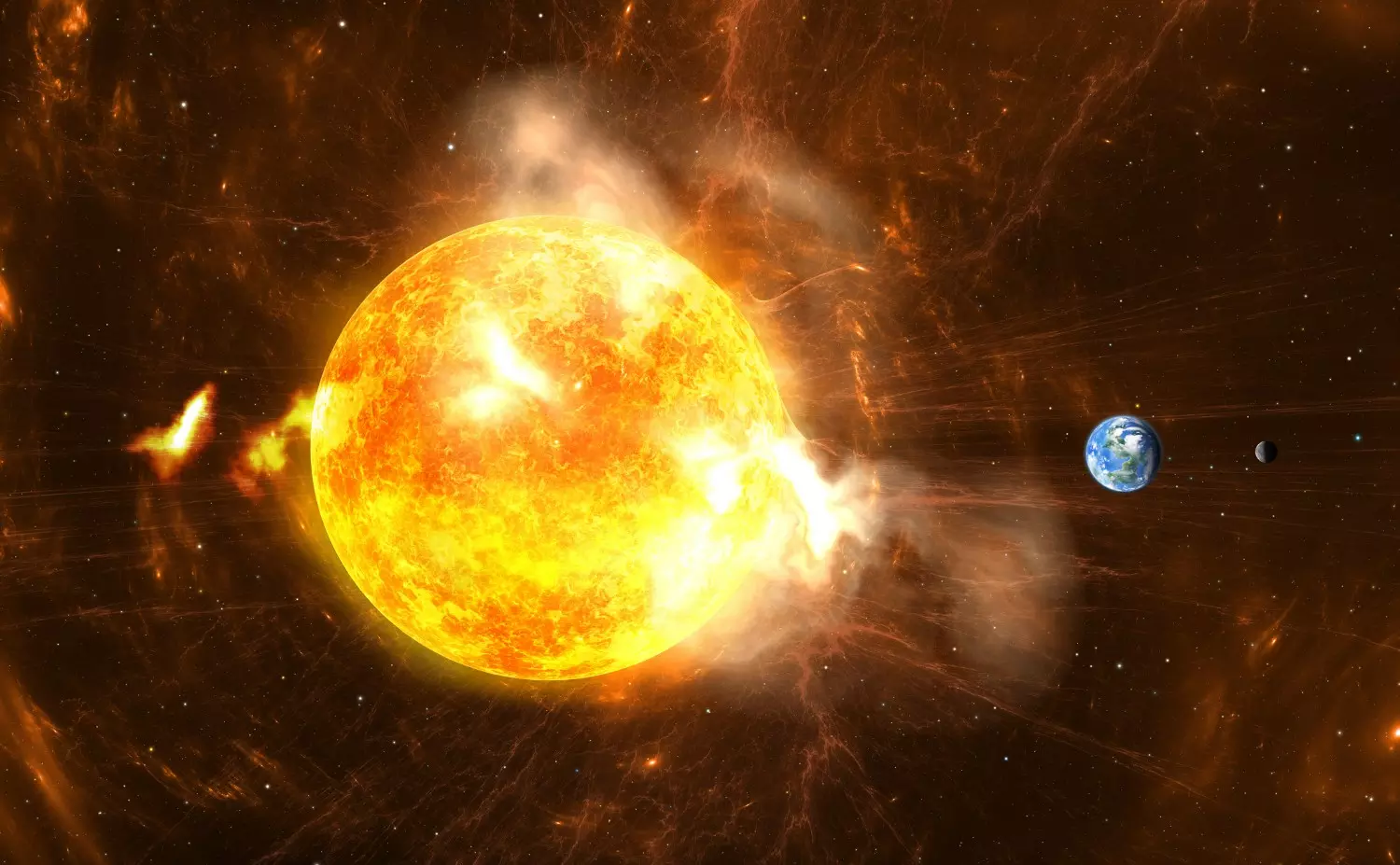
The term “artificial Sun” is a popular description for efforts to reproduce the nuclear fusion process that powers the Sun.
Inside the Sun, immense gravitational pressure and temperatures allow hydrogen nuclei to fuse, releasing enormous amounts of energy.
Scientists on Earth cannot reproduce the Sun’s enormous gravitational pressure. Instead, fusion researchers heat hydrogen-based fuel to extraordinary temperatures until it becomes plasma, then use powerful magnetic fields to confine it.
A tokamak is one of the leading technologies being developed for this purpose. SST-1 is a superconducting tokamak in which the ultra-hot plasma is confined inside a doughnut-shaped chamber.
India’s fusion experiments have already achieved plasma temperatures exceeding 200 million degrees Celsius, far hotter than the Sun’s core. But reaching such temperatures is only one part of the challenge. Keeping the plasma stable and confined for long enough is much harder.
Why new gyrotron is important
The new 82.6 GHz gyrotron is essentially a high-power source of microwave energy used to heat and control the plasma.
Also read: India spends four times the US on rocket launches, says study
It forms part of an Electron Cyclotron Resonance Heating (ECRH) system. By delivering electromagnetic energy at a carefully selected frequency, the system can transfer energy to electrons in the plasma.
According to IPR, ECRH technology can support plasma start-up, heating and the control of certain plasma instabilities.
The new system therefore gives Indian scientists another important tool for experimenting with high-temperature plasma conditions. It also represents an upgrade from the earlier 42 GHz heating capability used in India’s fusion research.
Is India ahead of China in fusion race?
Not yet. China has made major advances through its Experimental Advanced Superconducting Tokamak (EAST), which has become particularly notable for experiments involving long-duration, high-temperature plasma.
India’s achievement should instead be viewed as an important strengthening of its domestic fusion capabilities.
The global fusion effort is not a single race in which temperature alone determines the winner. Researchers are tackling different engineering problems, including plasma heating, confinement, stability, superconducting magnets and materials capable of surviving extreme conditions.
India is also a participant in ITER, the giant international fusion project under construction in France. Through ITER and its own programmes such as SST-1, India is building expertise across several areas of fusion technology.
When will India generate fusion electricity?
That remains a long-term goal. The new gyrotron does not turn SST-1 into a fusion power plant. The machine is primarily a research facility used to understand plasma behaviour and develop technologies needed for future reactors.
The ultimate challenge is to create a fusion system that produces sustained, controllable energy on a scale that can be converted into electricity economically.