Will FCRA vote expose TMC rebels’ fragile identity as NCPI MPs?
TMC rebels walk a fine line—asserting NCPI identity while still bound by TMC’s whip—raising questions about the enforceability of defection safeguards

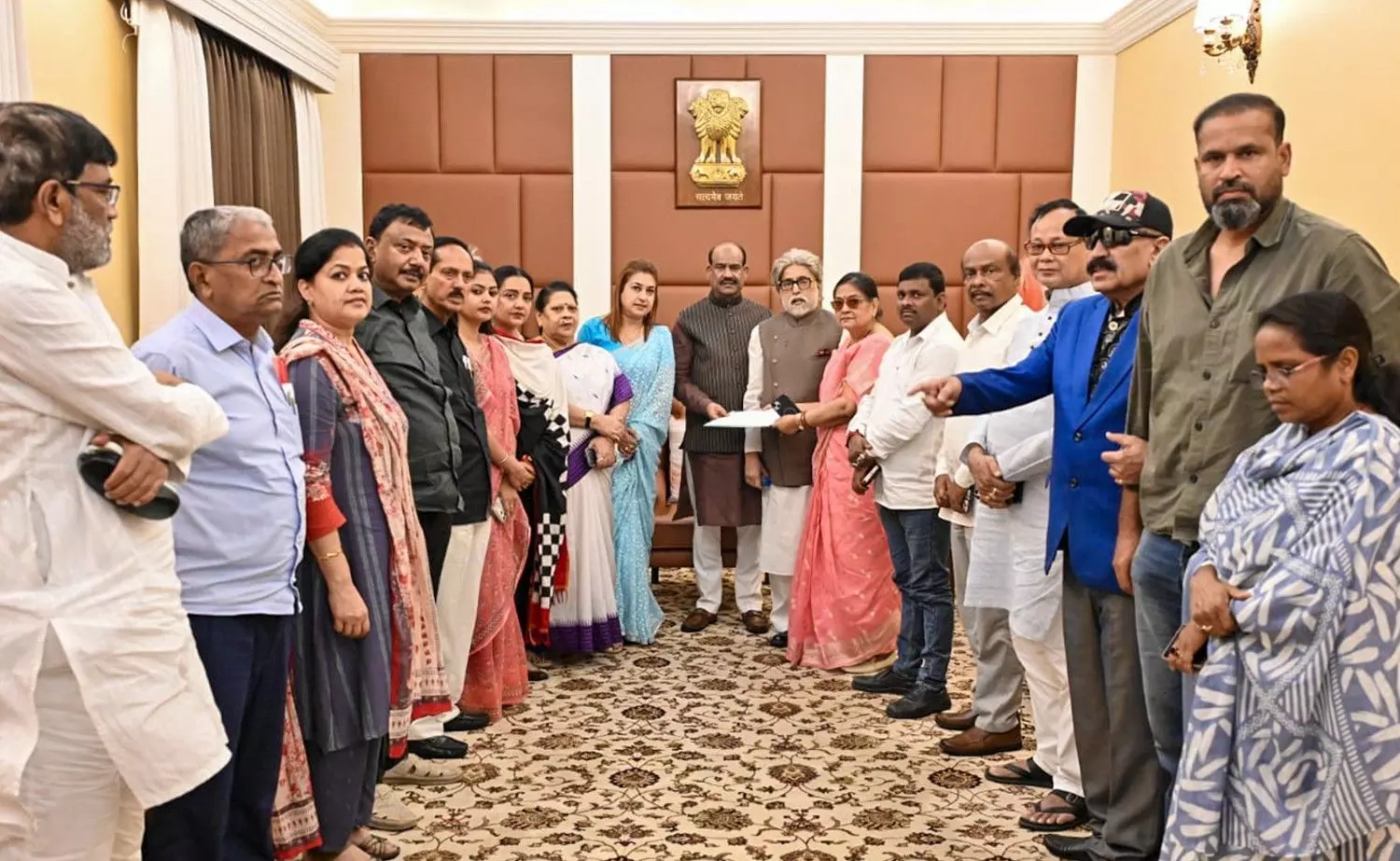
The proposed passage of the Foreign Contribution Regulation Amendment (FCRA) Bill could provide the first major parliamentary test of the National Citizens Party of India (NCPI), the new political home of 20 rebel Trinamool Congress MPs.
If the TMC issues a whip asking its MPs to oppose the Bill, the rebels could face a difficult choice. They have declared themselves members of the NCPI, but the TMC has challenged their defection and sought their disqualification under the anti-defection law.
A legal question
Senior Kolkata-based advocate Nabapallab Roy said defying a TMC whip could put their parliamentary membership at risk, even as the rebels seek to establish their NCPI identity to avoid disqualification proceedings under the anti-defection law.
The question is complicated by the fact that Lok Sabha Speaker Om Birla has already allowed the 20 rebels to sit separately from the TMC benches without settling the larger dispute over their merger with the NCPI and the TMC’s disqualification petitions.
Also read: Separate seats, unresolved loyalties: Speaker's TMC call defers real constitutional question
The FCRA vote could bring that unresolved status into sharper focus.
“If the TMC issues a whip asking its MPs to vote against the Bill, the rebels would have to decide whether to follow that whip or vote with the government,” said political commentator and columnist Debashis Chakrabarti. “If they defy the whip, the TMC could seek action against them under the anti-defection law. If they follow it, they would be voting against the government despite having announced themselves as part of the National Democratic Alliance (NDA).”
A test for anti-defection law
The episode could expose how political parties have reduced the anti-defection law to a farce wherein lawmakers can publicly abandon one party, claim allegiance to another and yet remain caught in the parliamentary consequences of their earlier affiliation.
The NCPI’s longer-term prospects, however, will depend on a broader political calculation. The BJP is engaging with the 20 rebel MPs while also maintaining contact with a separate rebel TMC formation led by Ritabrata Banerjee in the West Bengal assembly.
The two rebellions are distinct. The 20 MPs have moved into the NCPI. Ritabrata's group of MLAs has instead sought to establish itself as the real TMC and has ruled out joining the NCPI.
That second formation is now showing signs of fluidity.
Rift among rebels
Three MLAs associated with the Ritabrata camp, namely Tausifur Rahman, Bibhas Sardar and Abdul Khaleque Molla, publicly reaffirmed their loyalty to Mamata Banerjee on Monday (August 10).
Tausifur said Mamata was his only leader and described the TMC, its twin-flower symbol and Mamata’s image as inseparable. The three legislators also joined protests organised by the Mamata-aligned TMC.
Also read: Capital Beat | TMC rebels merge with NCPI: What is the plot and script?
TMC spokesperson Kunal Ghosh claimed that several other MLAs had contacted the Mamata camp. Ritabrata rejected the claim and said his faction still had 65 MLAs.
The developments do not establish a wider return to Mamata camp. But they raise questions about the cohesion of a rebel faction that the BJP has also been engaging with as a separate political force.
All-round uncertainty
In Cooch Behar's Sitai, NCPI MP Jagadish Chandra Basunia and his wife, TMC MLA Sangeeta Roy, returned to their constituency on Monday but left within hours after protests outside their residence.
The episode illustrates the uncertain political ground occupied by leaders who have broken with the TMC but have yet to establish a durable alternative base.
For the BJP, that uncertainty creates both an opportunity and a complication.
The party has already begun accepting some senior TMC leaders. Three TMC Rajya Sabha MPs—Sukhendu Sekhar Ray, Sushmita Dev and Prakash Chik Baraik—have joined the BJP under state president Shamik Bhattacharya.
The inductions have caused resentment among sections of the Bengal BJP, whose workers spent years fighting the TMC at the grassroots.
The party leadership has defended the move in the name of national interest, arguing that the NDA needs additional parliamentary support for major legislation.
BJP’s internal contradictions
Former BJP state president Dilip Ghosh, a vocal opponent of inducting turncoats, has said the party’s doors remain closed to grassroots TMC leaders, particularly those accused of attacking BJP workers or vandalising their homes. At the same time, he has echoed the national-interest argument for closer engagement with senior rebel TMC leaders.
BJP sources, however, told The Federal that opening the floodgates to TMC rebels could trigger resentment and factional tensions within the party, some signs of which are already visible.
Also read: Lok Sabha Speaker’s nod to Shiv Sena merger, separate seating for TMC rebels
Those internal contradictions help explain why the BJP is maintaining separate channels with the two TMC rebel groups rather than immediately seeking to absorb all the defectors.
The arrangement gives the BJP a way to weaken the TMC on two fronts while keeping the rebels politically aligned with the ruling establishment.
The NCPI can potentially add to the NDA’s strength in Parliament, while the Ritabrata faction can chip away at the TMC’s organisational base in West Bengal. At the same time, the BJP can avoid the political and organisational costs of immediately inducting all the defectors.
Rebels’ future uncertain
The strategy is particularly relevant because the ultimate destination of the rebels remains unclear.
The Election Commission has yet to settle the contest over the TMC’s organisational control and twin-flower symbol. A favourable decision for the Ritabrata faction could give some anti-Mamata leaders an alternative to joining the BJP.
For some NCPI MPs, especially those who have publicly denied plans to join the BJP or NDA, that could preserve another political option.
Also read: Three NCPI MPs skip NDA meeting, deny joining hands with BJP amid voter concerns
The three NCPI minority MPs—Abu Taher, Khalilur Rahaman and Yusuf Pathan—have maintained contact with the BJP leadership but have denied plans to join the BJP or the NDA.
Given these contradictions, the FCRA vote could be the first parliamentary moment when those uncertainties directly collide.