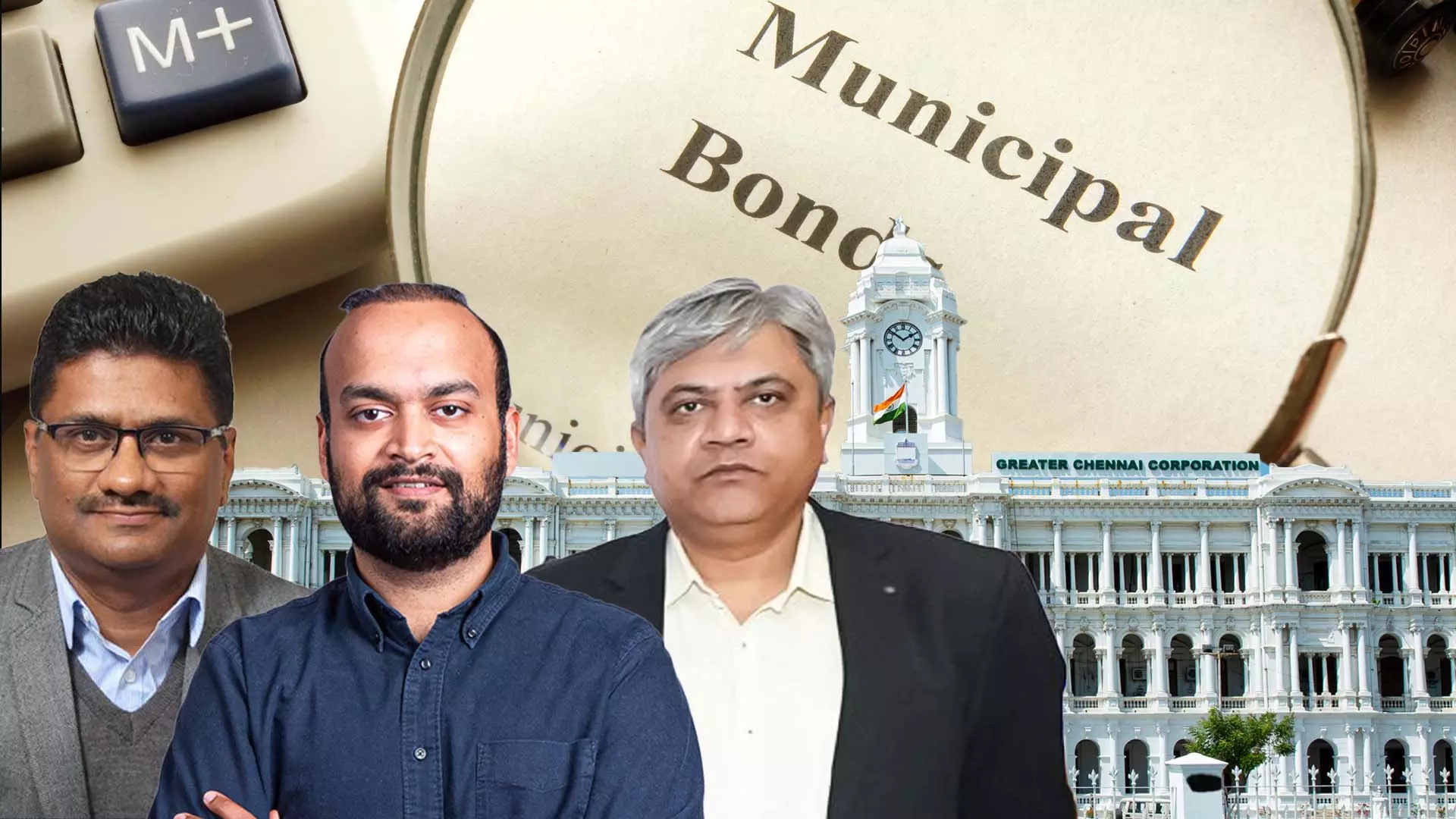
Want to invest in your city? Here's how you can buy municipal bonds
Budget 2026 pushes cities to raise funds via municipal bonds with Rs 100 crore incentives; but, how can common investors access these mostly private issuances?

Municipal bonds have found a special mention in Budget 2026 as an investment avenue for citizens. However, even as cities increasingly tap capital markets to fund their infrastructure projects, access for retail investors remains limited as most issuances happen through private placements.
However, there is a way for common investors to participate — through the secondary market. Here’s how municipal bonds work, what risks they carry, and how you can invest in your city’s growth.
What are municipal bonds?
Municipal bonds are debt instruments issued by urban local bodies to raise funds for city development projects. The objective is to improve transparency, reduce dependence on central grants, and allow citizens to invest directly in infrastructure.
When you invest in a municipal bond, you are essentially lending money to the city administration. In return, the city pays you interest and repays the principal at maturity. These bonds are also traded on stock exchanges, allowing investors to buy or sell them before maturity.
Budget 2026 has incentivised cities to opt for public bond issuances by offering a ₹100 crore incentive for single bond issues exceeding ₹1,000 crore under the AMRUT scheme. This move is expected to encourage more municipalities to tap public markets.
Risk and returns
Like fixed deposits (FDs), municipal bonds are often perceived as safe. But experts caution that no investment is entirely risk-free.
“First of all, it’s important to know that no investment is completely safe. Even a fixed deposit carries some risk,” said Nikhil Aggarwal, Founder and Group CEO of Grip Invest.
He added, “Whether it's a municipal bond or a government bond, there’s always some element of risk. It could even be from a liquidity perspective — the ability to sell.”
Aggarwal advised investors to examine the financial health and past track record of the issuing municipal corporation, as well as the tenure of the bond, before investing.
Public vs private
In India, nearly 90 per cent of bonds are issued through private placement. This means the bonds are sold directly to large institutions like banks and insurance companies.
“Very few bond issues are happening through the public placement route. However, SEBI is encouraging issuers to tap the market through public issues so that retail investors can directly participate,” said Venkatakrishnan Srinivasan, a bond market veteran.
He noted that very few municipalities, such as Indore, have tapped public markets in a way that allows retail participation. However, with the Budget 2026 incentive for issuances above ₹1,000 crore, more municipalities are expected to explore the public route.
Even when bonds are privately placed, institutions often sell them later on stock exchanges. This secondary market is where retail investors can step in.
Key metrics
Before investing, experts recommend understanding three crucial terms: credit rating, maturity, and coupon versus yield.
The credit rating acts like a report card. It indicates the municipality’s ability to repay debt. Higher ratings suggest lower risk.
Maturity refers to the date when the principal amount is repaid. Like a fixed deposit, you get your original investment back at maturity.
The coupon is the fixed interest rate printed on the bond. For example, if a ₹1,000 bond carries an 8 per cent coupon, you receive ₹80 annually, regardless of market price changes.
Yield, on the other hand, is the actual return based on the price you pay. If you buy the bond at ₹900, your yield will be higher than 8 per cent. If you buy it at ₹1,100, your yield will be lower. Yield fluctuates because bond prices move in the secondary market.
Tax clarity
A common misconception is that all government-linked bonds are tax-free. That is not the case.
“Interest may not be tax-free,” Aggarwal clarified. “There are certain tax-free bonds separately classified at the time of issuance. But all bonds issued by governments or municipal corporations are not inherently tax-free. An investor must look at the offer document before investing.”
He also pointed out that tax-free bonds usually offer lower returns compared to taxable ones.
Safety mechanism
Municipal bonds typically use an escrow mechanism to protect investor interests. Repayments are not directly linked to the success or delay of a specific project.
“Repayment schedules are not linked to the project. They are linked to the municipality’s own revenue streams such as tax revenue or user fees,” said Anurag Arun, Municipal Bond Advisor.
“Even if a project gets delayed, principal and interest payments are made from existing revenue streams. Investors are pretty safe,” he added.
In Tamil Nadu, cities such as Chennai, Coimbatore, Tiruppur, and Tiruchirappalli have issued municipal bonds. According to Arun, the experience has been positive for both investors and corporations.
How to invest
Since most issuances are private placements, retail investors need to access municipal bonds through the secondary market.
The process is relatively straightforward:
i) Use a SEBI-regulated online bond platform or consult your stockbroker.
ii) Search under categories such as ‘Municipal’ or ‘Sovereign’.
iii) Check the face value. While some bonds have high entry points of ₹1 lakh or ₹10 lakh, many are now available from ₹10,000.
iv) Complete the purchase via UPI or net banking. The bond will reflect in your demat account.
Growing opportunity
With Budget 2026 pushing larger public issuances, municipal bonds could become more accessible to retail investors in the coming years.
While they may offer potentially higher returns than fixed deposits, experts emphasise the importance of due diligence. Check ratings, understand maturity timelines, review tax implications, and assess liquidity before investing.
Municipal bonds may start as private placements for large institutions, but eventually flow into the secondary market. For retail investors, this could be an opportunity not just to earn returns, but also to participate in building the cities they live in.
Will municipal bonds become the next big retail investment avenue?
(The content above is for information only. It does not constitute investment advice.)