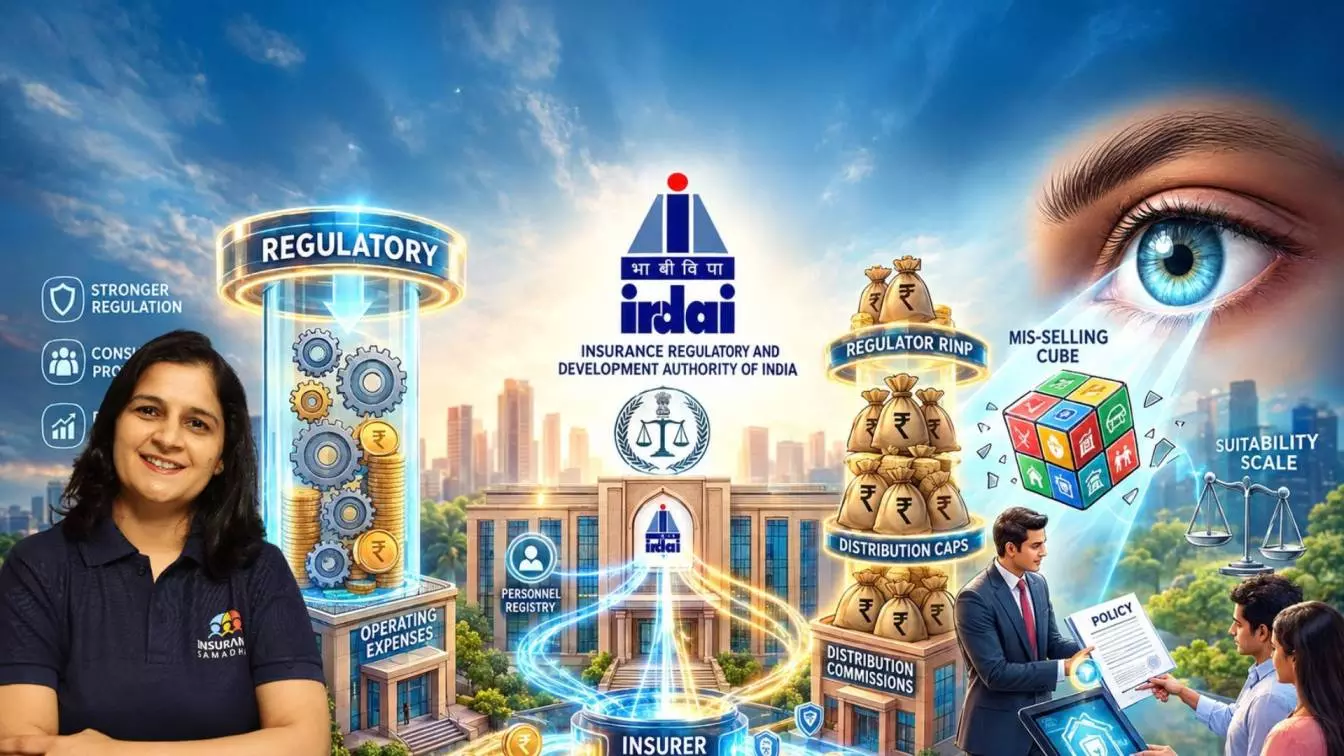
IRDAI insurance reforms: Lower costs may not be enough without better claims
IRDAI’s proposed distribution reforms could lower insurance costs, but Shilpa Arora says better claims, advice and consumer awareness are equally crucial

India’s insurance industry could be entering a significant transition as the Insurance Regulatory and Development Authority of India (IRDAI) seeks to reshape insurance distribution, with a greater focus on policyholder value.
The proposed changes aim to address distribution costs, commissions, disclosures, incentives and digital access. But according to Shilpa Arora, co-founder and chief operating officer of Insurance Samadhan, reducing costs alone will not be enough unless policyholders also receive better claims support and understand what they are buying.
“This is the first time that IRDAI has put customers, the policyholder, at the centre” of a proposal, Arora said.
Lower costs
Arora said lower commissions could potentially translate into lower premiums or better policy benefits, particularly for term and traditional life insurance products.
Also read | How women investors are reshaping India’s mutual fund story
For term insurance, she explained, premiums broadly comprise the risk or mortality component and expenses. If expenses, particularly commissions, come down, premiums could also fall.
For endowment plans, lower expenses could potentially leave more money for the investment component, improving the value delivered to policyholders. Arora said this could address a common problem in which policyholders stop paying premiums after a few years because they believe other investment avenues may offer better returns.
Health insurance, however, presents a more complicated picture. Arora said commission reductions could help lower premiums, but medical inflation and rising lifestyle diseases also need to be addressed.
She pointed to rising healthcare costs and hospital billing practices as factors that can push up insurers’ claim costs and, consequently, premiums.
Claims matter
According to Arora, the health insurance market cannot be addressed simply by reducing distribution costs. Insurers also need to improve their claims experience.
She noted that health insurance premiums have been rising and said controlling hospital costs, including excessive billing for items such as consumables and disposables, should be part of the broader solution.
“Commission is all right, that you can reduce the premiums, but the claim experience needs to improve,” Arora said.
On ULIPs, Arora said she did not expect the proposed changes to have a major impact because commissions and charges are already disclosed and regulated for such products. She said the larger impact could be felt in areas such as term insurance, endowment products and health insurance.
The central issue for policyholders, she argued, is not necessarily how much commission an intermediary earns, but whether the product is suitable and whether the claim will be paid when it is needed.
Sales incentives
The proposed restrictions on volume- or reward-linked incentives for bank and NBFC employees selling insurance could help address mis-selling, Arora said.
She said bank employees often face sales pressure because insurance contributes significantly to bank revenues. Removing monetary incentives and rewards could reduce one source of pressure on employees.
However, Arora cautioned that sales pressure could continue in other forms. Employees may still face targets linked to performance reviews, promotions or job security.
“So, if not the money part, the employee may feel a pressure of sustaining the job or maybe looking at promotion, which can lead again to mis-selling,” she said.
She added that requiring banks to demonstrate why a particular insurance product was suitable for a customer could strengthen consumer protection.
For example, when a product is sold to an elderly customer, the need analysis and rationale for recommending it become important in determining whether the sale was appropriate.
Loan protection
Insurance sold alongside loans is another area where Arora said the focus should be on selling the right product rather than simply selling an insurance policy.
She said insurance attached to a loan can be useful when it protects the borrower’s liability. However, she noted that endowment products have also been sold alongside loans, whereas a reducing-term plan or conventional term plan could be more appropriate depending on the policyholder’s needs.
“The right selling is required,” Arora said, adding that the reforms could encourage banks to focus more on suitability.
The question, however, is how banks will monitor sales practices while continuing to meet their revenue and performance targets.
Mis-selling test
The proposed disclosure of commission structures and the possibility of clawing back commissions in cases of mis-selling could also change how agents and distributors sell long-term policies.
Also read | ETFs: Why Indian investors are pouring Rs 12 lakh crore into them
Arora, drawing on Insurance Samadhan’s experience with policyholder grievances, said the definition and proof of mis-selling would need to be carefully established.
She said some policyholders approach grievance platforms claiming they were mis-sold a product, but further examination can reveal that financial difficulties, job loss or changing family circumstances may be the actual reason they want to exit a long-term policy.
“This should not be a lot of pressure on the advisor. Anybody comes up and says it’s a mis-selling and then a clawback happens,” she said.
Arora also stressed that insurance remains a product that often has to be actively sold. Unlike many consumer products, people may postpone buying insurance even when they understand its importance.
Adviser continuity
Long-term policies also raise the issue of servicing when an agent leaves the industry.
Arora said such policies can become “orphan policies”, which are subsequently serviced directly by the insurance company. While the insurer continues to provide support, the personal relationship between the customer and adviser can disappear.
That can affect trust, particularly when customers need help with a claim or other policy-related issue years after the original sale.
Arora said the proposed reforms could encourage a more professional distribution system in which qualified advisers build longer-term careers in insurance rather than entering and leaving the sector within a few months.
Digital access
Bima Sugam, the proposed digital insurance marketplace, could make it easier for customers to compare and buy policies while potentially reducing distribution costs where an intermediary is not involved.
Arora said this could result in lower premiums. But she cautioned against assuming that digital access alone would solve the problems of insurance penetration or consumer understanding.
“The problem with this is that in India people do not understand the insurance product,” she said.
According to Arora, consumers could end up choosing policies primarily on the basis of lower premiums without understanding differences in coverage, exclusions and sub-limits.
Need for advice
She cited health insurance as an example. A customer may choose a cheaper policy without understanding the implications of room-rent restrictions or sub-limits on advanced treatments.
Arora said policyholders may not appreciate how a room-rent cap can affect the overall claim amount or understand limits imposed on treatments such as immunotherapy, oral chemotherapy or robotic surgery.
As a result, simply comparing premiums on a digital platform could create a new form of consumer vulnerability.
“There need to be a combination of both,” Arora said, arguing for digital access alongside personalised support that helps customers understand the consequences of their choices.
She said Insurance Samadhan has also explored the idea of allowing customers to design their preferred coverage digitally and then matching those requirements with suitable products, without directly selling the policy.
Insurance for all
The challenge becomes even greater when the objective is to expand insurance coverage beyond financially and digitally aware consumers.
Arora said the goal of “insurance for all by 2047” will require reaching people who may have limited familiarity with insurance terminology and limited financial capacity to buy cover.
Also read | ‘Sahi hai’? Why mutual funds may not always be safe and the right investment for you
For this segment, she believes advisers still have an important role in explaining products, conducting need analysis and encouraging customers to act instead of continually postponing a purchase.
Digital platforms could make comparison and purchase easier, but Arora said consumers still need help understanding concepts such as waiting periods, coverage limits and how policy terms can affect claims.
The larger question for the industry, therefore, may not simply be whether insurance can be sold more cheaply or digitally. It is whether reforms can make insurance easier to understand, more suitable for customers and more reliable when a claim is actually made.