Gold’s glittering 2025 run sets the stage for more gains in 2026
Rallies in gold have historically been long-term, so investors view it as a strong and reliable asset; the current price surge is more than a blip, say experts

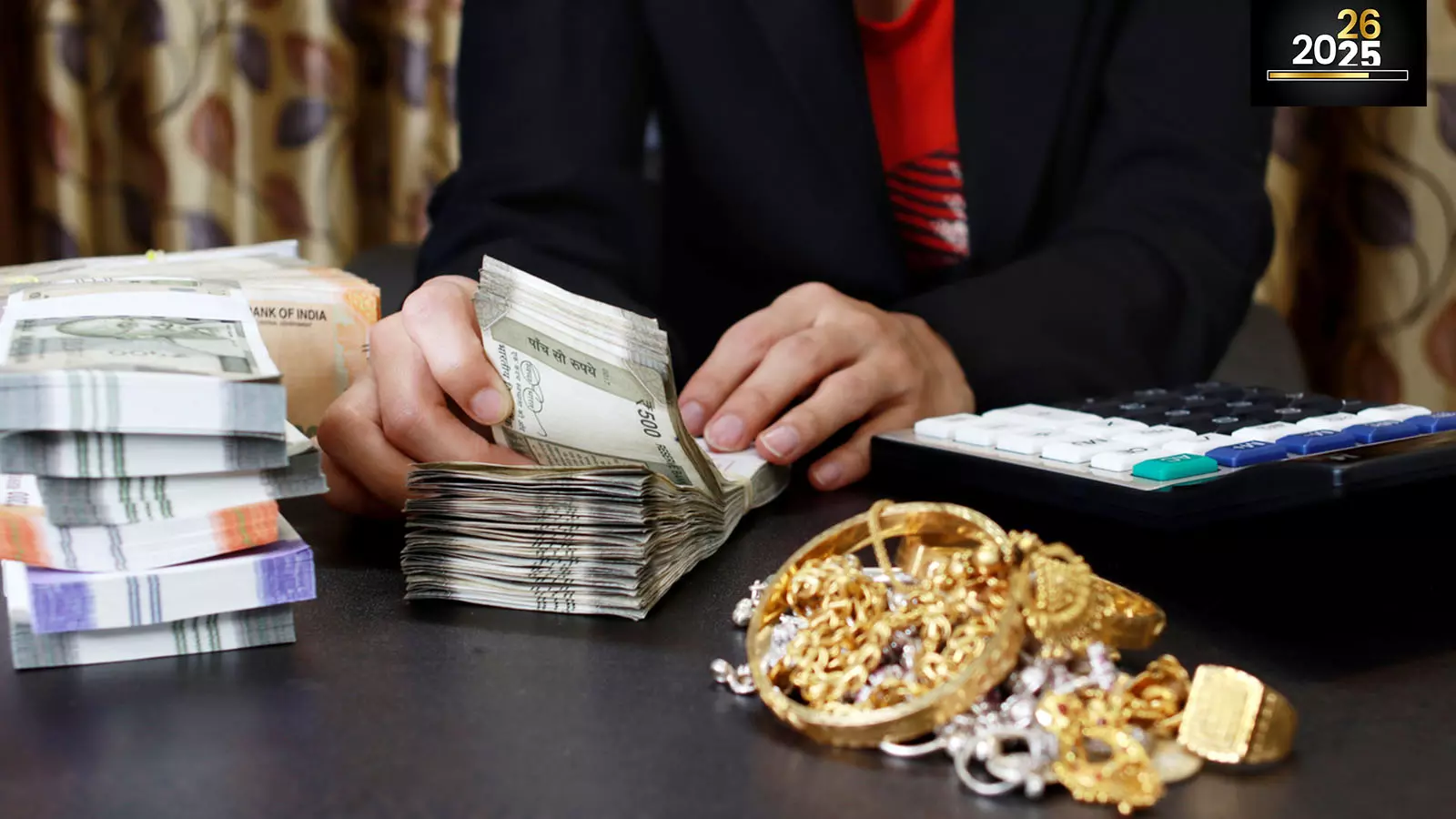
Investors who have traditionally put their money in gold struck gold, quite literally, in 2025.
In April, gold prices crossed the psychological Rs 1 lakh mark for the first time, and the rally didn't stop there. Prices surged to fresh highs of Rs 1.36 lakh and Rs 1.38 lakh per 10 grams.
In the international market, gold touched an all-time high of $4,409 per ounce and is currently trading at around $4,356.
Phenomenal rise
On January 1, 2025, gold was trading on the Multi Commodity Exchange (MCX) in the range of Rs 77,500-78,000 per 10 g. By December 19, it had climbed to around Rs 1,34,500. This translates into a sharp 74 per cent rise over 12 months.
Compared with January 1, 2024, when gold was trading at around Rs 63,349, prices are now well over double that level.
Also read: Are silver ETFs the next big thing for Indian investors?
Gold has witnessed a strong uptrend over the past two years, surging 112 per cent. According to the World Gold Council (WGC), the metal delivered returns of around 61 per cent up to November 2025, far higher than the 26 per cent return in 2024 and 15 per cent in 2023.
The report notes that rallies in gold have historically been considered sustainable, which is why investors currently view it as a strong and reliable asset — the current bull run is more than just a blip.
Four main factors
In its Gold Outlook 2026 report, the WGC said the price rise is being driven by several factors. This explains why gold’s performance this year has been distinctly stronger than in previous years.
Four key drivers of the trend are: economic expansion, risk and uncertainty, opportunity cost, and market momentum. The four factors appear to have played almost equal roles in driving prices higher.
Also read: In digital payments era, it's time for India to say goodbye to cheques
Uncertainty over trade policy and rising geopolitical tensions after US President Donald Trump took office in January have also impacted gold prices. In addition, falling interest rates, a weaker dollar, and global tensions have boosted investment and demand for the yellow metal.
Central banks' concerns
After the 2008 global financial crisis, gold crossed $1,000 an ounce. During the COVID pandemic, it moved past $2,000, breaching $3,000 following Trump’s tariff announcements. Then, it hurtled past the $4,000 level during the US government shutdown.
Since then, central banks across the world have been buying gold on a large scale, and this trend continues. The freezing of Russian assets after the Russia-Ukraine war further weakened central banks’ faith in the dollar, prompting them to increase their gold reserves. Investor interest in gold ETFs has also risen.
Going ahead, gold prices are expected to remain firm. Rate cuts by the US Federal Reserve could keep pressure on the dollar, which would increase investor appetite for the precious metal. Central banks are also likely to continue adding to their gold holdings.
More shine 2026
Trump recently said he will name the next Fed chair. A newly appointed Fed chairman could cut interest rates further, which would benefit gold. As a result, gold could create new records in 2026 as well.
Speaking to The Federal, Manoj Kumar Jain, Director and Head of Commodities at Prithvi Finmart, said gold could touch $4,800-5,000 per ounce in the international market in 2026. In the domestic market, this could translate into levels of Rs 1,45,000-1,50,000 per 10 g.
According to the WGC, under current conditions, gold prices could rise by 5 per cent to 15 per cent in 2026 from present levels. The extent of this rise will depend on how severe the economic slowdown turns out to be, and how quickly and how sharply interest rates are cut.
This article was originally published in The Federal Desh.