How you can use Dave Ramsey’s 7 Baby Steps to save money and get rich
A baby crawls and finally walks; similarly, you can build your wealth by following this step-by-step process

Two people can earn the same salary, yet one feels secure while the other feels perenially stuck for funds. The difference, according to American finance coach Dave Ramsey, is not income — it is how money is handled.
Earning money, Ramsey says, is only the first step. What truly changes life is knowing how to save, manage, and use it in the right order.
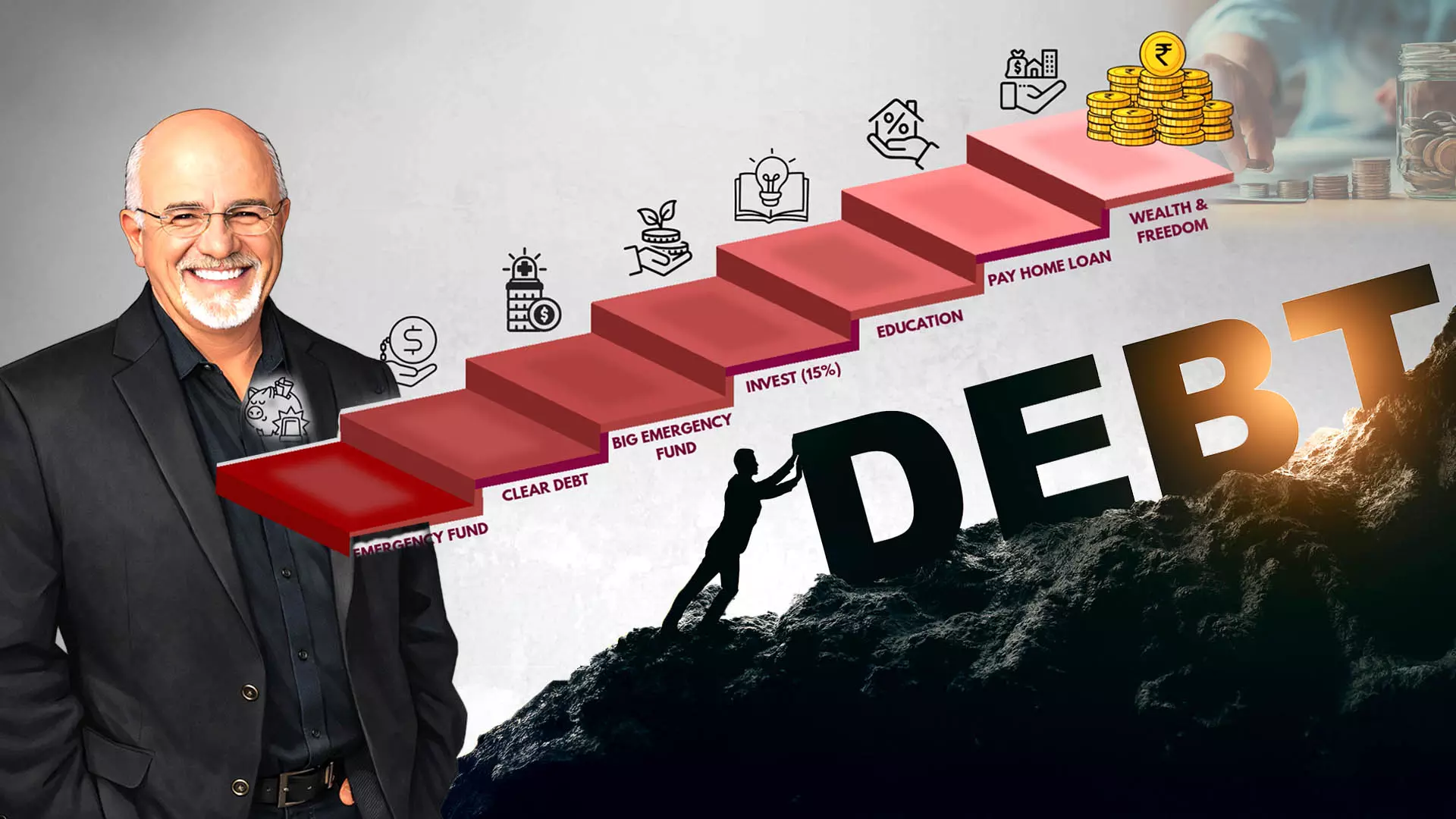
He explains money growth like a child’s development — the baby first lifts her head, then crawls, and finally walks. "You do not jump straight into investing. You move forward step by step," he says, and calls this framework the “7 Baby Steps.” Here are the seven steps:
Baby Step 1: Build a small emergency fund
The first step, Ramsey says, is to build a small emergency fund. This money is not for shopping or vacations. It is only for minor emergencies.
If you suddenly fall sick and get a medical bill, or your phone breaks, you should not panic. These are normal life situations. For such moments, Ramsey advises keeping a small buffer.
Even saving around ₹25,000 is a good starting point. As he puts it, this fund is meant only for small emergencies — not lifestyle spending.
Baby Step 2: Clear your debt
The second step is the toughest: clearing all debts. This includes money borrowed from friends, personal loans, credit card dues, and buy-now-pay-later bills.
Ramsey warns that debt grows faster than investments. For example, if you have a credit card bill of ₹50,000 at 5% monthly interest, you pay ₹2,500 every month — ₹30,000 in interest in a year.
Now compare that with investing ₹5,000 a month in a mutual fund at 12% annual returns. In one year, the gain is only about ₹600. “Debt pulls you backward. Investment can push you forward — but only after debt is cleared,” he says.
Baby Step 3: Have a safety net
The third step is building a full emergency fund. Once you are out of debt, Ramsey says, you should save three to six months of your expenses.
If your monthly income is ₹25,000, three months equals ₹75,000, and six months equals ₹1.5 lakh. This fund protects you if you lose your job, face a medical emergency, or need unpaid leave.
This is what gives real mental peace and financial stability.
Baby Step 4: Think of pension
Only after clearing debt and building a safety net does Ramsey recommend investing. His focus here is retirement.
He suggests investing 15% of your household income for retirement. If you earn ₹25,000 a month, that is about ₹3,750 a month, or ₹45,000 a year.
This money should go into long-term pension options. According to Ramsey, investing before clearing high-interest debt is a mistake.
Baby Step 5: Earmark big goals
The next two steps deal with major life expenses. Education costs are rising fast, so saving for children’s college becomes important.
After that, the goal is to pay off your home loan early. Ramsey makes one thing clear: your children can take out education loans or find scholarships, but you cannot borrow for retirement.
Paying off a home loan should never come at the cost of your emergency fund.
Baby Step 6: Clear your home loan
The home loan comes between you and complete freedom from debt, he says. You can save tons of money by not paying the EMI. You also earn the interest on the money saved.
Baby Step 7: Build wealth
No loans. No panic if your salary is delayed. No stress during emergencies. At this stage, you can build wealth, support your family, and give to causes you care about.
As Ramsey puts it, “Money becomes a tool — not a source of anxiety.”
This framework, he stresses, is not financial advice. It is simply a clear, step-by-step way to think about money.
By following this order — small savings, debt clearance, safety nets, and then investing — Ramsey believes anyone can move from stress to stability and from survival to freedom.
The content above has been transcribed from video using a fine-tuned AI model. To ensure accuracy, quality, and editorial integrity, we employ a Human-In-The-Loop (HITL) process. While AI assists in creating the initial draft, our experienced editorial team carefully reviews, edits, and refines the content before publication. At The Federal, we combine the efficiency of AI with the expertise of human editors to deliver reliable and insightful journalism.