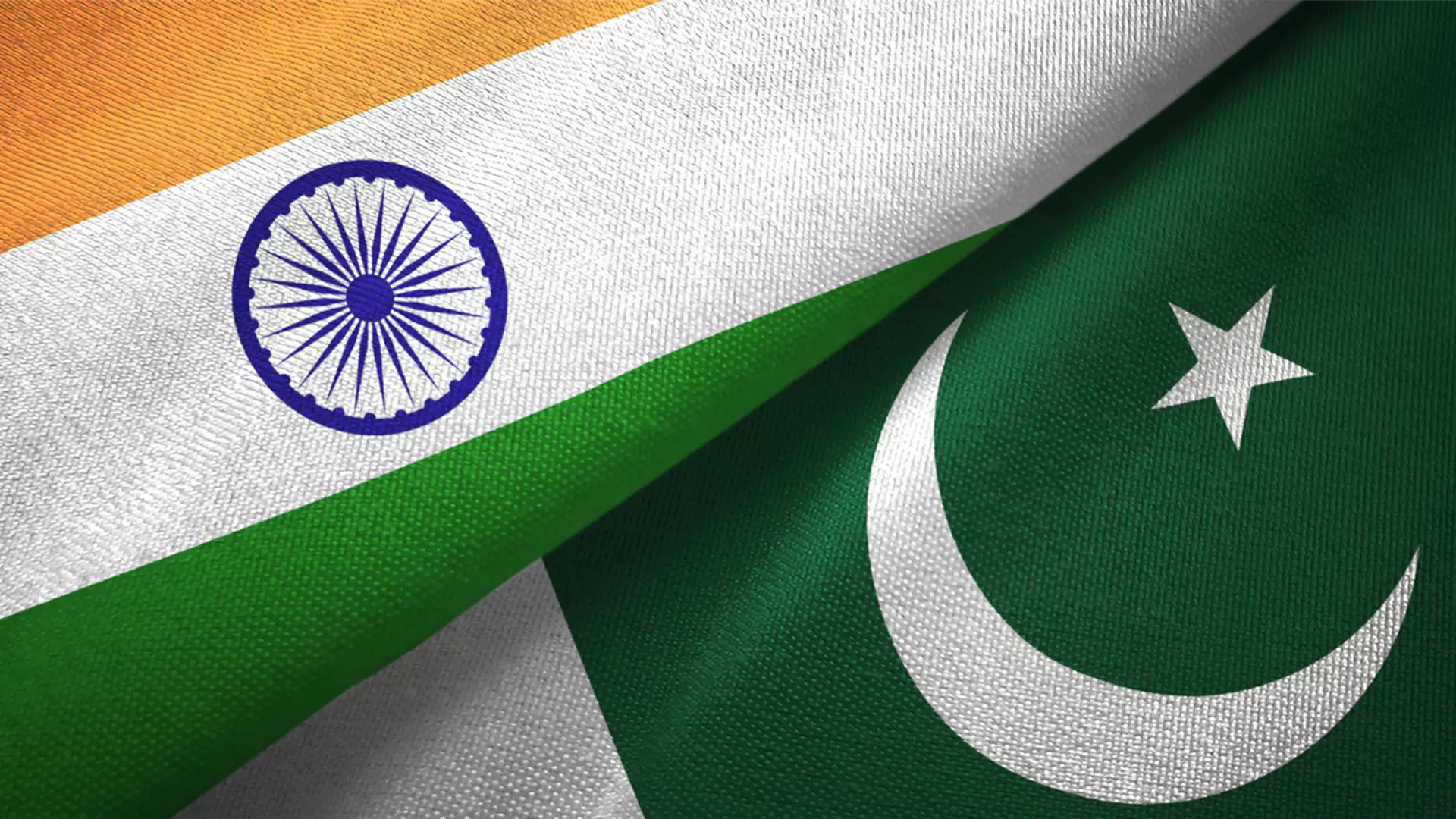
The RSS general secretary’s comments on civil society ties, dialogue and “one nation” revive old questions about India’s Pakistan policy and its strategic limits
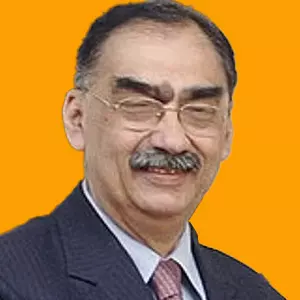
In an interview with the Press Trust of India (PTI) on May 12, Dattatreya Hosabale, general secretary of the RSS, was asked about India-Pakistan relations. As the RSS general secretary holds a pivotal position in the ruling dispensation, his views merit careful attention.
He articulated views about Pakistan that are in line with the RSS’s well-known positions. He also made remarks on how India should deal with this neighbour that were reminiscent of the approach of Atal Bihari Vajpayee and that pursued by Narendra Modi in the first two years of his prime ministership.
Hosabale’s Pakistan outreach
Hosabale’s views can be summarised thus:
— “Everything has been tried and more such efforts should go on.”
— Pakistan gives “pinpricks” as in Pulwama. India should respond to them “wholesomely, according to the situation because security and self-respect of a country and the nation have to be protected. Governments should take note and take care of it.”
Also read | Is RSS turning soft on Pakistan or just being consistently inconsistent? | AI With Sanket
— “Doors should not be closed. We should always be ready to engage in dialogue. That is why diplomatic relations are maintained, trade and commerce go on, visas are being given. That we should not stop. There should be a window for dialogue.”
— For relations, the turning point was the Mumbai attack. “Since then the peace period is very, very less.” While other things are continuing, “mutual confidence is not there.”
— Pakistan’s military and political leadership has developed an aversion to Indian politics, while civil society could come forward to promote relations.
— “I believe strongly in civil society relations because we have cultural relations and we have been one nation. So that has to be emphasised by some people at least. So civil society can pave the way for better relations.”
Pak welcomes dialogue signals
In his media briefing of May 14, Tahir Andrabi, spokesperson of Pakistan’s Ministry of Foreign Affairs, was asked about former Army Chief General MM Naravane supporting Hosabale’s “call for a dialogue.”
Andrabi was reported by Pakistan’s authoritative newspaper Dawn as responding thus: “The voices within India calling for dialogue are obviously a positive development; we hope that sanity will prevail in India, and warmongering, the belligerence that has been emanating for the past several months and even beyond, for past years, will fade away and pave the way for more such voices.”
Andrabi was also queried on whether backchannel talks were going on between the two countries. Again, Dawn quoted him as saying: “About track two or backchannel — well, I am not aware of that and do not wish to comment on those. If I were to comment, there would be no backchannel. Backchannel or track two, the name is self-explanatory.”
Clearly, Andrabi could not resist using Hosabale’s remarks to criticise the Modi government for its “belligerence” and “hostility”. It has been condemning Modi’s approach towards Pakistan since the surgical strikes of 2016 and even more so after the Balakot aerial strike following the Pulwama terrorist attack and the constitutional changes in J&K on August 5, 2019.
Civil society versus ideology
Perhaps Hosabale either forgot or deliberately overlooked, in his magnanimity, the vitriol that Pakistan then hurled at the RSS, including from the UN General Assembly forum. Of course, Hosabale may have been able to overlook it because he has made a distinction between Pakistan’s political and military leadership on the one hand and civil society on the other.
The fact is that most of Pakistan’s civil society shares the same view of the RSS as its political and military leadership. Pakistan has been especially troubled by Modi’s policies after the Pahalgam attack, which led to Operation Sindoor. The military action witnessed a cessation of hostilities after 88 hours. However, the break in dialogue and what has troubled Pakistan most — the suspension of the Indus Waters Treaty (IWT) — continue.
Obviously, Pakistan hopes that a resumption of dialogue would pave the way for the restoration of the IWT. It wants that at the earliest.
Significantly, Andrabi was not asked for his views on Hosabale saying that India and Pakistan were one nation. He would have hurled fire and brimstone at Hosabale. By saying “one nation”, Hosabale was striking at the very foundation of Pakistan. It was founded on the two-nation theory.
Simply put, that holds that Hindus and Muslims not only constitute two nations but also antagonistic nations. This is not denied even by those Pakistanis who believe that the normalisation of India-Pakistan ties is in Pakistan’s interest.
Old debates, new signals
Some Pakistanis do not deny their Hindu roots, though most — at least among the traditional ‘Shurfa’ and the new elites — search for ancestors in Iran, Central Asia and Arabia. This again shows that almost all Pakistanis hold the two-nation theory close to their hearts and minds.
Also read | Move over, Sanatana, what RSS truly cares about is political power
Hence, there is no scope for the hope that consistent interaction between the civil societies of India and Pakistan would erode the latter’s view that there was once a common nationhood between India and Pakistan. Thus, even if civil society interaction is promoted, there should be no illusion that it would lead to a change in Pakistan’s views on India.
Hosabale’s views on India-Pakistan dialogue are reminiscent of the old policy that led India to undertake dialogue again and again for almost two decades, overlooking terrorist attacks or what Hosabale calls pinpricks. In strategic terms, they may be pinpricks because they have not done anything to halt India’s progress, but they extract a heavy social and political price.
Besides, they also lead to an increase in expenditure in the security sector.
Finally, do Hosabale’s remarks indicate that there is new thinking in the Modi government on its Pakistan policy? Only time will tell.
(The Federal seeks to present views and opinions from all sides of the spectrum. The information, ideas or opinions in the articles are of the author and do not necessarily reflect the views of The Federal.)