With unmatched reach across politics and society, the Sangh navigates deepening divides, ideological tensions and challenge of staying relevant in changing world
Not many organisations withstand the vicissitudes of history over the course of a full century. In October 2025, as the Rashtriya Swayamsevak Sangh (RSS) marked its centenary, the organisation stands at a point few could have imagined at its founding.
Once a loose volunteer network with a modest local footprint, the RSS has become an influential civil society movement with a worldview that informs India’s political leadership. Its cadres populate the country’s dominant party, and its philosophy increasingly shapes policy, education, social welfare, and public rhetoric.
Yet, as its influence deepens, so do questions about its historical legacies, its flawed relationship with India’s minorities, and the direction it seeks for India at home and abroad.
For many in the liberal establishment, the moral link between the RSS and the climate of hostility around Gandhi remained unresolved. For the Sangh, the episode symbolised the dangers of state overreach and political scapegoating. This difference in interpretation continues to shape public perceptions of the organisation.
Understanding the RSS today requires neither vilification nor romanticism, but a sober assessment of an organisation that has outlasted empires, political cycles, and ideological currents — and now faces the tension between power and responsibility on a scale unprecedented in its history.
Hindu social vulnerability
Founded in 1925 by KB Hedgewar in Nagpur, the RSS emerged from a sense of Hindu social vulnerability in the light of the Khilafat movement. Hedgewar’s diagnosis was less political than civilisational: Hindu society, divided by caste and region, lacked the cohesion necessary for self-governance.
Also Read: RSS at 100: How relevant is the Sangh in Modi era? | Talking Sense With Srini
His solution was organisational discipline — daily shakhas, uniform drills, and a network of local volunteers. Under MS Golwalkar, who led the Sangh from 1940 to 1973, the movement acquired a more defined ideological frame. He articulated the concept of a Hindu Rashtra — not a theocracy, but a cultural nation rooted in shared civilisational ethos.
Critics read this as exclusionary, supporters viewed it as restorative. Either way, it set the intellectual foundation for what would become the most sustained socio/cultural/revivalist/pro-Hindu/anti-minorities project in modern India.
Shadow of Gandhi’s assassination
No episode has cast a longer shadow on the RSS than the assassination of Mahatma Gandhi in January 1948. The veteran RSS leader MG Vaidya in an interview with The Hindu had called it the most difficult phase of the RSS when the people, government, and the press (janta, sarkar, and akhbar) were against them, resulting in the RSS being banned.
The ban was lifted only after the Sangh agreed to adopt a written constitution and formalise its operations.
Also Read: RSS at 100: 'Hindu Mahasabha emerged because Congress avoided religious issues'
For many in the liberal establishment, the moral link between the RSS and the climate of hostility around Gandhi remained unresolved. For the Sangh, the episode symbolised the dangers of state overreach and political scapegoating. This difference in interpretation continues to shape public perceptions of the organisation.
Transformation under Deoras
The most consequential transformation in the RSS’s political trajectory came under Madhukar ‘Balasaheb’ Deoras, who succeeded Golwalkar in 1973. If Golwalkar was the ideologue, Deoras was the strategist. He understood that to remain socially relevant, the RSS needed to expand beyond its insular, caste-homogeneous roots and engage with the institutions of a democratic polity.
Today, in BJP-governed states, there is repeated bulldozing of Muslim homes, ill-treatment of Christians, calls of lynchings and hate speeches or boycotting minority businesses. Such actions put Bhagwat’s efforts under question.
The ABVP, the student wing of the RSS, actively participated in the movement led by Jayaprakash Narayan. The latter welcomed it for its exaggerated nationalistic fervour, giving further legitimacy to the RSS. In fact, its association with Jayaprakash Narayan gave it expanded acceptance, something it had yearned for.
Also Read: RSS centenary celebrations: Modi, Bhagwat rely on duplicitous rhetoric, gloss over real issues
The Emergency (1975-77) proved decisive. With thousands of RSS volunteers imprisoned, the organisation emerged from the period with a new legitimacy — as part of the resistance to authoritarianism. Deoras encouraged cooperation with opposition parties and created space for the political rise of the Sangh’s affiliates, particularly the Jana Sangh and eventually the BJP.
He also made a historically-important, though debated, intervention on caste, and a failed effort to bring Muslims into its fold. In 1974, he publicly condemned untouchability as a “sin”, signalling an attempt — however partial — to recalibrate the Sangh’s relationship with India’s most-oppressed communities.
More inclusive image
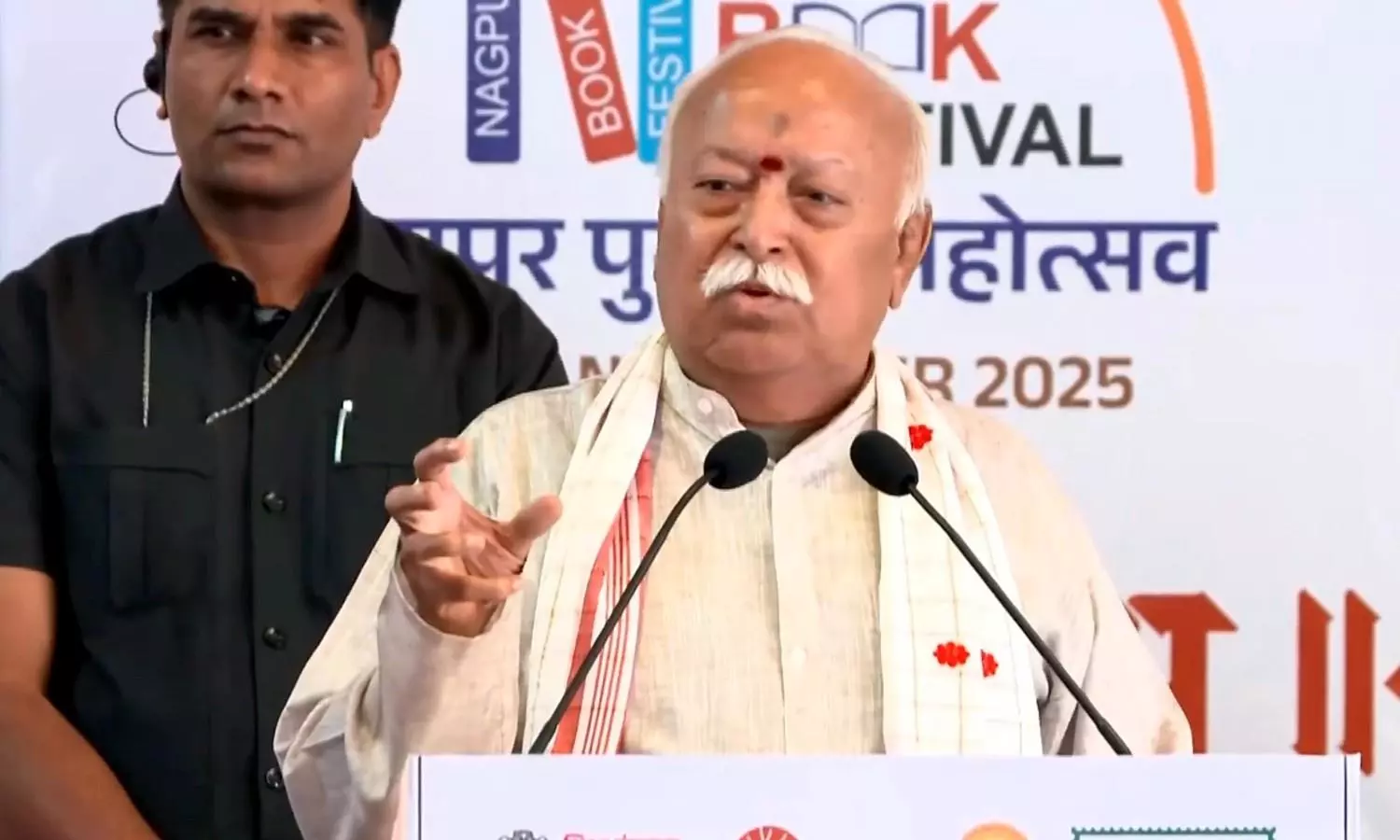
Under Mohan Bhagwat, who became Sarsanghchalak in 2009, the RSS has adopted a more reflective tone, in fact demonstrating a vision for the future. Bhagwat, like Deoras, is attempting a wider, more inclusive image for the Sangh. He has engaged in dialogue with Muslim groups, distanced the RSS from earlier exclusionary theories, and encouraged debates on caste inequality.
Yet, voices in their own wider ecosystem often outpace the leadership’s messaging, creating a dual perception of the organisation. It’s pretty clear that Bhagwat may be heard with respect but not necessarily followed by the hard core that the organisation has bred over the years.
Also Read: RSS at 100: How Italian fascism influenced Hindu nationalist politics
Today, in the BJP-governed states, there is repeated bulldozing of Muslim homes, ill-treatment of Christians, calls of lynchings and hate speeches or boycotting minority businesses. Such actions put Bhagwat’s efforts under question and create continued concern among India’s Muslims, Christians, even Sikhs.
Unparalleled in scope
Today, the RSS leads a network unparalleled in scope. Known as the Sangh Parivar, it includes the BJP, now India’s dominant political party, the VHP, the ABVP, the BMS, vast educational and welfare initiatives, and overseas organisations such as the Hindu Swayamsevak Sangh.
To understand the RSS’s appeal, one must recognise its strengths: organisational discipline, social service, leadership stability, and narrative coherence. The rise of the Hindu middle class, urbanisation, and India’s digital public sphere have all converged to expand the RSS’s social reach.
Yet, the RSS’s ascent has been accompanied by questions concerning communal violence, minority rights, and institutional influence. While the organisation disavows violence, affiliates within its ecosystem have been linked to episodes of tension and riots. In communal riots, the swayamsevaks are known to be active participants along with affiliates like the VHP and the Bajrang Dal.
Also Read: RSS at 100: Hindutva is an ideological camouflage for its Brahminical core
In an historical perspective, the active role of the BJP leaders in the Ram Janam Bhoomi movement, the demolition of the Babri Masjid, the riots that followed, the Citizens Amendment Act, etc. will always remain as evidence of anti-Muslim perspectives within the RSS and its affiliates.
Wide-reaching influence
The RSS’s rise must also be seen in the context of India’s changing economic landscape. Liberalisation produced a new aspirational class, globally-connected yet culturally-rooted. This demographic often finds the Sangh’s message compelling.
The most unexpected element of the RSS story is its growing influence among the global Hindu diaspora. In the US, the UK and Canada, the diaspora is affluent and increasingly politically-engaged.
RSS-affiliated groups play roles in lobbying, framing debates around “Hinduphobia”, and supporting political candidates aligned with Indian interests. In Africa, Southeast Asia, and parts of the Middle East, RSS-linked organisations focus more on education, temples, and community welfare, exporting a softer cultural identity.
Future role
At 100, the RSS is no longer an outsider movement. Without argument, it is at the commanding heights of the Indian social and political landscape. Its strengths are undeniable: discipline, social commitment, and a long-term worldview.
Its weaknesses are equally clear: a history shadowed by communal tension, an uncertain relationship with minorities, and ideological rigidity.
Also Read: RSS at 100 | Was the Sangh anti-colonial? Not at all, says historian
Going forward, the network of Sangh organisations will have to take a call on the role they see for themselves in reducing inequalities, strengthening the promise of antyodaya (upliftment of the most marginalised) for every Indian, becoming more inclusive, and resisting the communal elements within the organisation.
(The Federal seeks to present views and opinions from all sides of the spectrum. The information, ideas or opinions in the article are of the authors and do not necessarily reflect the views of The Federal.)