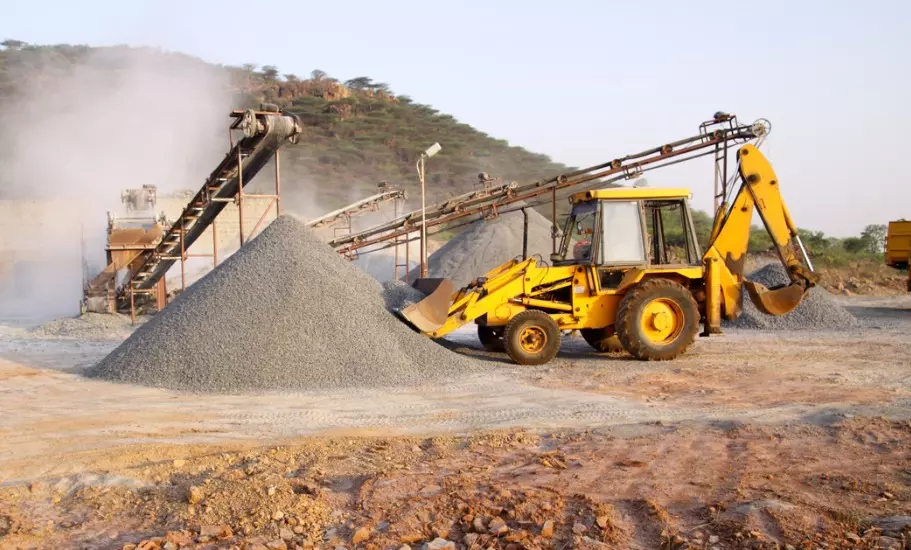
Passed without debate and applied retrospectively, law overturns 2024 SC verdict, hitting states like TN and Karnataka that earn crores from mineral royalties
Prime Minister Narendra Modi has been quoted as saying that “federalism is no longer the fault line of Centre-state relations but the definition of a new partnership of Team India”. This was in the aftermath of the launch of the Goods & Services Tax (GST), which was and remains a remarkable example of Centre-state cooperation.
GST was 10 years in the making, with intense discussions and talks between the Centre and the states before its launch in 2017. The Centre went the extra mile to address concerns of the states, even guaranteeing them compensation for possible loss of revenue.
The Mines and Minerals (Development and Regulation) Amendment Act 2026 (MMDR) is a classic example of the contrary – how Centre-state issues should not be handled.
Mining drives state revenues
The Supreme Court, in 2024, decided multiple contentious issues impacting Centre-state fiscal relations in the matter of Mineral Area Development Authority & Anr Vs M/S Steel Authority of India & Anr Etc. It had to decide if royalty collected on mining activities under the MMDR Act 1957 was tax and if the states’ power to tax land and buildings extended to mineral-bearing land. A related issue was also if Parliament had the power to limit such powers of the state.
Also read | Federal row: Why are states unhappy with Mines and Minerals Amendment Bill?
The apex court, by an 8:1 majority, held that royalty is not a tax but merely a payment as a consequence of the right extended to enjoy mineral rights. The court also confirmed that the states have the powers to tax mineral rights and that Parliament does not have the powers to limit the powers of the states in this regard.
India’s mineral wealth lies in a few states for whom it is a major source of revenue. States typically collect royalty in respect of major minerals, seigniorage fee in respect of minor minerals, mineral-bearing land tax, auction/lease amount, penalty imposed for the various infractions. So, it is a major source of revenue. Thus, for instance, the latest Tamil Nadu budget projected a Rs 7,482 crore target from minerals; Karnataka is eyeing Rs 13,000 crore revenue as per its last budget.
It is debatable if Parliament has the powers to regulate mineral-bearing land. Land is a state subject where the state legislatures have the power to tax land.
The MMDR Amendment Bill was introduced in the Monsoon Session in Lok Sabha on August 10, 2026. It was passed by the Lok Sabha on August 12 with no debate or discussion, by the Rajya Sabha on August 13 and Presidential assent was given on August 18.
It is a different matter that the passage of this Bill was only a reflection of the situation in Parliament. Twelve bills were introduced in this session and 11 of them were passed – most without any discussion except for the Public Examinations Bill.
MMDR Act curtails state powers
What the MMDR (Amendment) Act 2026 has in effect done is to nullify the 2024 Supreme Court decision. A new section (9D) has been introduced, per which the state’s power to impose any tax, cess or levy, ‘by whatever name called’ has been curtailed.
Henceforth, such levies are to be imposed only as per conditions prescribed by the Union government. The amendment goes on to state that any levy not paid or collected by the state before the amendment would be treated as invalid.
Also read | India’s race for Rare Earths: PLI, mining push, and a long road to tech independence
The Statement of Objects and Reasons states that the Union is taking control of the regulation of mines and development of minerals in the “larger public interest” because there is “uneven imposition of taxes or other levies” by the state governments in the absence of “reasonable restrictions”.
Who holds the powers?
The statement suggests that amendments would provide certainty, stability and predictability in the fiscal regime in the mineral sector, thereby giving impetus to national growth. Be that as it may be, it would appear it is doing so by trampling on the state’s fiscal powers.
The glue which binds Centre-state ties is trust on fiscal matters. Does the MMDR (Amendment) Act erode this trust?
It is debatable if Parliament has the powers to regulate mineral-bearing land. Land is a state subject where the state legislatures have the power to tax land (Schedule 7, List II, Entry 49 and 50). The Supreme Court had categorically held that mineral-bearing lands fall within what could come under Entry 49.
The challenge comes because Entry 50 of the same list talks of limitations which can be imposed by Parliament by law relating to mineral development – the apex court has clarified that this does not extend to state’s powers under Entry 49.
Federal balance under strain
The retrospective application which the Act has introduced is also troublesome, as is the manner in which a categorical Supreme Court decision is being negated. The amendment Act can certainly be challenged – and one would think it should be, to set at rest this contentious issue.
Also read | How India’s ‘greenest state’ is sacrificing massive forest land to mining
However, it must be mentioned that the lone dissenting judge’s opinion has discussed the restriction mentioned in Entry 50 at length. The honourable judge has highlighted that this entry is “a unique entry because it is the only taxation entry in Lists I and II where the taxing power of a state legislature has been subject to any limitation imposed by Parliament by law relating to mineral development” – in effect holding that restrictions can be imposed by the Centre.
But eight other judges did not agree with this interpretation.
Trust is paramount
The Centre has highlighted that minor minerals continue to remain entirely under state control. This is minor consolation. Revenue of all mineral-bearing states will certainly be impacted. If the Centre was indeed keen to ensure certainty, stability and predictability in the fiscal regime of the mineral sector, it could have done so by ensuring strenuous debate and discussions, addressing concerns and bringing all the states on board – after all, this is what “cooperative federalism” is all about.
The glue which binds Centre-state ties is trust on fiscal matters. The MMDR (Amendment) Act has eroded this trust.
(The Federal seeks to present views and opinions from all sides of the spectrum. The information, ideas or opinions in the articles are of the author and do not necessarily reflect the views of The Federal.)