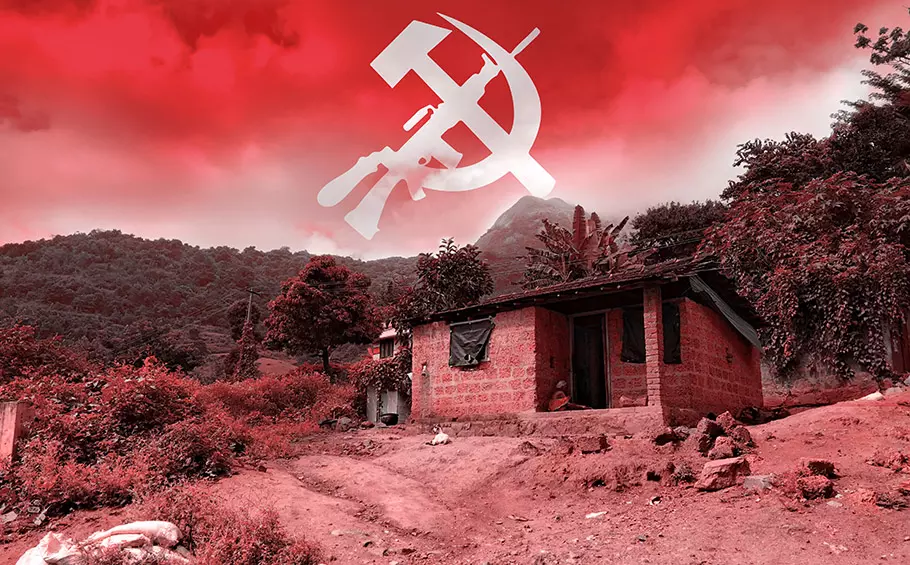
Like the LTTE, Maoists did not know when to pull back; the dream that succeeded for Mao in the last century could have never come to fruition in India today
Come March 31, India’s Maoists, widely known as Naxalites, will meet a formal and inglorious end akin to the Tamil Tigers in Sri Lanka. And like with the Liberation Tigers of Tamil Eelam (LTTE), the Maoists will never revive.
What is in store for the Communist Party of India (Maoist) is not just an undisguised military rout (which for long was considered impossible) but also an ideological implosion, which will have lasting consequences.
Mao was a different era
There are many reasons why the Maoist movement in India, which dates its birth to 1967 at Naxalbari in West Bengal, has come to this pass. Capping the humiliation is the surrender by Maoist leaders who went underground decades ago, dreaming of copying Mao’s tactics of an earlier era.
Also read: Families of Maoist leaders appeal for surrender as ‘red sunset’ looms
It was clear for a long time that the overwhelming bulk of India’s youth, in cities and elsewhere, were no more attracted to an ideology based on class struggle and a violent overthrow of the existing order.
While India still remains home to millions of poor, the acute poverty one witnessed in the 1960s and ’70s has given way to improved living conditions, in part due to the accelerating but widely criticized liberalized economy.
Even China moved on
In parallel, the collapse of the Soviet Union and its satellite states marked, irrespective of whatever Indian communists thought, the end of times when Marxism was seen as an alternative to the greed of capitalism.
China’s impressive economic growth and its ability to lift millions out of poverty were the result of its decision to embrace the capitalist and market-oriented path despite wearing a Red cloak.
Indeed, Mao’s Little Red Book, once a bible for Naxalites, has gone out of fashion in his own country.
Shrinking communist bases
The introduction over time of a string of welfare measures for Dalits and the mass of poor, both by the central and state governments, helped marginalized families slowly climb the socio-economic ladder.
The last two or three decades saw a rising number of Dalits and other disadvantaged sections bag government and private sector jobs, developments which were considered a mirage by their own largely illiterate parents.
Also read: How Indian communism rose, split and slipped into decline
Naturally, in universities today, discussions about Marxism and revolutions have few takers. The urge for a better material world is overwhelming.
This is why even mainstream communist parties in the country are struggling to hold on to their flock. Their influence refuses to expand to newer areas from the existing (and shrinking) oases.
Failure to learn
Blame it on ideological blinkers, none of this was recognized by the Maoist leadership which believed that the state-within-a-state they had carved in the forested regions would never be disturbed and, who knows, they might prevail over the whole of India one day.
The dream succeeded for Mao in the last century. It could have never come to fruition in India today.
When a section of Maoists came to this conclusion and embraced parliamentary politics post-Emergency, they were dubbed “revisionists” by the still-underground revolutionaries who are surrendering now to escape certain death.
Like the obliterated LTTE, the Indian Maoists did not know when to pull back. Both felt they were undefeatable. The reasons lay in subordinating politics to the gun and refusing to learn from rapidly changing developments.
Tigers never returned, nor will Maoists
For a while after the LTTE and its brass were wiped out, there was persistent speculation that the Tigers may revive, some day. As a long-time student of the LTTE, I consistently maintained that this was impossible.
Also read: As Maoism reaches dead end, vulnerable tribals face an uncertain future
Now, there are murmurs that Naxalites, at least the remnants, will survive the March 31 deadline for their extermination. Yes, lower-rung cadres still holed up in the forests may cause some trouble but they will be eventually hunted down. There will be none to take their place.
Having observed the Maoists closely since the mid-1970s, I am confident there will be no revival of the Naxalite movement—of the kind we have seen.
This is a crucial difference between the Naxalites and the now vanquished LTTE.
Two movements marked by a big difference
All said and done, the LTTE was crushed primarily by a resurgent Sri Lankan military. LTTE chief Velupillai Prabhakaran died fighting. He and his closest aides refused to surrender.
In the case of the Naxalites, guerrilla leaders who for decades egged others—mostly tribals and the rural poor—to leave their families and fight the Indian state have now called it quits and are in a hurry to join the “mainstream”.
Those who not long ago murdered election contestants, threatened voters, and bombed polling stations are today publicly promising to be a part of the same electoral system they had denounced!
This marks a complete negation, indeed a wholesale defeat, of all that they preached.
What a ruthless state can do
In the end, the Naxalite leadership didn’t realize that for decades, the Indian state—whatever the political party at the helm—was content to play hide-and-seek with them, killing the Maoists now and then and allowing them to live at other times.
Also read: Battle for Bastar Part 5: Koraput police armoury raid and its aftermath
For the first time, a central government refused to give even a semblance of respect to the Maoist thinking, calling the movement “anti-national” and a disease. And the administration showed the lethal power it could unleash.
Once the Indian state launched a total unforgiving war, the deep forests and rural terrain could not guarantee safety. The local police were bolstered by troops, paramilitary forces and commandos besides locals, former Maoists included, who threw their lot with the security forces.
The prairie fire that never was
As weeks rolled into months, the writing was on the wall: Give up or die. The CPI (Maoist) leadership chose the easy way out. Surrender.
Way back in 1967, after Charu Mazumdar ignited the Naxalite movement, China’s People’s Daily, in a gloating essay, prophesied that a single spark could start a prairie fire.
Also read: Why decades-old Maoist movement faces oblivion as its last stronghold is set to fall
It never happened. Yes, there were some mini fires. Over time, they lost the spark, one by one.
The last of the flames which burnt for the longest period in central India will be put down on March 31.
(The Federal seeks to present views and opinions from all sides of the spectrum. The information, ideas or opinions in the articles are of the author and do not necessarily reflect the views of The Federal.)