Elite institutions must uphold standards and discipline without crushing students’ self-worth, and build multi-layered grievance systems to avoid future tragedies
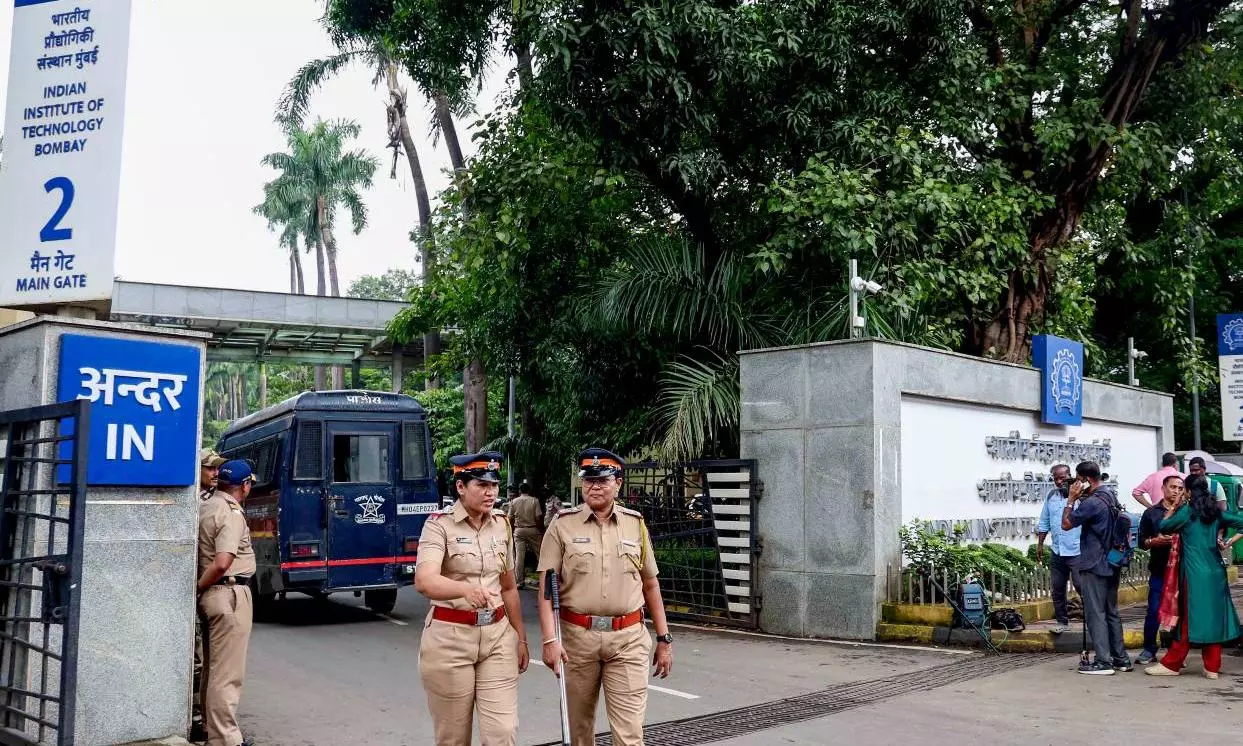
Sahil Wakode, a student at IIT-Bombay, died by suicide. The circumstances are still under investigation. His family alleges caste-based discrimination and harassment, and a case of abetment to suicide has been registered under the SC/ST Act. Professor Suryanarayana Doolla, named in the family’s complaint, has been suspended from deanship; he remains a faculty member.
Ponderable questions
It is too early to say what caused Sahil’s death. But the case points to a question that IIT-Bombay, and other elite institutions, cannot avoid: how do they treat students who fail, make mistakes, get into trouble, or raise complaints the institution would rather not investigate? This is not a small question.
The Supreme Court's National Task Force on student mental health has looked beyond counselling, at academic pressure, caste and gender discrimination, financial stress, and institutional processes – a mandate that itself tells us student suicides cannot be explained by mental health alone.
Also read: After student suicide, IIT-Bombay students seek reforms, back professor
RTI data shows at least 65 student suicides across IITs between 2021 and 2025. The Supreme Court’s National Task Force on student mental health has looked beyond counselling, at academic pressure, caste and gender discrimination, financial stress, and institutional processes – a mandate that itself tells us student suicides cannot be explained by mental health alone.
When a topper faces failure
Let’s start with what changes for these students the moment they arrive on campus. They get in after years of intense competition, often as the best performers at their schools. However, within the IIT, almost everyone has a similar record, making it harder to stand out.
Failure, once rare, becomes common. Our education system does not prepare students for this shift. It teaches them to clear exams and win, and much less about failing, asking for help, or starting over. When exam results become part of a student’s identity, a bad grade or a disciplinary charge can feel far bigger than it is.
None of this means students should escape consequences. If a student cheats, the institution has to act. But there is a difference between discipline and humiliation, between authority and arbitrary power. A professor can tell a student what they did was wrong. But an allegation of misconduct should go through a fair process, not an on-the-spot confrontation where the same person accuses, judges, and punishes.
Also read: IIT Bombay student death: Police register abetment of suicide case
A student should know the charge, get a chance to respond, and receive a proportionate, appealable penalty. These procedures are not red tape that gets in the way of discipline. They are what make discipline fair. This matters more because students are still learning to deal with authority, failure, and responsibility. A good teacher can hold both ideas at once: this was wrong, and it does not decide your future. That is real teaching.
The caste angle
Additionally, the caste question complicates the issue. The IITs are often seen as among India’s most meritocratic institutions, with admission through one of the country’s hardest exams, which can create the impression that caste has no place on campus.
Also read: IIT Bombay student Sahil Wakode’s death: What we know so far
Ajantha Subramanian, an anthropologist who studied IIT-Madras closely, argues otherwise: that “merit” at these institutions is not neutral but shaped by caste advantage, built up over generations of unequal access to schooling and coaching. Caste does not disappear once a student clears the entrance exam; it becomes harder to see.
An SC-ST cell exists on paper at most IITs, but it is of little use if students believe a complaint will hurt their standing or go unheard. So, there are structural issues to be addressed.
Just a few weeks ago, at IIT-Mandi, a poster referring to ‘Shudras’ as servants set off a controversy of its own. In the IIT-Bombay case, however, the allegation is disputed: the family says discrimination occurred, the institute denies it, and the investigation will have to settle the matter.
Can grievance cells provide succour?
But, even before the facts are known, there is another question: do students trust their institution’s grievance systems?
An SC-ST cell exists on paper at most IITs, but it is of little use if students believe a complaint will hurt their standing or go unheard. So, there are structural issues to be addressed.
Faculty, wardens, and mentors need training to recognise when a student is struggling and know where to send them. Students need peer support and a grievance system outside their own department, so they are not complaining to the people who grade them.
Elite institutions face constant pressure to demonstrate their excellence. Publications, patents, placements, and rankings are things you can measure and report. Student wellbeing is not. An institution can get very good at what shows up in rankings while paying less attention to whether students feel heard, whether teachers use authority responsibly, and whether failure is treated as something to learn from rather than hide.
Support must be multi-layered
Counselling alone cannot fix this problem. The task force itself found real gaps in mental health support. A counsellor can help a struggling student, but cannot fix an unfair disciplinary process, remove caste prejudice from a hostel, or undo a student’s belief that going to an authority figure will only make things worse. Institutions need more than one layer of support.
Faculty, wardens, and mentors need training to recognise when a student is struggling and know where to send them. Students need peer support and a grievance system outside their own department, so they are not complaining to the people who grade them. Disciplinary cases need to be documented and open to appeal, and discrimination complaints need an independent inquiry with a clear timeline.
Also read: IIT-Delhi suicide: Raging protests bring systemic issues under scanner
Parents have a role too. Getting a child into an IIT usually means years of family sacrifice, and when success becomes the family’s main measure of worth, failure is hard to admit. Parents can help by making it clear that failure is not the end of the world. Faculty deserve some understanding too: they teach, publish, and meet institutional targets all at once, and cannot also be expected to act as therapists. But that pressure is no reason to treat students without care.
Lessons for IITs
Finally, it comes down to what a university is for. A good university not only trains competent and successful professionals, but also teaches people how to fail, accept correction, take responsibility, and start again. Its authority should be strong enough to hold standards, and careful enough not to break a person’s sense of self.
The real test of institutions like IITs is not how they treat their best students. It is how they treat the student who fails, makes a mistake, complains, or falls behind. We have gotten very good at teaching young people how to get into the IITs, which is laudable.
But, sadly, we still need to work out whether these institutions are equally good at helping them stay strong when things go wrong.
(Suicides can be prevented. For help please call Suicide Prevention Helplines: Neha Suicide Prevention Centre – 044-24640050; Aasara helpline for suicide prevention, emotional support & trauma help — +91-9820466726; Kiran, Mental health rehabilitation — 1800-599-0019, Disha 0471- 2552056, Maithri 0484 2540530, and Sneha’s suicide prevention helpline 044-24640050.)
(The Federal seeks to present views and opinions from all sides of the spectrum. The information, ideas or opinions in the articles are of the author and do not necessarily reflect the views of The Federal)