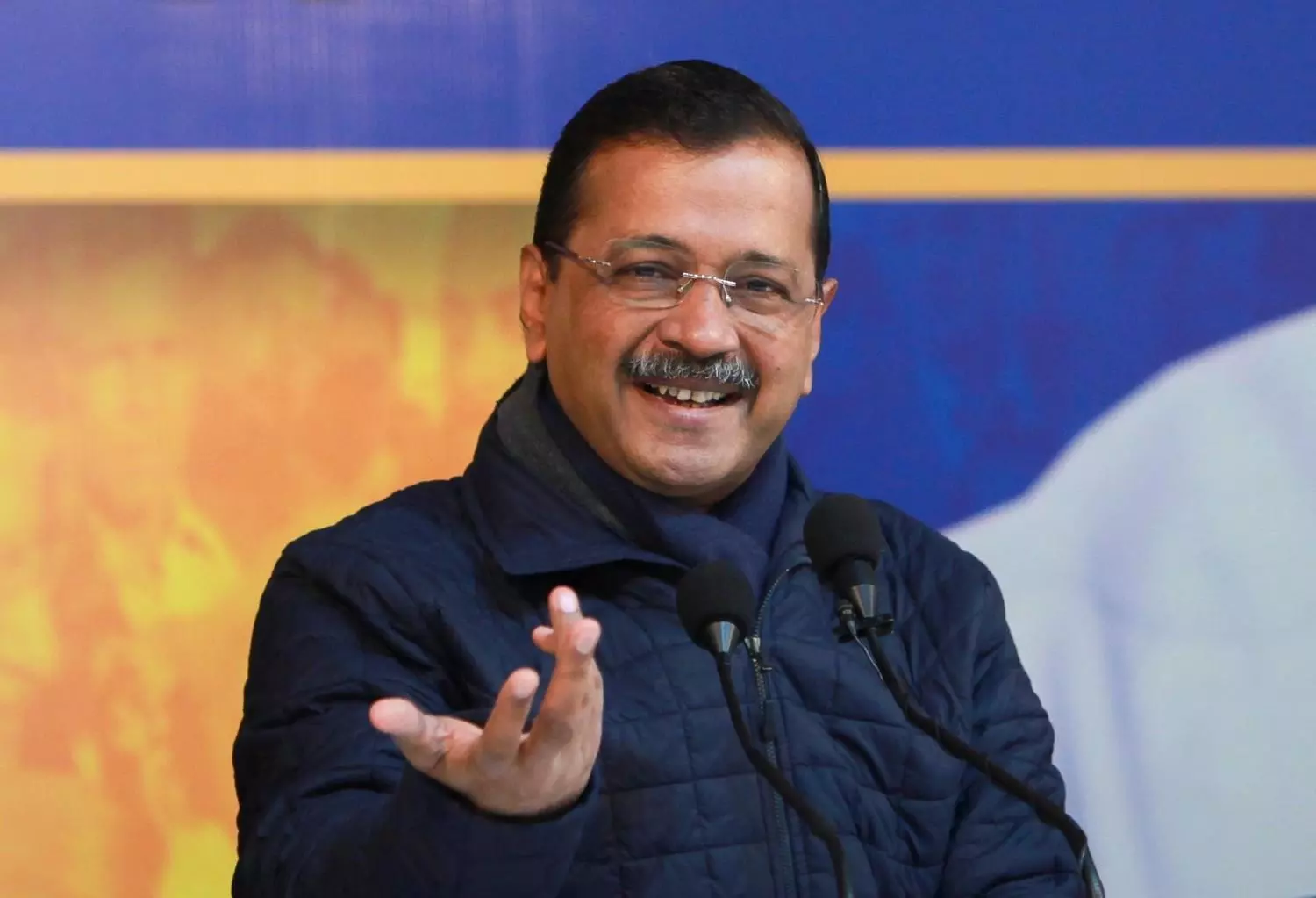
The liquor retail policy, for which charges of corruption were brought against Arvind Kejriwal, is the best the nation’s capital has seen
The Delhi government should revive the liquor policy, even if the election loss on false corruption charges cannot be undone
Discharging all 23 accused in the alleged Delhi liquor policy scam, Special Judge Jitendra Singh pronounced the voluminous charges wholly lacking in merit and internally contradictory, and ordered a departmental inquiry against the CBI investigating officer.
Such an investigation is called for against the prosecutor, who framed the charges, as well. The concocted accusation of corruption had sent the former Delhi chief minister, and his deputy, Manish Sisodia, to jail for long periods: 530 days for Sisodia and 156 days for Kejriwal.
The Delhi government should bring back the liquor policy, even if the election that took place on flawed assumptions of corruption by AAP leaders cannot be undone
This should lead to dismissal of the charges brought by the Enforcement Directorate under the Prevention of Money Laundering Act. If there were no liquor scam, there would be no proceeds of the liquor scam to be laundered, either.
Curious case of Omar Khalid
Student activist Omar Khalid has been in jail for more than five years, on charges that have a high probability of being found specious when a court finally gets around to hearing them. The charges framed against him are under the draconian Unlawful Actviities (Prevention) Act. The courts have so far chosen to give the executive the benefit of the doubt while denying the scholar bail, taking it on trust that the investigative agencies would not trump up such serious charges without sufficient grounds.
Also Read: Naidu and Siddaramaiah: Latest examples of ‘self-acquittal’ by chief ministers
The dismissal of charges against Kejriwal and Sisodia, accompanied by an instruction to hold an inquiry into the conduct of the CBI investigating officer, shows that such trust is wholly misplaced when it comes to the CBI, the Enforcement Directorate, or other investigative agencies controlled by the central government. Bail should be granted to protesters against the Citizenship Amendment Act now languishing in jail for years on end, and their cases should be tried fast. It is not enough for truth to prevail sometimes in the ever after. It must prevail in a timeframe that allows errors to be corrected without permanently damaging those harmed by the errors. This is precisely the goal that the Judiciary exists to subserve.
Caged parrot or master's attack dog?
In 2013, Supreme Court Justice RM Lodha had called the Central Bureau of Investigation a caged parrot. Justice Ujjal Bhuyan recalled that unflattering figure of speech in 2024, when he chided the investigative agency for the needless arrest of Arvind Kejriwal in relation to the alleged liquor policy scam.
Special Judge Jitendra Singh’s verdict makes it clear that the portrayal of the CBI as a parrot, caged or otherwise, is wholly inappropriate. Its master’s attack dog would appear to be a better metaphor. The charges against and arrest of these leaders served to demolish their political USP, of being incorruptible, in the eyes of the public. This worked to the advantage of the BJP in the subsequent Delhi assembly elections.
The dismissal of charges against Kejriwal and Sisodia shows that such trust is wholly misplaced when it comes to the CBI, the Enforcement Directorate, or other investigative agencies
It is not for the Special Judge to pronounce on the political corruption subsisting in the misuse of investigative agencies to harass, arrest and imprison political opponents, in the absence of clear proof of such malpractice. It is for the democratic process to hold the politicians who practise such corruption to account.
Also Read: 5 years without trial: What Umar Khalid’s incarceration tells us about the Republic
For that, We, the People, must be animated by considerations beyond direct benefit transfers to our bank accounts or opportunistic paeans to the glory of our ascriptive identities of caste and community, considerations such as the substantive meaning of democracy, our entitlement to dignity as citizens who are not treated as pliant traders of their right to accountable governance for a few rupees.
SC must step in
A trial court judge cannot take suo motu action against seemingly errant behaviour of lawyers. However, the Supreme Court is fully capable of doing that, empowered as it is by Article 142 of the Constitution, to pass any decree or make any order necessary for doing complete justice in any matter pending before it. When a public prosecutor colludes in the misuse of governmental machinery to discredit and imprison political opponents of the ruling dispensation — collusion is inevitable, if the chargesheet is so flawed as Judge Jitendra Singh pronounces it to be, but the public prosecutor goes ahead with the charges — shouldn’t that dignitary pay a price for failing to do his duty as an officer of the law?
'Liquor retail policy was the best'
The liquor retail policy, for which charges of corruption were brought against Kejriwal and Sisodia, is the best the nation’s capital has seen. It was liberal with retail licences, ensured genuine consumer choice, and made it possible for women to shop for liquor without their morals being judged or their bodily integrity being violated.
The open-handed policy on retail licences increased the number of liquor outlets, reduced crowding, allowed buying liquor to become a normal shopping activity, different from the shame-laced, hurried transaction it used to be, when those jostling for space at the counter discouraged any protracted exercise of choice by those at the front of the queue.
The Delhi government should bring back the liquor policy, even if the election that took place on flawed assumptions of corruption by AAP leaders cannot be undone.
(The Federal seeks to present views and opinions from all sides of the spectrum. The information, ideas or opinions in the articles are of the author and do not necessarily reflect the views of The Federal.)