Delhi University's PG admission row underscores a wider NEP challenge: Flexibility in degree pathways means little without seats, clarity, capacity, recognition
The predicament of nearly 4,000 Delhi University students from the first four-year undergraduate batch, uncertain about admission to the one-year master’s programme, has exposed a problem larger than an admission dispute.
They chose the four-year route believing it would open a defined postgraduate pathway. They have found that eligibility does not guarantee admission and that the next step depends on available seats and selection criteria.
Their experience raises an important national question: Has India introduced flexibility into undergraduate education without building the arrangements that make it meaningful?
The difficulty with flexibility
The four-year undergraduate programme is not a Delhi experiment. It is part of the National Education Policy (NEP) 2020 and the UGC’s Curriculum and Credit Framework for Undergraduate Programmes. Students may leave after three years with a bachelor’s degree or continue for a fourth year to earn an honours or honours-with-research qualification.
Also read: Mickey Mouse degrees: Why India shouldn’t let market decide on humanities
Under the UGC’s 2025 regulations, students completing a four-year honours degree are eligible for a one-year postgraduate programme; those with a three-year degree are eligible for a two-year programme. However, institutions retain the flexibility to decide which postgraduate programmes they offer. That distinction is central to the present difficulty.
There is a sound educational rationale for different routes. One student may need to enter employment after three years; another may want to prepare for research; a third may benefit from an apprenticeship or interdisciplinary study. The fourth year can deepen disciplinary knowledge and develop research skills. Leaving after three years can help students unable to afford another year of fees and living expenses. But flexibility is valuable only if each route leads to a credible qualification and meaningful opportunities.
A vexing question
The question is, therefore, simple. Can flexibility be created simply by announcing multiple exits, credit accumulation and different degree durations? It requires credit recognition across universities, clear admission criteria, adequate seats and faculty, and employer recognition of each award.
The Academic Bank of Credits can record and facilitate credit transfers; it cannot compel a university to accept credits, create a postgraduate seat, or guarantee that every recruiter will treat three-year and four-year degrees alike. A regulatory framework can permit a pathway. It cannot, by itself, make that pathway accessible. Delhi, quite clearly illustrates this gap.
Also read: Watch | IIT-Bombay suicide: Is student pressure being overlooked?
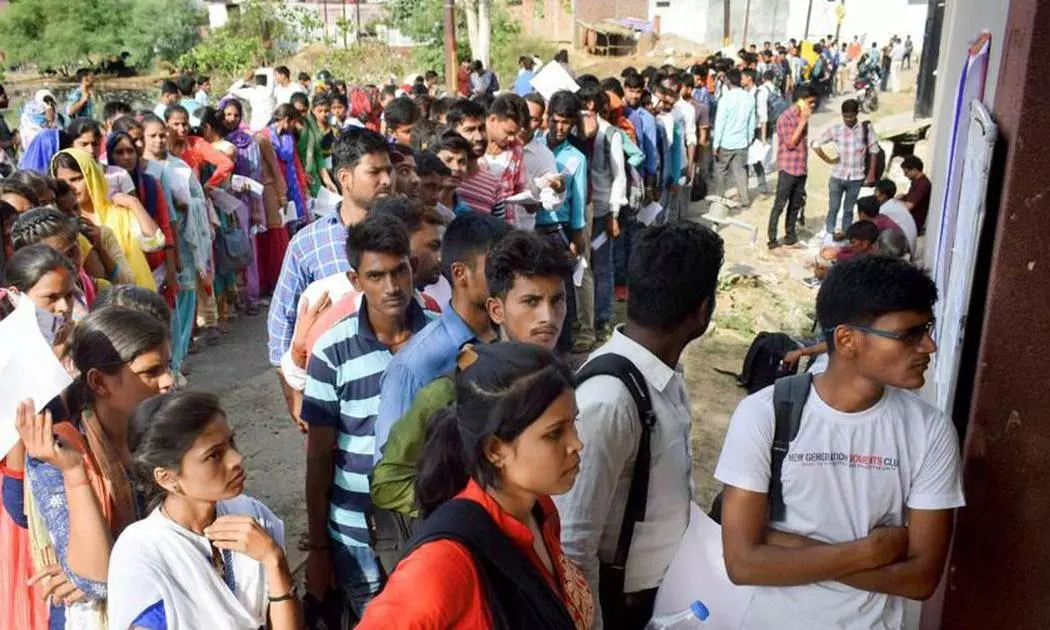
According to reports, around 14,000 students applied for the one-year postgraduate programme, while the university initially offered about 2,500 seats. Students who completed the fourth year also encountered selection criteria that disadvantaged some applicants, particularly those from multidisciplinary programmes. Some say they were unaware of the admission implications when deciding whether to continue.
A communication failure
Delhi University, for its part, says that relevant information had been uploaded well before admissions. This disagreement points to a communication failure: Consequential rules must be clear before students commit to an additional year. The issue is not whether every applicant can be admitted, but whether students could make informed choices about the likely outcomes.
Educationists differ on the design and implementation of the four-year structure. Supporters argue that it allows greater curricular choice, interdisciplinary learning, research preparation and apprenticeships. These are worthwhile aims. Critics, however, question whether universities have the resources and academic preparation to deliver them, and warn that an overloaded curriculum may weaken disciplinary depth.
Also read: Why are Jamia Millia students on an indefinite hunger strike?
There are also concerns about the market-oriented emphasis of some courses and the risk of treating employability as the principal measure of undergraduate education. Which of these possibilities prevails actually depends less on the framework’s stated intentions than on how universities translate it into teaching and learning.
A need for clear direction
Additionally, the question becomes more pertinent because Indian universities lack comparable resources. A well-funded university may offer research supervision, specialised electives, and postgraduate programmes. Many state universities and colleges struggle with vacancies, large classes, limited laboratories, and inadequate libraries. It is foolish to believe that a common curricular framework could ensure a common educational experience.
A fourth year without sufficient faculty, supervision, laboratory access or library resources may add credits without adding learning. Research cannot be created by attaching the word to a degree. It requires supervisors, time, equipment, funding and a culture of inquiry. The curriculum, too, needs scrutiny. Multidisciplinary education can enlarge understanding, but intellectual breadth must rest on adequate knowledge of at least one discipline. A crowded menu of generic, skill-based and value-added courses may leave too little time for sustained reading, method and conceptual development in the major.
Also read: Watch | JNU students end protest: What triggered 17-day hunger strike?
Does an additional year necessarily produce better learning? Only if it deepens disciplinary understanding, strengthens research methods and gives students the time and guidance to pursue substantial academic work. Universities need resources and freedom to design coherent programmes.
Besides, recognition beyond the university is equally important. Employers, public recruitment bodies and postgraduate institutions must clarify how they treat the three-year degree, the four-year honours degree, and the honours-with-research qualification. Students should not discover after graduation that eligibility differs across institutions. Nor should a one-year master’s degree be understood as an assured destination when universities are not obliged to offer it and may have limited capacity. Eligibility to apply is not admission; a formal option is not necessarily an accessible opportunity.
What’s the solution?
The answer, of course, is not to abandon the four-year degree, but to put institutional readiness before expansion. Universities should publish transition and admission rules before students enter a programme, establish transparent credit-transfer arrangements, disclose postgraduate seat availability and assess whether their faculty and infrastructure can support the fourth year. The UGC and governments must monitor these conditions while allowing institutional adaptation. Students caught in the transition need fair, time-bound remedies.
Also read: One in five Indian college students has started a business: IIT survey
What does a degree actually do? It assures students and society of what has been learned and what opportunities a qualification enables. When policy encourages students to invest an additional year, universities and regulators are responsible for making the academic route intelligible and credible.
The fourth year, no doubt, can add value. But choice must be supported by capacity, rules must be understood before decisions are made, and qualifications must carry clear academic and professional recognition. Students should not discover the limits of a national reform only after investing time and money in it.
(The Federal seeks to present views and opinions from all sides of the spectrum. The information, ideas or opinions in the articles are of the author and do not necessarily reflect the views of The Federal.)