The eviction of the 115-year-old icon has little to do with land and everything to do with BJP-RSS project to purge Lutyens' Delhi of its Colonial-era soul
The sword hanging over Delhi’s exclusive Gymkhana Club, populated mostly by Punjabi aristocracy and retired army personnel and bureaucrats, where fancy parties by the legacy rich and nouveau nepos ran late into the night, has finally fallen with an abrupt and curt notice from the Land and Development Office of the Centre, which administers land in the Lutyens' Delhi.
“The land is required to fulfil urgent institutional needs, governance infrastructure and public interest projects, integrated with the resumption of adjoining government lands,” said the order. The deadline for the handover is June 5.
Club under threat since 2014
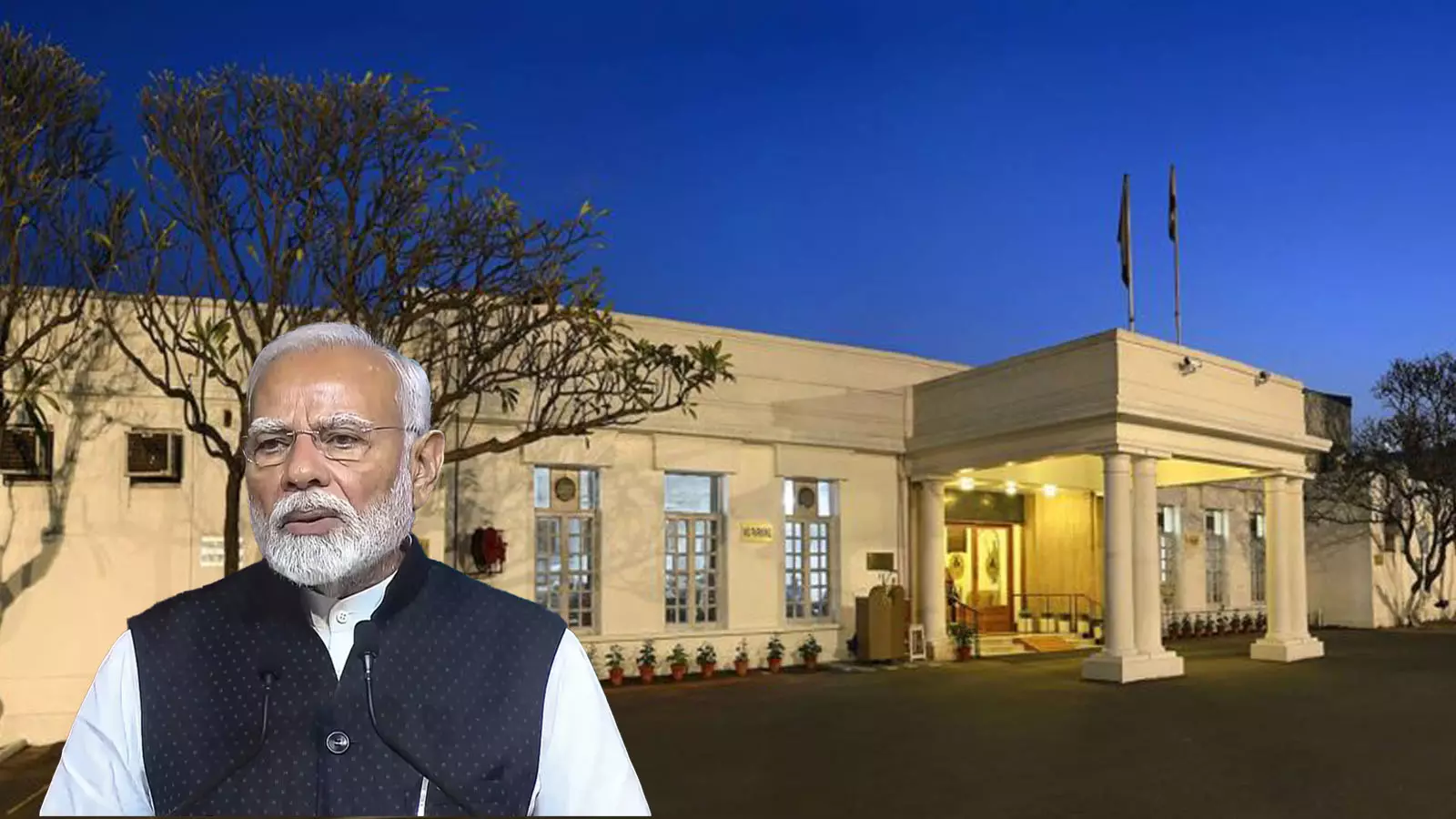
Ever since the BJP came to power in 2014, the club, which is adjacent to the Prime Minister’s house on 7, Race Course Road (now Lok Kalyan Marg), has been under threat. The club is run on eternally leased land (the club disputes this), and so it became easy for the government to claim it back.
It is impossible to understand why a government should spend so much of time and money on vacating a club, but this is all part of the RSS's purification campaign to rid the capital of Islamic and colonial vestiges.
Actually, there is no particular reason for the club to be shut down apart from a known suspicion, hatred and bias of the BJP top-notch and RSS pracharaks' hangers-on, against the English-speaking elite who drink late into the night. It was feared without reason that various conspiracies were hatched here.
Also, the BJP and the RSS have made known their interests in taking over the Lutyens' zone in the capital and reshaping it into an imagined Hindutva capital (maybe like the fabled Indraprastha).
Also read: Beating Retreat 2026 ditches colonial past, takes Swadeshi turn
From 2020 onwards, various attempts were first made just to take over the management of the Gymkhana Club. Allegations of mismanagement were levelled and the committee was taken over by government nominees. But the parties continued, and the ballroom became active during Christmas time.
Many old-timers still went there every day and the tennis and squash courts, which produced many champions over the 115 years of its existence, continued to be active. Finally, the feared bombshell was dropped on Saturday (May 23), even as the government apparatchiks were busy running helter-skelter, fighting the sudden social media deluge of the Cockroach Janta Party.
Axe falls on a metaphorical madrasa
Apparently, there are no small battles any longer, and everything has to be won. The Gymkhana Club was seen as a metaphorical madrasa in the middle of a rising, gleaming Hindutva heartland (new Lutyens Delhi), and the axe fell, albeit a bit delayed.
The ball room. All pix courtesy: Delhi Gymkhana Club website
The only surprising aspect is that the Prime Minister has already moved, fully or partially, to another residence-cum-office in the Seva Teerth complex built by his favourite architect, Bimal Patel, and that was seen as a sign of a second life for Gymkhana.
But that was too much to expect. Though the top BJP leadership 'hated' the club, they visited it occasionally for a meal, according to insiders. That may have been a reconnaissance mission.
Also read: Imperial days to eviction: All you need to know about Delhi's Gymkhana Club
Apart from its many fabled heritage bungalows, the Gymkhana Club has among the few remaining lawn tennis courts in Delhi and maybe in the whole country. The late Khushwant Singh used to play tennis on the courts every day. As if as a last flourish, the Davis Cup tournament between India and Denmark in 2022 was held on its grass courts, sponsored and managed by a well-known BJP insider and former UP bureaucrat, who had educational institution around the capital.
In any case, BJP stalwarts had taken over all sports bodies.
Order leaves members aghast
Members of the club are fuming at the sheer needless, nonsensical nature of the order, reeking of vendetta against a class of people and the government's continuing action against imagined and perceived enemies.
The club's library.
“For many elderly people who spent all their lives here, it has become a home — it's like a temple,” said A S Dulat, ex-RAW chief and a former president of the club. “If you send the Delhi gymkhana elsewhere, it will not remain the Delhi gymkhana.”
The current office bearers are all nominees of the government. Senior members of the club pointed out that the government order was not tenable since the club had paid for the land a long time back.
“This is not a normal lease— it was made because at that time, there was no provision for an ownership document. Technically, we are owners of this land,” a senior member of the club was quoted as saying in the Hindustan Times.
Also read: Architecture as Modi's political assertion in remaking of Lutyens' Delhi
The running war of the club with the government had seen the National Company Law Tribunal (NCLT) intervening as if in a major corporate battle, and as if by diktat, found various discrepancies in fund management. All these are unlikely to stand legal scrutiny, according to experts.
Members of the club were fuming at the sheer needless, nonsensical nature of the order, reeking of vendetta against a class of people and the government's continuing action against imagined and perceived enemies.
It is impossible to understand why a government should spend so much time and money on vacating a club as the country battles major issues. But this is all part of the RSS's purification campaign to rid the capital of Islamic and colonial vestiges. And, in the government’s eye, it ranks in equal or more importance than ridding the country of economic problems, such as rising prices and falling rupee.
A club with a rich history
The club, situated on Safdarjung Road, opposite the house where Indira Gandhi was shot dead by her guards, is awash in the history of colonial and post-Independence times. All top leaders and heads of state have visited the club.
Former President Pranab Mukherjee was in attendance during its 100th year celebration in 2013. The discussion that led to the Gandhi-Irwin Pact (1931) was held here. British officers were regular visitors and ballroom dancing was a routine feature captured beautifully by the great photographer, Homai Wyravalla.
But all that cuts no ice with a government that compresses all history and ideas into real estate and measures it in square feet.
Next on line?
It has been feared for sometime that the National Press Club on Raisina Road is next in line. Apart from being the only place in Delhi where the rump of the old liberals and Lefties can hold meetings and press conferences, the new Parliament building is now just across the road.
For a government riding a jingoistic horse, this is reason enough to shut down the last liberals watering hole where political gossip and inside stories blended so well with whiskey and rum.
(The Federal seeks to present views and opinions from all sides of the spectrum. The information, ideas or opinions in the articles are of the author and do not necessarily reflect the views of The Federal.)