Nana Patekar obit: How the actor showed us what Indian temper looks like when it has nowhere to go
For much of his career, Patekar, who died on October 8, aged 75, made middle-aged men, the ones with grievances and a case to make, impossible to ignore.

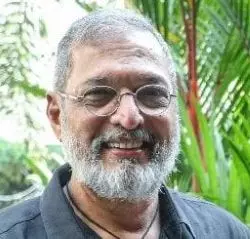
Nana Patekar died in Goa on October 8. Photo: Wikipedia
Nana Patekar was the kind of actor who never needed to raise his voice to frighten viewers. That was the trick, and the trouble of him: the feeling in every scene that something in the man was about to give and that he was choosing, with enormous effort, not to let it.
For over three decades, the actor — who died on October 8, aged 75 — was Hindi cinema's pressure gauge, a performer who showed us what the Indian temper looks like when it has nowhere to go. Patekar played anger as a condition, something a man lives in like a rented room, with the rent due every month. We recognised it because most of the country was paying it too.
The sound of him
Patekar had a rough, rasping voice that belonged to no one else in Hindi cinema. The leading men of the late ‘80s had deep, polished voices that filled a hall. His was gravelly and clipped, a voice from the ration queue and the local train, a sound that remains unmistakable to this day.
He trained as a painter at the JJ School of Art and came to acting through Marathi theatre. After debuting with Gaman (1978), the actor spent the next decade doing small parts, among them the drug dealer Baba in Mira Nair's Salaam Bombay! (1988). Then came Vidhu Vinod Chopra's Parinda (1989). As the gangster Anna Seth, Patekar found the menace in stillness. He won a National Award for the film and the Hindi film villain, until then a loud man in a loud room, had to learn restraint.
Also read: In death, bestselling author Jeffrey Archer leaves ‘biggest market’ India bereft
The delivery did half the work. He spoke in short, low bursts and let a single word spike before dropping his voice again. He held pauses a beat longer than anyone dared, so the next line hit harder, and he gave his dialogue none of the swagger Hindi cinema expected from a hero's one-liner.
In Krantiveer (1994), the long angry speech, a staple of the angry-young-man tradition, turns in his hands into a list of charges against the country. In Yeshwant (1997), his speech about a mosquito became one of the most quoted pieces of dialogue in Hindi cinema.
Nana Patekar receiving the Padma Shri in 2013 from then President, Pranab Mukherjee. Photo: Wikipedia
Then Sanjay Leela Bhansali's Khamoshi: The Musical (1996) took the voice away. Cast as Joseph, a deaf-mute father, Patekar spoke no lines and the temper that defined him was softened. It remains one of the gentlest performances of his career and the clearest evidence of how much of his intensity was about control.
Dedication to craft
Prahaar (1991), the film he acted in, co-wrote and directed, perhaps best reveals his dedication to his craft. The film follows Major Chauhan, an army officer who runs a gruelling commando training centre and turns vigilante after a former trainee is killed by the gangsters extorting his family's bakery. It was nominated for Best Story at the Filmfare Awards and has been counted among the notable films of its year, with Madhuri Dixit and Dimple Kapadia as co-actors. Patekar had trained for it as well. In an appearance on the Amitabh Bachchan-hosted Kaun Banega Crorepati, the actor had said that he spent nearly three years with the Maratha Light Infantry.
Still, nothing fixed his image like Sadhu Agashe in Ab Tak Chhappan (2004). Ram Gopal Varma, who had worked with Patekar on Bhoot (2003), produced the film that marked Shimit Amin’s directorial debut. In Ab Tak Chappan, Sadhu is a Mumbai encounter specialist with 56 kills behind him, a man who threatens gangsters over the phone while driving his wife to work and plants evidence without a flicker of doubt. Varma later said the film couldn't have been made without Patekar. The film's cold, procedural style asked for an actor who could play moral exhaustion as a day job and that was what Patekar brought to the film.
The role shows his sharpest insight into authority: that it wears out. Patekar's Sadhu is a man worn down by what he does for a living and that weariness is the horror of the film. In that sense, a long line of rumpled, compromised cops in Hindi cinema descends from him.
Over the years, Hindi cinema has had little room for the Marathi middle class: the clerk, the chawl resident, the man with strong opinions and no power. Patekar gave him a face and a voice and carried him into cinemas across the country. He kept returning to Marathi films in between.
In later years, the temper became a punchline. As Uday Shetty, the soft-hearted don of Welcome (2007) and Welcome Back (2015), he played a gangster whose life's ambition was to get his sister married, and audiences loved him for it. Purists winced. It is one of the oddities of a long career that the face which once scared a generation ended up making that same generation laugh.
In that sense, his place in Hindi cinema is hard to file. He was never the hero, never only the villain, never the kind of star an industry builds its posters around and yet for three decades the films he was in bent toward him.
Also read: Shakuntalabai Nagarkar obit: Why death of award-winning Lavani artiste marks end of an era
The angry young man of the ‘70s exploded on the country's behalf. Patekar arrived when that explosion had settled into habit and showed what the anger looks like years later: older, sourer, with a job to hold down and a family to feed. Hindi cinema had spent decades making its stars glow. Patekar made middle-aged men, the ones with grievances and a case to make, impossible to ignore.
The other ledger
A fair account of Patekar has to carry a second ledger. In 2008, actress Tanushree Dutta accused him of sexually harassing her on the sets of a film. She filed a complaint with the Cine & TV Artists Association that March; allegedly no action was taken. She repeated the allegation against Patekar in a 2013 interview and again in 2018. Her account is widely credited with bringing ‘#Me Too’ to Bollywood. Patekar denied the allegation. He lost Housefull 4 in the fallout but was back at work soon after.
It is uncomfortable to hold this next to the work. The films will keep being watched and the allegation will keep sitting beside them. That, too, is the trouble of Nana Patekar.