Why India’s first Rare Earth Corridor begins in the South
From Kerala and TN's mineral sands to AP's deep reserves and Odisha’s processing hubs, the South hosts the backbone of India’s rare earth ecosystem, says expert

With the Union Budget 2026 announcing a Rare Earth Corridor, attention has turned to India’s southern and eastern coastlines, where most of the country’s mineral sands, processing units, and public-sector expertise are already concentrated.
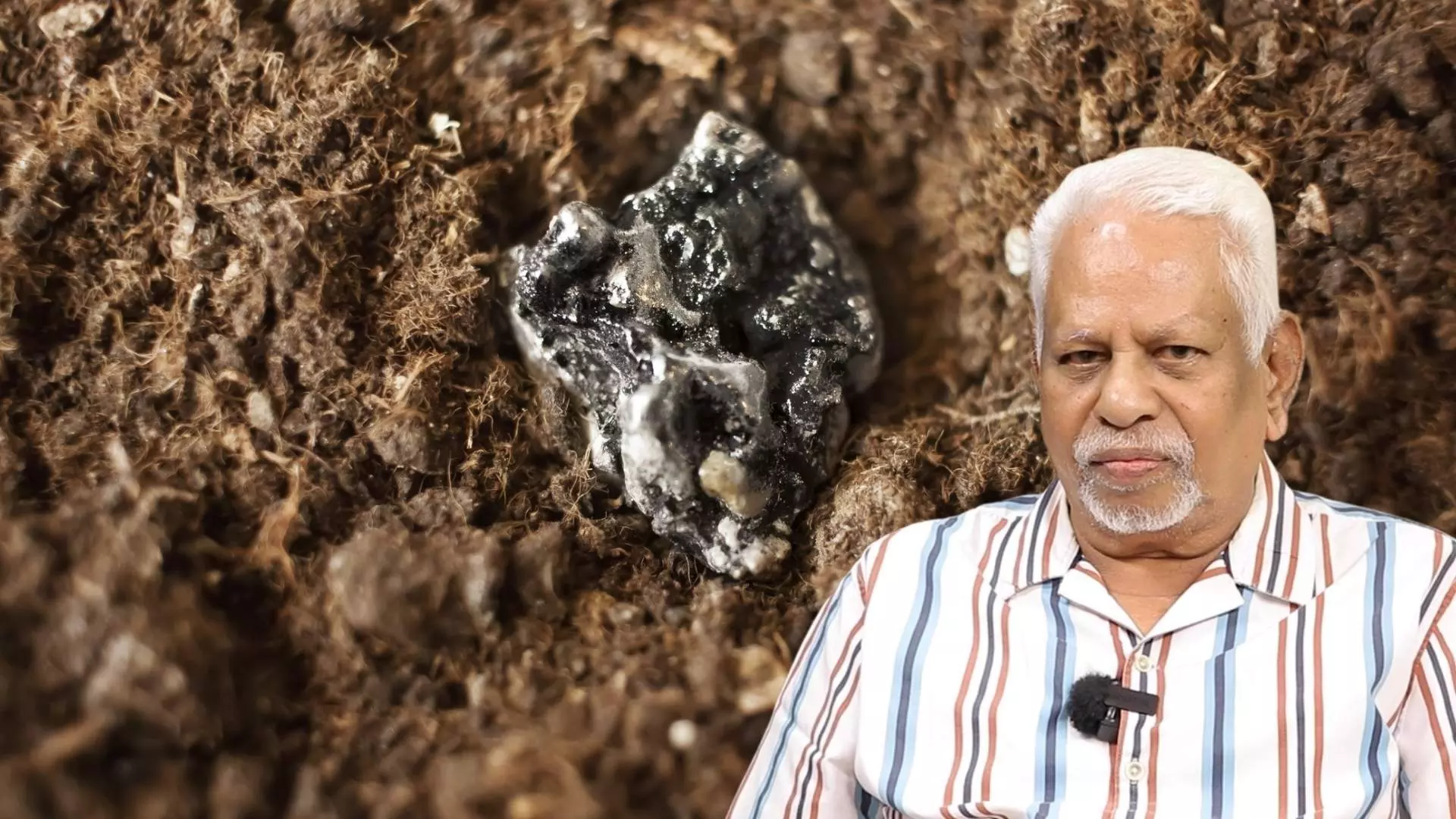
The Federal spoke with researcher TR Govindarajan to understand what rare earths are, why the South sits at the heart of this strategy, how India lost time in processing technology, and what challenges lie ahead as the country attempts to scale up.
“India has rare earths in plenty, but we failed for decades to master the most critical part — separating and processing them — while China spent 20 years perfecting it,” Govindarajan said.
Edited excerpts from the interview:
What exactly is the Rare Earth Corridor announced in the Budget? Why does it matter now?
When the Union Budget 2026 announced a Rare Earth Corridor, it sounded like a broad national policy move. But its real footprint lies along India’s southern and eastern coastlines.
The corridor is meant to connect mining, processing, research, manufacturing, and port-led exports into one integrated ecosystem. Rare earths are critical for modern life — electric vehicles, wind turbines, smartphones, defence systems, and clean energy technologies all depend on them.
Globally, rare earth processing is dominated by China. India has the resources, but we are still building scale and value addition. This corridor is an attempt to bridge that gap.
What are rare earth elements, and why are they so strategically important?
Rare earth elements power almost all modern technologies. They are essential for high-end electronics, defence equipment, clean energy systems, and advanced instrumentation.
The irony is that rare earths are not actually rare in availability. They are available in plenty, even in India. The real challenge is that they exist in compounds and oxides, which makes separating individual elements extremely difficult. That separation technology is where the real value lies, and that is where countries either succeed or fail strategically.
How significant are India’s rare earth reserves compared to the rest of the world?
According to the Geological Survey of India, the country has identified 482.6 million tonnes of rare earth ore resources. This is a substantial strategic reserve.
Nearly 8% of India’s coastline — especially in Andhra Pradesh, Tamil Nadu, and Kerala — contains rare earth-bearing sands. These sands exist mainly as oxides, which means extracting usable elements like neodymium from neodymium oxide is a complex process.
So availability is not the problem. Processing capability has been.
Why does southern India sit at the centre of India’s rare earth story?
The geography explains it clearly. Andhra Pradesh holds the largest reserves, with 24 identified deposit sites. Odisha has 12 sites and hosts major processing facilities.
Kerala and Tamil Nadu together have nearly 40 sites, largely along their coastlines. These coastal sands contain monazite, a mineral critical for rare earths and atomic energy.
Historically and even today, India’s rare earth ecosystem has been deeply rooted in the South.
If India has had these resources for decades, what went wrong?
The rare part is not availability, but separation. Rare earths exist in compounds, and extracting individual elements from them is extremely difficult.
Unfortunately, in India, there was no serious focus on separation technology when it became important. China, on the other hand, invested consistently for 20 years and became the global leader in processing and converting rare earths into magnets.
These magnets are used in all modern electrical and electronic projects and high-end instrumentation. China mastered that full value chain early.
In India, attempts have started only recently. As usual, it is a bit late, but we have no choice. We have to do it.
How did India’s public sector role in rare earths evolve over time?
IREL (India) Limited, formerly Indian Rare Earths Limited, was incorporated in 1950. Its first rare earths division was set up at Aluva in Kerala.
By 1963, it became a Government of India undertaking under the Department of Atomic Energy, taking over key southern operations like Chavara in Kerala and Manavalakurichi in Tamil Nadu. These sites became central to mining and separating atomic and rare earth minerals.
In 1986, IREL expanded eastward with the Orissa Sands Complex at Chhatrapur in Odisha.
What processing capacity does India currently have?
Currently, there is a rare earth extraction plant in Odisha producing around 11,000 tonnes of rare earth concentrate. There is also a rare earth refining unit at Aluva, Kerala, producing high-purity rare earth oxides.
India is not starting from scratch. There is existing infrastructure, experience, and institutional memory — especially in the South.
How has India’s capability changed in recent years?
For years, India’s role was limited largely to extraction. That is now changing.
IREL today is a profit-making firm, with its turnover peaking at over ₹20,000 crore in 2023–24. Exports accounted for about ₹9,600 crore.
The company has also set up an in-house R&D division in Kollam, Kerala, and a rare earth metal and titanium theme park in Bhopal. These are signs of movement towards value addition.
What is the next critical step for India in rare earths?
The next stage is converting extracted rare earths into usable products like magnets. If India succeeds in that, it will become far more self-sufficient.
Shifting from raw minerals to refined technology is at the core of what the Rare Earth Corridor promises.
But this transition also brings challenges — environmental safeguards, coastal livelihoods, and transparency cannot be ignored.
What concerns must be addressed as the corridor expands?
It is very important that strategic minerals do not come at the cost of local communities.
The benefits must go to the regions where the sand is available — parts of Andhra Pradesh, Tamil Nadu, Kerala, and also Bengal. These states should see substantial benefits because they are the source.
This is a very crucial aspect that we have to be careful about as India scales up its rare earth ambitions.
So what does the Rare Earth Corridor ultimately represent?
The Rare Earth Corridor announced in Budget 2026 is not just a new project.
India’s southern coastline has carried the weight of the country’s rare earth ambitions for decades. What is needed now is to convert that long public-sector research and resource base into industrial-scale capability.
The content above has been transcribed from video using a fine-tuned AI model. To ensure accuracy, quality, and editorial integrity, we employ a Human-In-The-Loop (HITL) process. While AI assists in creating the initial draft, our experienced editorial team carefully reviews, edits, and refines the content before publication. At The Federal, we combine the efficiency of AI with the expertise of human editors to deliver reliable and insightful journalism.