


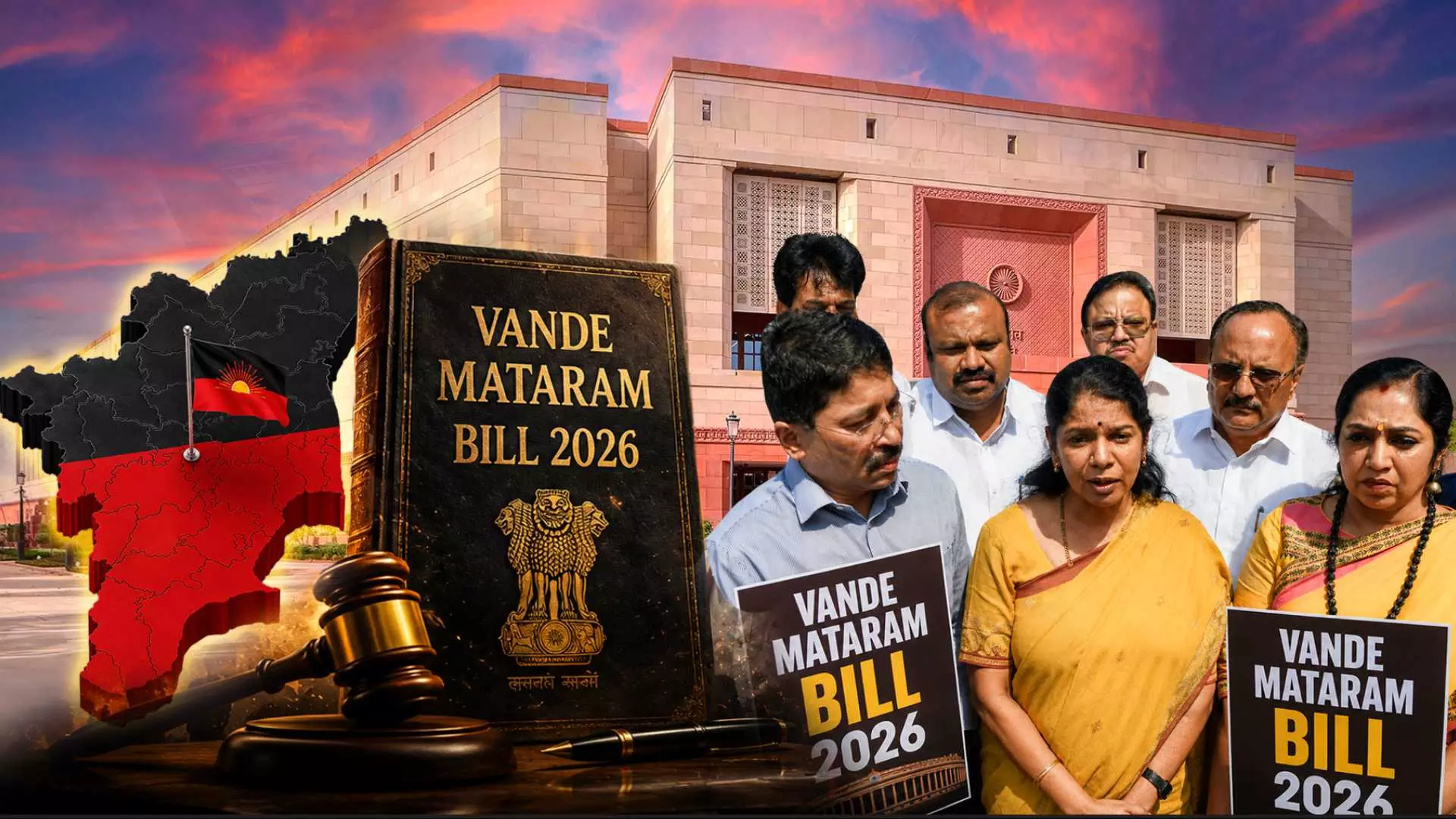
Vande Mataram Bill 2026: DMK opposes, calls it 'joke, fraud and foul play'
Parliament passes the Vande Mataram Bill 2026 amid Opposition walkouts, sparking intense debate over federal rights and Tamil identity. What comes next?

Parliament has passed the Prevention of Insults to National Honour (Amendment) Bill 2026, granting the national song Vande Mataram the same legal status and statutory protection as the national anthem. The Lok Sabha cleared the legislation following its approval in the Rajya Sabha, despite Opposition protests and walkouts. The Bill now awaits presidential assent to be enacted into law.
Under the amended provisions, any intentional disruption, obstruction, or disrespect directed towards the national song constitutes a criminal offence. Individuals found guilty of violating the law face penalties of up to three years in prison, a fine, or both. This legislative effort traces back to a Union Home Ministry directive mandating that all six stanzas of Vande Mataram be rendered prior to the national anthem at official events.
Also read: How Kharge's Manusmriti citation turned into a 20-min Rajya Sabha storm
Central policy directives mandating full renditions of the song triggered intense debate across both Houses of Parliament. Representatives from the Dravida Munnetra Kazhagam (DMK) voiced strong objections during legislative proceedings, opposing the compulsory singing of all stanzas.
'Bill is a joke, fraud and foul play'
During the debate in Lok Sabha, DMK MP A Raja expressed firm opposition to the legislation, characterising the objectives of the bill as misleading.
"I have carefully gone through the reasons and objects of the Bill. It is nothing but a joke, fraud and foul play," said Raja in Lok Sabha.
The DMK’s ideological resistance relies on a long-standing emphasis on regional autonomy, constitutional secularism, and Tamil linguistic identity.
Tracing its stance back to 20th-century anti-Hindi agitations, the party criticises national mandates enforcing heavily Sanskritised texts as an imposition of cultural hegemony. Because the song originates from Bankim Chandra Chattopadhyay’s 1882 novel Anandamath and personifies the nation as a Hindu deity, leaders argue that compulsory participation infringes upon secular guarantees.
Protocol shifts questioned
This statutory shift directly affects protocols governing Tamil Nadu's state invocation, Tamil Thai Vazhthu. Composed in 1891 by Manonmaniam Sundaram Pillai, the song was designated as the official state prayer in 1970 by former Chief Minister M Karunanidhi and formally declared the state song in 2021 by Chief Minister MK Stalin. Established regional protocol dictated that public ceremonies open with Tamil Thai Vazhthu and conclude with the national anthem.
Following the new federal guidelines, official functions and academic convocations began prioritising Vande Mataram, followed by Jana Gana Mana, placing the regional anthem in the third position. DMK representatives criticised this altered ordering, viewing the altered sequence as a deliberate effort to diminish Tamil identity.
Cultural identity contested
Speaking in Lok Sabha, DMK MP Kanimozhi strongly criticised the central mandate for overriding established regional customs.
"In Tamil Nadu, we have a state song for over five decades. We've been giving that the first place. You are disrespecting the Tamil people by bringing this Bill. This goes against—this is an insult to Tamil Nadu and many states, which have their own song. Why are you dividing this country? You are calling anybody who opposes you anti-national. This government is anti-national. It is dividing this country by imposing this song on the people of this nation," stated Kanimozhi.
Lawmakers representing the Congress, Trinamool Congress (TMC), DMK, and the Left Front staged a walkout during the final vote. Several parliamentarians questioned the necessity of criminalising disrespect, maintaining that national respect cannot be legally coerced.