







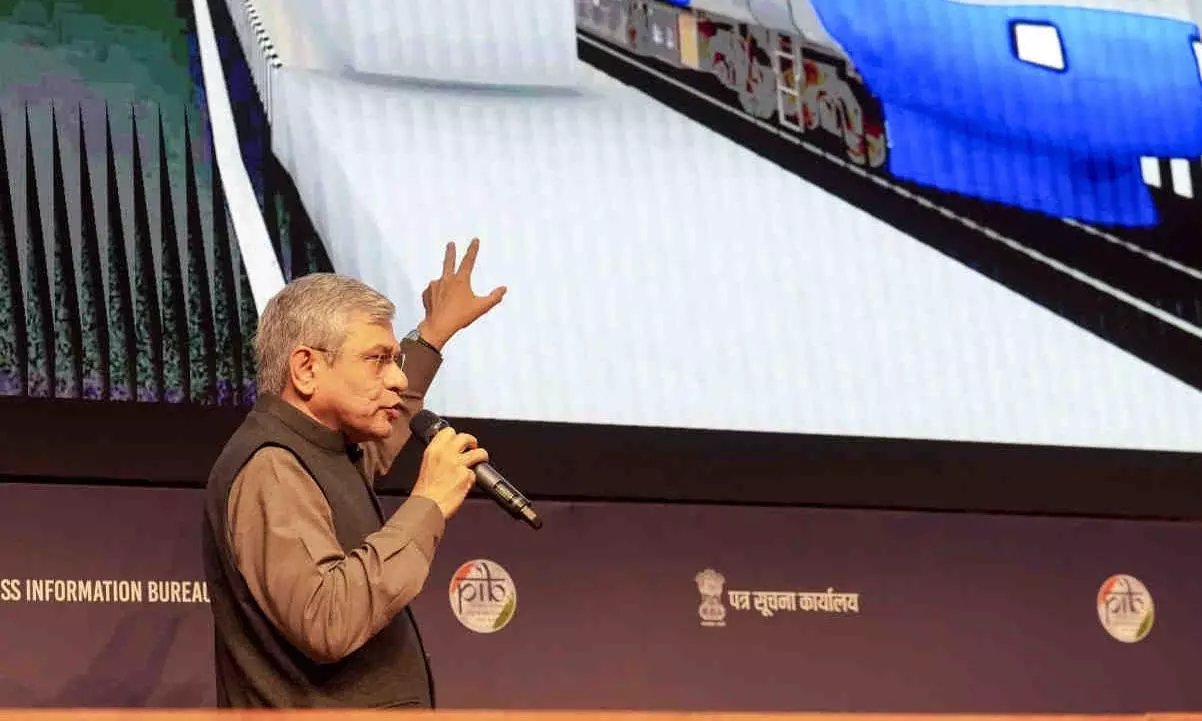
Union Minister for Railways briefing the media in New Delhi on Saturday (February 14). Photo: PTI
Vaishnaw unveils ‘52 reforms in 52 weeks’ plan for Railways this year
National transporter to focus on data-driven freight operations and enhanced passenger services, including catering, sanitation, and overall journey comfort

The Indian Railways is set for a year of sweeping reforms in 2026, with the government unveiling an ambitious roadmap aimed at modernising passenger services, strengthening freight operations, and raising cleanliness standards across the network.
Announcing the plan on Saturday (February 14), Railway Minister Ashwini Vaishnaw said the transporter has achieved a major global milestone, emerging as the world’s second-largest cargo carrier. Building on that momentum, the ministry has drawn up what it calls “52 reforms in 52 weeks” for 2026, signalling a structured and time-bound transformation agenda.
Cleanliness overhaul
The first set of reforms will focus on improving the passenger experience, particularly on-board services. The ministry plans to enhance catering, housekeeping, and overall journey comfort, while standardising service benchmarks. A key pillar of this push is a comprehensive sanitation drive to ensure “end-to-end cleaning” of trains and stations.
Also Read: Budget 2026: Rail traffic stalls, congestion remains acute, debt burden mounts
Officials said the cleanliness overhaul will be implemented in phases over three years, covering the entire fleet and station network. The blueprint aims to bring hygiene standards in line with global best practices and institutionalise the concept of clean rail stations nationwide.
Tech-driven freight operations
Freight operations will form the second major thrust area. The government will intensify efforts under the “Gati Shakti” cargo framework to streamline goods movement and reinforce India’s supply chain. The focus will be on improving turnaround times, boosting multimodal connectivity, and leveraging data-driven logistics planning.
Also Read: Scrapping of Rail Budget: The original sin behind India’s railway crisis
To ensure accountability, the ministry will introduce clearly-defined service level agreements and performance-linked contracts. Extensive use of digital tools is planned to monitor progress in real time, marking a shift towards technology-driven management.