







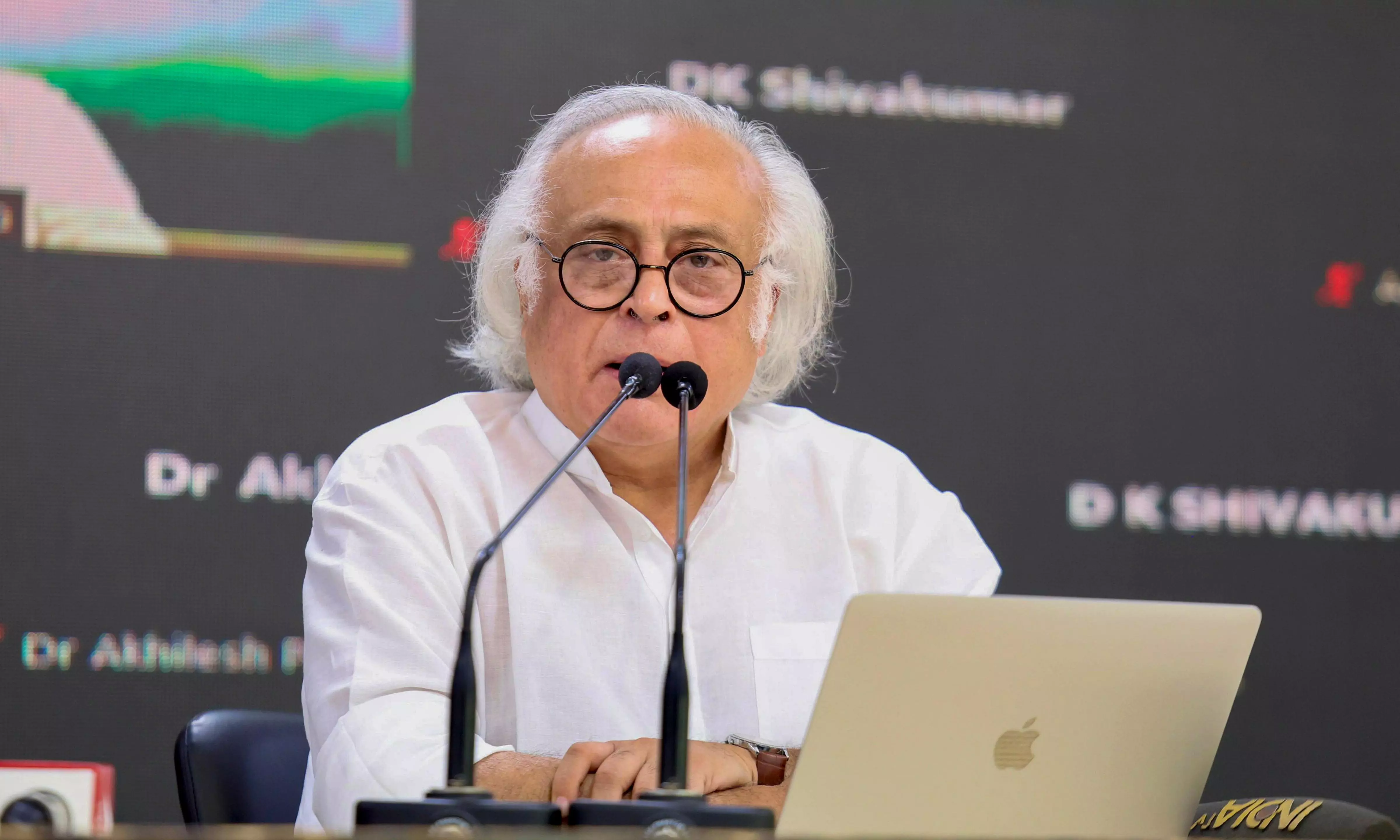
Budget 2026: Congress hopes for ‘meaningful steps’ to address economic challenges
Jairam Ramesh says higher GDP is not sustainable without addressing slow private investment and income disparity

The Congress on Monday (January 12) hoped that the Union Budget 2026 will prioritize addressing the challenges of slow private corporate investment and disparities in income as higher GDP growth rates in actuality will simply not be sustainable.
Congress general secretary in-charge of communications Jairam Ramesh said household savings rates have declined considerably, and wealth, income, and consumption inequalities continue to deepen.
Ramesh said if in the forthcoming Union Budget, which will be presented in 20 days from now, the government would come out of the comfort zone of statistical illusions, acknowledge the realities and challenges, and takes meaningful steps to resolve them.
Also read: GDP growth projected at 7.4 per cent in FY26 on services, manufacturing boost
"It will no doubt reflect the recommendations of the 16th Finance Commission that had submitted its report on November 17, 2025. These recommendations, covering the period 2026/27- 2031/32, relate to the sharing of tax revenues between the Centre and States and the distribution of these revenues among the States themselves," he said in a post on X.
The states, already deeply concerned by the new 60:40 cost-sharing formula in the law that bulldozed away MGNREGA, will certainly be keeping their fingers even more crossed than ever, Ramesh said.
Three main economic challenges
"The economy faces many challenges. Three stand out. First, rates of private corporate investment remain markedly sluggish — tax cuts and healthy profits notwithstanding. Second, household savings rates have declined considerably, constraining investment capacity. Third, wealth, income, and consumption inequalities continue to deepen," he said.
Also read: Tax burden will ease further as India’s economy becomes stronger: PM Modi
"It remains to be seen if the forthcoming Budget boldly comes out of the comfort zone of statistical illusions, acknowledges these realities and challenges, and takes meaningful steps to deal with them," Ramesh said.
Higher GDP growth rates in actuality, so very essential for vastly expanded job creation, will simply not be sustainable unless these steps are taken now, he said.
Budget session
The Budget session of Parliament will be held from January 28 to April 2 The session begins with the address of President Droupadi Murmu to the joint session of the Lok Sabha and the Rajya Sabha in the Lok Sabha chamber.
Finance Minister Nirmala Sitharaman will table the Economic Survey and present the general Budget.
Also read: Unprecedented certainty in India amid great global uncertainty: Modi
Parliamentary Affairs Minister Kiren Rijiju has not shared details on the date of the presentation of the Budget. February 1, which has been fixed as the Budget Day, falls on a Sunday this year.
Parliament will be in recess from February 13 till March 9.
(With agency inputs)