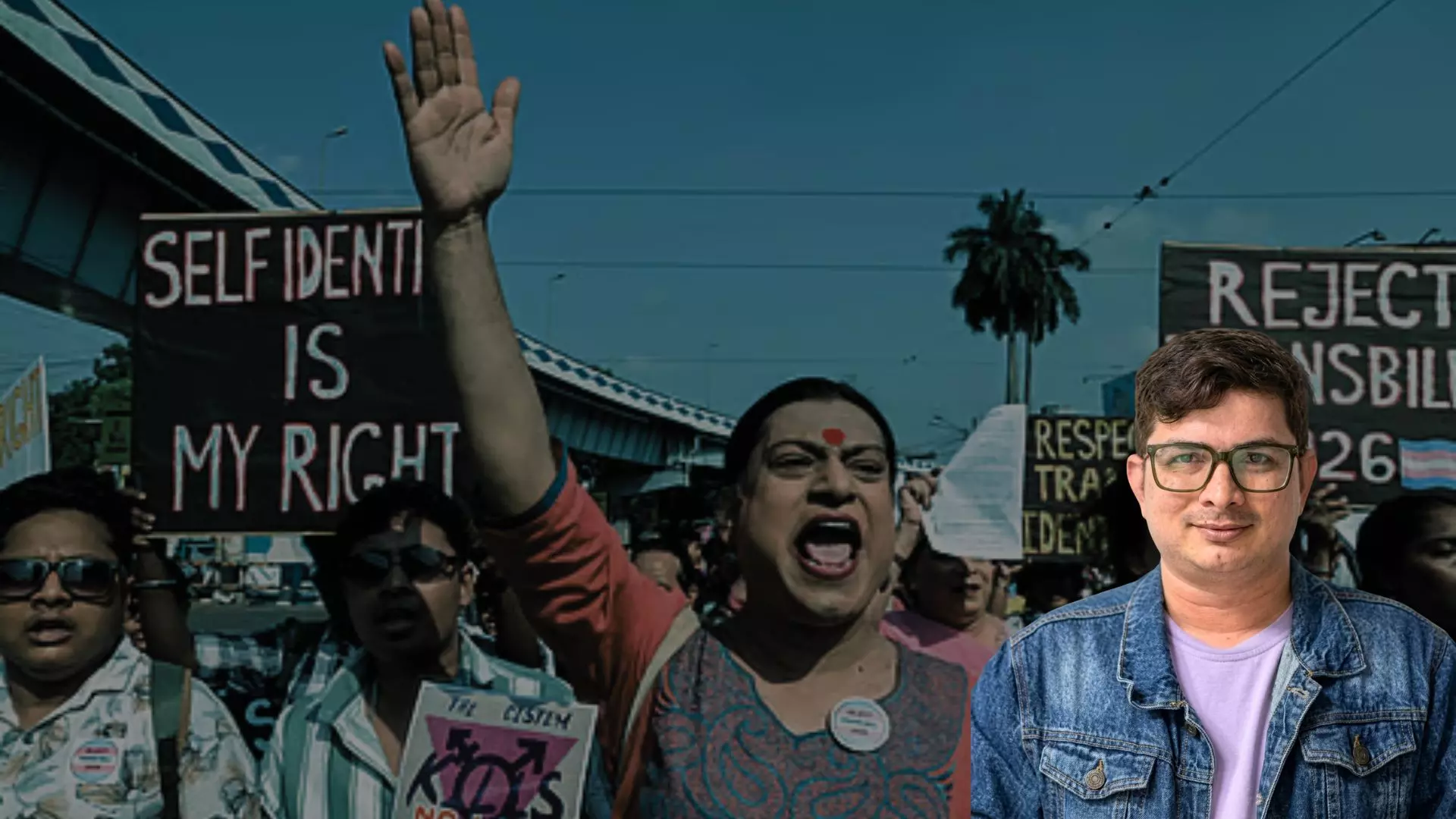
Trans activist speaks against controversial bill
Transgender Amendment Bill: Patruni Chidananda Sastry on implications and way forward
Hyderabad-based drag artist Patruni Chidananda Sastry, popularly known as Sas Who Maa, warns of rights rollback, lack of consultation, and threats to dignity under the new amendment

“This bill comes from a place of mansplaining, not from what the community actually needs,” says Hyderabad-based drag artist Patruni Chidananda Sastry, popularly known as Sas Who Ma, sharply criticising the Transgender Persons Amendment Bill 2026 and calling it a direct rollback of rights. The legislation, projected by the government as progressive, has triggered deep concern among trans and non-binary communities over identity, dignity, and access to basic rights. The Federal spoke to Chidananda Sastry, who is also a performance storyteller, and LGBTQIA+ activist, about the implications of the bill and the path forward.
Can you briefly explain the LGBTQIA+ spectrum and why awareness is important?
I would put the LGBTQIA+ spectrum into two buckets. L, G, and B relate to sexuality, while T relates to gender. L stands for lesbian — a cis woman attracted to another cis woman. Gay refers to two men or people with masculine identities in a romantic relationship. Bisexual people are attracted to multiple genders irrespective of masculinity or femininity.
Transgender refers to gender identity. It describes someone whose assigned sex at birth does not align with their internal sense of self. Some may undergo surgeries, while others express their gender through clothing or other affirmations.
Sexuality is about who you are attracted to; gender is about who you are. These are very different orientations, and awareness is crucial to understanding that distinction.”
Why is there strong resistance to the bill despite it being called progressive?
As of now, the government is listening to its own drum rolls and calling this progressive. But there was no consultation, no conversation with the LGBTQIA+ community, and no representation. It’s like asking for one thing and being handed something entirely different. The bill reflects their perspective, not our needs.
Earlier, the transgender umbrella included trans women, trans men, gender queer, non-binary individuals, and socio-cultural groups like Hijra, Kothi, and others. Anyone who self-identified as trans was recognised.
Now, the bill restricts that umbrella to a few socio-economic categories, excluding large sections like trans men and non-binary people. That strips away rights.
Even more troubling, the bill proposes harsher punishment for those supporting trans people — up to 10 years — while crimes like rape against trans persons carry lesser penalties. This shows how deeply flawed and discriminatory the law is.”
What concerns do you have about the role of medical boards in certifying identity?
The idea of medical boards is extremely problematic. Even now, getting a transgender certificate can take six to seven months due to bureaucracy.
Now imagine being forced to appear before a medical board, possibly having to strip and prove your identity. That is invasive, humiliating, and traumatic.
There are also risks of harassment or abuse. Who oversees these boards? What happens if they misuse power?
This system polices our bodies and creates endless loops without accountability. It denies us dignity and access rather than providing support.”
How does this affect the lived realities of trans individuals at the grassroots level?
Gender-affirming surgeries are not simple. They depend on age, health conditions like diabetes or HIV, and financial resources. Not everyone can or wants to undergo medical procedures.
Some people come out later in life, when surgery is not even an option. So making surgery a requirement for identity is deeply exclusionary.
It creates pressure and makes life unsafe for many.
People who were already living openly, accessing benefits, and navigating their identities are now at risk of losing that space.
This also affects community workers and NGOs. Anyone supporting trans individuals could now be criminalised.
So yes, the impact is very real — it affects daily life, safety, and survival. We are in panic and pain, unsure of what comes next.”
What would meaningful consultation have looked like?
The government already has structures like the National Portal for Transgender Persons. This bill should have been discussed there first.
Instead, even board members were not informed. When they tried to engage, they were called to Delhi at odd hours and not even properly heard.
There were also calls from panels and opposition leaders to reconsider the bill, but none of that was taken seriously.
Meaningful consultation means involving the community, discussing drafts, using standing committees, and listening to those affected.
This law feels like one-sided mansplaining rather than policymaking.”
How will this bill impact healthcare, employment, and legal access?
In healthcare, organisations that provide hormone therapy, HIV treatment, and transition support will now operate under fear.
They may hesitate to help because the law criminalises ‘influencing’ someone. That creates confusion and fear among providers.
Legally, things become even more complicated. Courts in different states have recognised trans rights differently. For example, some judgments affirm trans women as women.
This bill contradicts those rulings and creates confusion about what rights actually exist.
So overall, access to healthcare, legal clarity, and support systems will all suffer.”
As an artist and activist, how do you plan to respond?
There is fear even for artists now. Anything we express could put us at risk.
But artists also have the power to adapt and resist. Art has survived even in the harshest conditions, including wars and oppressive regimes.
This is a documentary era for us. It’s a time where art must reflect reality and inspire change.
We need to be bold, create hope, and uplift the community. Young people are hurting, and as artists, we must bring them joy and strength, not more pain.
Our role is to inspire action and keep the fight alive.
What does a truly inclusive law look like to you?
The foundation of any law should be self-identification.
A good law is shaped by the people it affects. It should come from dialogue, understanding, and lived experiences.
Right now, it feels like something imposed without asking us what we need.
India once had the potential to be a leader in trans inclusion, but we are moving backwards.
Still, I remain hopeful. Our community has always resisted and survived. We will continue to fight and reclaim our space.”
The content above has been transcribed from video using a fine-tuned AI model. To ensure accuracy, quality, and editorial integrity, we employ a Human-In-The-Loop (HITL) process. While AI assists in creating the initial draft, our experienced editorial team carefully reviews, edits, and refines the content before publication. At The Federal, we combine the efficiency of AI with the expertise of human editors to deliver reliable and insightful journalism.