



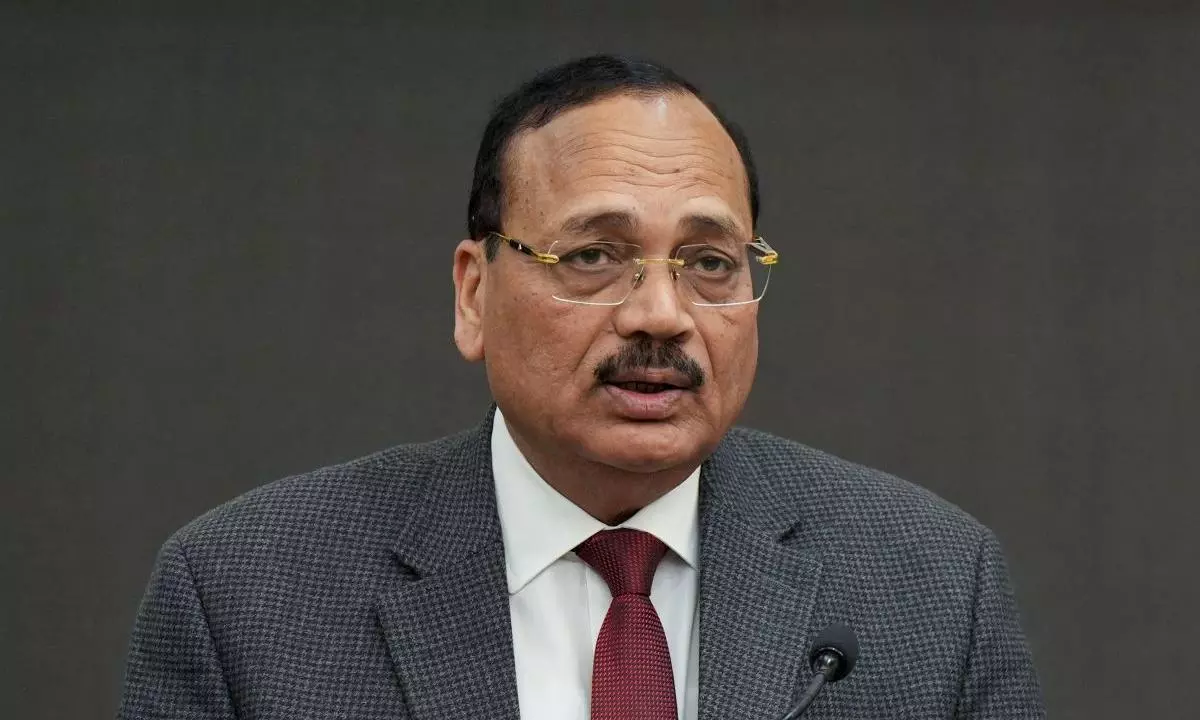
Supreme Court to set up four benches for hearing oldest pending cases: CJI
The Supreme Court will constitute four special benches from July 15 to hear its oldest pending civil and criminal appeals, CJI Surya Kant announced

In a unique initiative, the Supreme Court has decided to constitute four dedicated benches to hear the oldest cases pending before it, marking what Chief Justice of India (CJI) Surya Kant described as an "experiment" aimed at addressing a long-standing imbalance in the Court's listing system.
The initiative, which takes effect from July 15, is intended to ensure that appeals pending for years are heard on priority instead of remaining at the end of an ever-growing roster.
Two benches will exclusively hear the oldest civil appeals, while two others will deal with the oldest criminal appeals. The revelation was made by the CJI in an interview with the Bar and Bench.
Four benches for old cases
Explaining the rationale, the CJI said the Court's pendency figures often create a misleading picture. Of the nearly 93,000 matters shown as pending, around 10,000 are defective cases awaiting compliance by lawyers.
Also Read: Litigant abuses CJI, 'orders' judges, flings case papers in Supreme Court
The effective pendency, he said, stands at about 83,000 matters, with nearly 40-45 per cent comprising admitted civil and criminal appeals, many of which are among the oldest cases before the Court.
Why the change
He said the existing listing pattern gives precedence to fresh matters and post-notice cases, leaving little room for the regular hearing of old appeals.
Also Read: SC junks pleas of 360 Bengal madrassa teachers, staff seeking regularisation
As a result, litigants whose cases have remained pending for eight or 10 years often see newer matters being decided ahead of theirs, added the CJI.
To address this, the dedicated benches will hear cases chronologically. "If the oldest civil appeal is from 2005, it will be listed at serial number 1. Similarly, if the oldest criminal appeal is from 2009, that will be listed first," the CJI said.
Chronological hearing planned
Calling it "probably a first", Justice Kant said the success of the initiative would ultimately determine whether future Chief Justices continue with the model.
"Frankly speaking, I am putting myself to the test. If these benches perform well and the outcome is good, then it will be an attractive incentive for the next Chief Justice of India to continue with the system,” he added.
Also Read: SC says citizenship must be determined fairly, sets aside Assam Foreigner Tribunal orders
He said the decision was based on months of studying disposal trends and listing patterns with the Registry. Although the proposal was his own, he said all judges extended their support and "any new suggestion for the system's betterment is received positively."
CJI on judicial role
Responding to a recent courtroom incident in which a litigant uttered abusive words about him before being let off by a vacation bench, the CJI said judges must develop the ability to rise above such episodes. "I really don't take these things seriously. I treat them like children behaving emotionally. Sometimes children burst out and we react as parents do," he said.
Using a Hindi expression, he added, "Bachche hain. Bachchon ki baatein hain." He said judicial training equips judges to remain unaffected by emotional outbursts in court, observing that allowing such incidents to influence daily functioning would make it difficult to discharge judicial responsibilities impartially.
Justice Kant also said that while courts are guided by law, judges cannot remain indifferent to the hardships faced by litigants. "We are also touched by their difficulties... After all, we are also human beings," he said, adding that "equity should always work hand in hand with the law."