



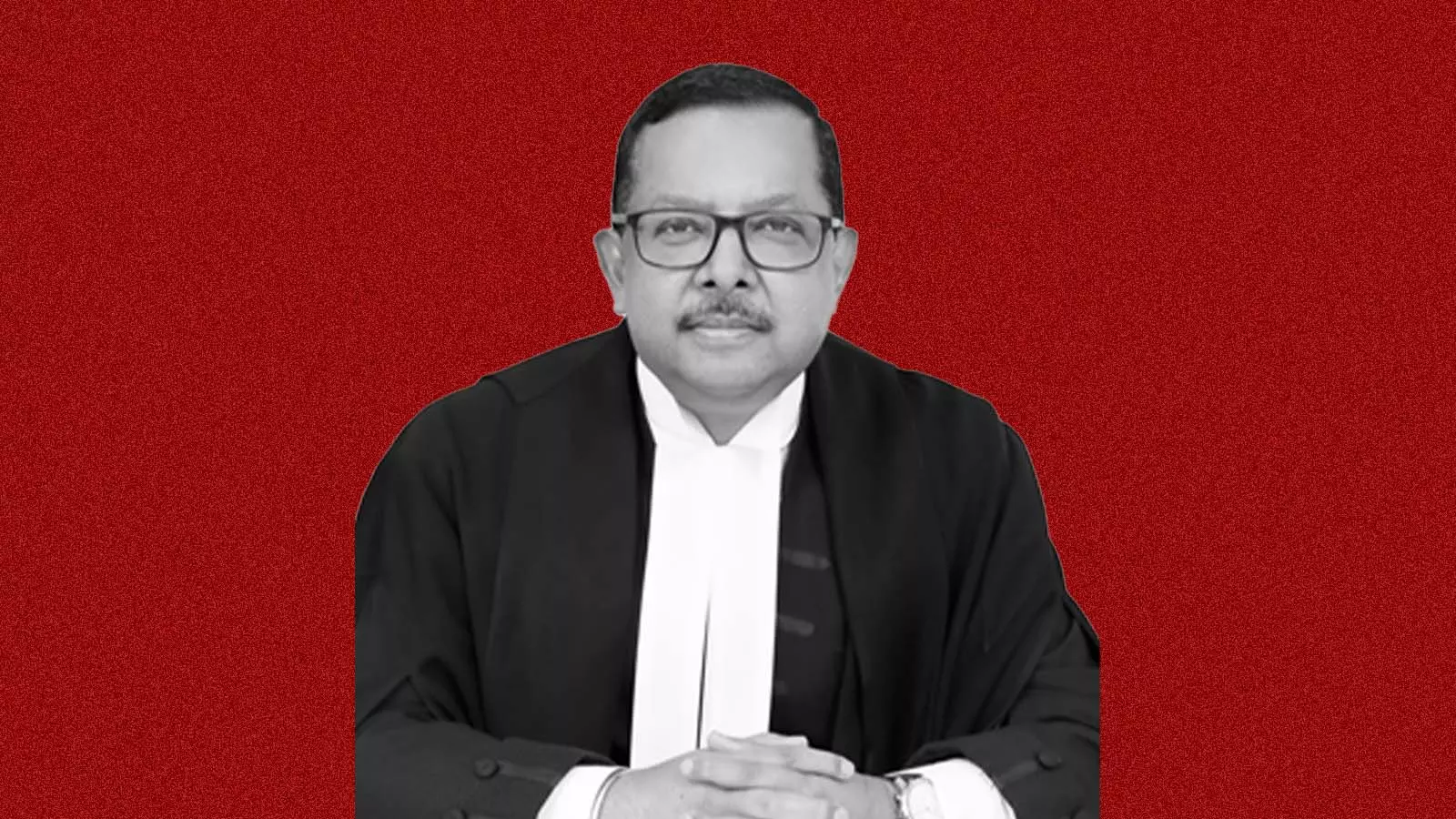
Justice Bhuyan flags 'overuse' of UAPA, less women representation in higher judiciary
The senior judge said in developed countries, there should be more room for debate and dissent, and the SC must be a rainbow institution with gender parity

Criminalising dissent and resorting to indiscriminate arrests under the anti-terror law Unlawful Activities (Prevention) Act (UAPA) will not help India achieve its vision of a “Viksit Bharat” by 2047, Supreme Court judge Ujjal Bhuyan said, cautioning against the widening of “deep social fault lines”. He also expressed concerns over the presence of fewer number of women in India's higher judiciary.
Judge rues fewer women in higher judiciary
Speaking at the first national conference of the Supreme Court Bar Association (SCBA) in Bengaluru on Sunday (March 22), Justice Bhuyan flagged the low representation of women in the higher judiciary, contrasting it with the district judiciary, where women account for over 50 per cent of judicial officers.
Questioning the lack of gender parity in constitutional courts, the senior judge asked whether the progress seen in the district judiciary has been replicated at higher levels. He pointed out that the collegium system comes under scrutiny in this context, noting that subjective assessments may be limiting women’s elevation.
Also read: Why women are missing from India’s higher judiciary | Sudha Ramalingam interview
“Out of 287 SC judges since 1950, we have had a total of only 11 women judges. Why? Starting with Fathima Beevi and now Justice Nagarathna, it is some two per cent," Justice Bhuyan said.
He added that under the collegium’s largely subjective criteria, only a minuscule number ultimately make it to the high courts and the Supreme Court.
'Only two women HC chief justices'
On the low representation of women in the higher judiciary, Justice Bhuyan said they made up only 14 per cent of high court judges. "In the 25 HCs, we have only two women chief justices (CJs) — Gujarat and Meghalaya. One more will become CJ in a month's time. That is also highly inadequate, three out of 25 HCs," he said.
"My research shows that whenever the recruitment process is objective, more women enter the judicial space. When India becomes a developed nation (Viksit Bharat by 2047), there should be more parity in gender representation in the judiciary. SC must be a rainbow institution, truly reflecting the diversity of the nation," he said.
'UAPA's overuse, if not misuse'
Raising serious concerns over the application of the UAPA, he referred to the data from 2019 to 2023 and said a truly developed nation must prioritise constitutional values over political slogans.
“Low convictions under UAPA show overuse, if not misuse, of the law," he said.
Also read: Modi govt using laws like UAPA to stifle dissent: Congress
Thousands were arrested between 2019 and 2023 under the UAPA, but the conviction rate is around five per cent, he added.
“It shows consistently low conviction. What does it indicate, overuse if not misuse, and its impact on the criminal justice system. How much burden does it put on courts? This shows the vast majority were arrested but could not be convicted. This indicates many arrests were premature and unsupported by sufficient evidence,” the judge said.
Also read: Justice Dipankar Datta flags instances where SC Collegium failed to protect upright judges
"My model of Viksit Bharat is equal distribution of wealth and disappearance of acute disparity... which is also the goal set in directive principles of state policies in the Constitution," the judge said, adding that in developed India, the "judiciary must remain judiciary” and “it can't be an eternal critic or a cheerleader".
‘Divergent views should be respected’
He also said in developed countries, there should be more room for debate and dissent.
“Debate should not be criminalised. There should be more tolerance towards diverse views. Divergent views should be respected. There should be more tolerance towards diverse views and criticism,” he said.
On societal imbalances, he said, “Deep social fault lines are there. Viksit Bharat cannot countenance such fault lines.
Also read: CJI's office received 8,360 complaints against sitting judges in last 10 years: Govt
There can be no Viksit Bharat with atrocities on Dalits: Judge
“Parents cannot insist that their children will not have food prepared by a Dalit woman. That cannot be a Viksit Bharat model. We cannot have Viksit Bharat when Dalit people are made to stand in the corridor, and people urinate on them. This can’t be the model of development. Respect for the individual must be protected,” he said.
Former Chief Justice of India B R Gavai had said there were many verdicts that said if the name of a person recommended for judgeship in a high court was returned for reconsideration by the government and reiterated by the collegium, the government had no option but to appoint them.
"But there are many instances where even after repeated reiterations, the persons have not been appointed," he lamented.
(With agency inputs)