



SC seeks Centre’s reply on plea for RMP status for AYUSH doctors
The PIL also wanted the Centre to constitute an expert committee to update the schedule of the Drugs and Magic Remedies (Objectionable Advertisements) Act, 1954, which regulates ads related to drugs and medical treatments

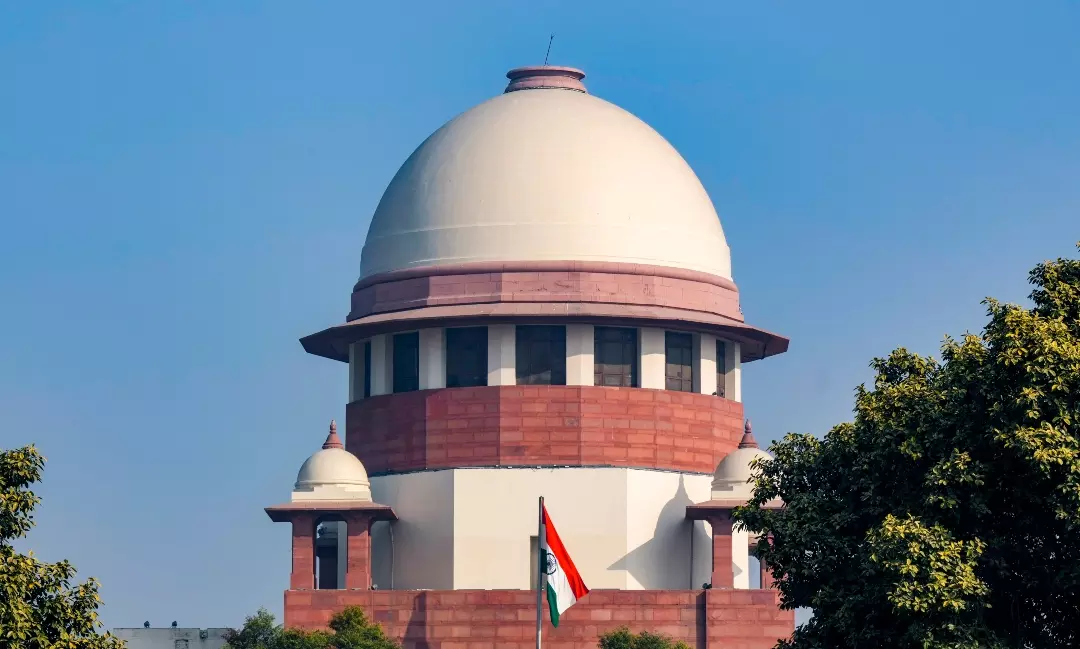
The Supreme Court on Monday (January 12) sought responses from the Union Ministries of Law, Health, and AYUSH on a public interest litigation (PIL) seeking recognition of AYUSH doctors as “Registered Medical Practitioners” under existing medical laws, on par with allopathic doctors.
The PIL also urged the apex court to direct the Centre to constitute an expert committee to review and update the schedule of the Drugs and Magic Remedies (Objectionable Advertisements) Act, 1954, which regulates advertisements related to drugs and medical treatments. The petitioner argued that the law requires revision to align with current scientific and medical advancements.
A bench comprising Chief Justice Surya Kant and Justice Joymalya Bagchi took note of the submissions made by advocate Ashwini Upadhyay, who appeared for the petitioner, law student Nitin Upadhyay, and issued notices to the concerned Union ministries seeking their responses.
Court issues notice to Centre
“Is he your son?” the CJI asked Ashwini Upadhyay.
“Yes,” replied the lawyer.
“We thought he will get some gold medal, etc. but he is filing PILs now. Why don't you study now? … Issue notice. Only for your son. So that he studies well,” the bench said.
The plea has sought a direction to declare that AYUSH doctors are also covered under section 2(cc) of the Drugs and Magic Remedies (Objectionable Advertisements) Act, 1954, as "registered medical practitioners".
Challenge to Drugs Act provisions
The Drugs and Magic Remedies (Objectionable Advertisements) Act, 1954 is aimed at controlling the advertisement of drugs in certain cases, and to prohibit the advertisement for certain remedies alleged to possess magic qualities.
Section 2 (cc) of the Act deals with definition of "registered medical practitioner".
Also Read: Siddha Day: Dubious Siddhar claims mar Ayush ministry’s social media promotions
"The Act was enacted to protect the public from false and misleading medical advertisements. However, Section 3(d) places a complete ban on advertisements relating to certain diseases and conditions," the plea said.
Section 3 of the Act deals with prohibition of advertisement of certain drugs for treatment of certain diseases and disorders.
Plea cites right to information
It said as AYUSH doctors and other genuine non-allopathic registered medical practitioners are not covered under the exception of section 14 of the Act, "this blanket ban effectively stops the advertisement by them of the existence of medication for serious ailments, leading to widespread public ignorance of the drugs".
The plea, filed through advocate Ashwani Kumar Dubey, said section 3(d) of the Act imposes a "complete and blanket ban" on advertisements relating to certain diseases and conditions without distinguishing between misleading advertisements and truthful, scientific, and lawful information.
It said the right to information to be cognisant of the diagnosis, prevention, mitigation, cure, and treatment of life-threatening chronic diseases has been overridden by a grossly disproportionate prohibition of advertisements through an "archaic law".
Also Read: Stop advertising, give research details: AYUSH ministry orders Patanjali
"It is humbly submitted that the initial aim of the Act to put an immediate ban over harmful advertisements has devolved into a blanket ban on all genuine medical advertisements by non-allopathic (AYUSH) doctors," it said.
The plea said advertisements relating to drugs and remedies, when truthful, scientifically-backed, and non-deceptive, constitute legitimate dissemination of information to consumers and patients.
It has sought a direction to the Centre to "constitute an 'expert committee' to review, revise and update the schedule of the DMR Act in accordance with present-day scientific developments and evidence-based medical knowledge".