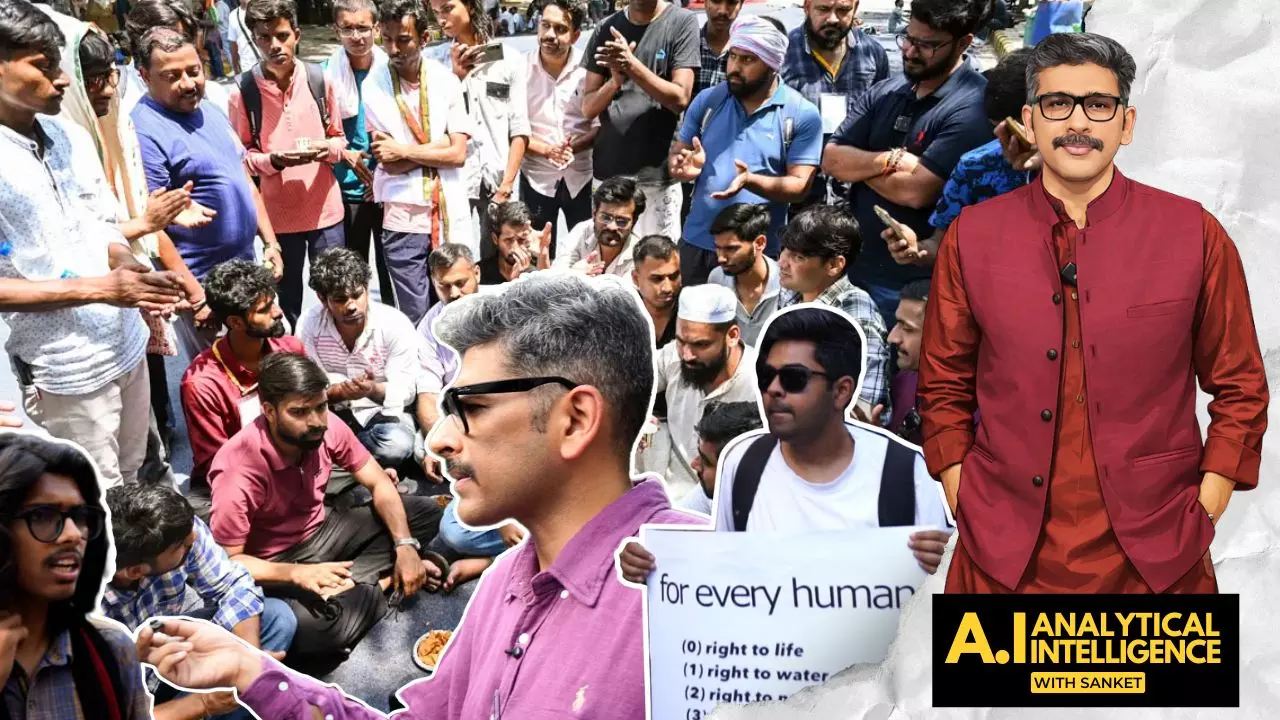
NEET protest anger grows over accountability demand
Student fury over NEET leaks: 'Broken trust will translate into votes'
Speaking from the ground at Jantar Mantar, activist Ruchit Asha Kamal explains the physical barriers and systemic failures pushing youth to demand accountability

The ongoing student protests at Jantar Mantar over the NEET examination controversy reflect a deep-seated anger that extends far beyond social media—a frustration that activists warn could eventually influence electoral outcomes.
Led by the Cockroach Janata Party (CJP), the demonstration has stretched past its scheduled end date. Protesters are demanding strict accountability from the Union Education Ministry, including the immediate resignation of Union Education Minister Dharmendra Pradhan. The sheer necessity of a re-examination is undeniable proof of a systemic failure, the students say.
Speaking to The Federal, Ruchit Asha Kamal, an activist who travelled to Delhi after organising a massive solidarity protest in Hyderabad, explained that he is there to represent the student communities of Telangana and Andhra Pradesh.
Kamal emphasised that the individuals gathering to protest are not just political voices but the actual stakeholders of India's education system. "The people you see here are CBSE aspirants, NEET aspirants, SSC aspirants, and RRB aspirants," he said. "These are the people directly affected by what is being done in the rooms of the Education Ministry."
For Kamal, the issue is deeply personal. "I am here today as a brother of a NEET aspirant," he shared. "I cannot tolerate seeing injustice happening to my own sister. I cannot tolerate seeing injustice happening to an entire Indian youth community."
Overcoming barriers to protest
Addressing the debate over why massive online support doesn't always translate to equally massive physical crowds, Kamal pushed back against the narrative that young people are "lazy" or "unwilling to engage on the ground." Instead, he pointed to a multitude of systemic, environmental, and psychological barriers keeping students at home.
He noted that students are currently battling severe environmental challenges, such as Delhi's extreme heatwave, alongside a lack of employment and basic public infrastructure. He highlighted a deliberate chilling effect created by the state.
Watch/Read | Abhijeet Dipke: 'Ready for arrest; will stay here, won't return to US'
"The government spends significant effort portraying organisers here, who are genuine young people and constitutional believers, as anti-national," Kamal said. He argued that this propaganda creates fear among students preparing for critical exams, actively discouraging their participation.
"But despite all those barriers, the number you see here today is historic," he added, noting that many attendees are stepping into the political space for the very first time.
Reality of broken trust
Kamal argued that the size of the crowd at Jantar Mantar does not change the grim facts of the controversy. "The reality is that papers were leaked. The reality is that students have died by suicide," he stressed. "That reality does not change whether there is a large crowd here or whether there is nobody present."
Watch/Read | Why e-Commerce brand known for Bengali-themed T-shirts chose the cockroach for its new collection
He issued a stark warning to policymakers about the long-term consequences of the Ministry's failures.
"Whether people show up physically, digitally, or in any other form, the anger is real. The frustration is real. The distrust is real. Trust has broken. And that broken trust will translate into votes. It will translate into anger. It will translate into peaceful demonstrations in multiple ways."
The protesters remain steadfast in their demands, insisting with "constitutional spirit" that the government take immediate accountability, starting with the suspension of Dharmendra Pradhan.