







SIR row, CJP’s rise, Delhi crackdown: How global media reported anti-CEC protests
International outlets portray the anti-CEC agitation as a widening challenge to the Election Commission, the government and democratic norms

As the nationwide agitation demanding the resignation of Chief Election Commissioner (CEC) Gyanesh Kumar gathers momentum, major international news organisations have devoted extensive coverage to the protests, portraying the agitation as a major political challenge to the BJP government and a broader test of democratic institutions.
International media outlets have converged on three broad themes: The controversy over the Special Intensive Revision (SIR) of electoral rolls, the rise of the Cockroach Janata Party (CJP), and the unprecedented security crackdown on protesters and Opposition leaders.
SIR as a democratic flashpoint
A dominant thread across global coverage has been the portrayal of the SIR exercise as the trigger for the current political confrontation.
Also read: Delhi crackdown LIVE updates
The New York Times has described the voter-roll revision as a sweeping exercise that has sparked nationwide anger over documentation requirements imposed on voters. While noting the government’s argument that the exercise is intended to remove duplicate and deceased entries, the paper has highlighted accusations from opponents that it amounted to “vote theft” directed at opposition supporters.
BBC News has focused on the scale of the revision, repeatedly drawing attention to the removal of around 130 million names from electoral rolls. It has also highlighted what it described as an institutional cleavage within the Election Commission (EC), and cited The Indian Express expose to report that fellow commissioners had raised objections to decisions linked to the SIR process.
Deutsche Welle (DW) has also devoted attention to allegations of internal dissent within the EC. To convey the scale of the exercise, DW has noted that the number of names removed from voter rolls exceeded twice the size of Germany’s entire electorate.
Al Jazeera has framed the SIR in even starker terms, presenting it as a process that could potentially disenfranchise millions of eligible voters. The network highlighted Opposition allegations that the exercise disproportionately affects poorer and minority communities and has become the focal point of a broader campaign against what protesters view as electoral manipulation.
Also read: CPM takes centre stage at CJP’s anti-CEC protests; police action shifts focus
Meanwhile, NHK World and The Japan Times have presented the issue through a more explanatory lens, contrasting the official claim that the revision is electoral “housekeeping” with Opposition concerns over transparency, due process and voter disenfranchisement.
CJP: From satire to ‘political force’
The second major theme has been the extraordinary rise of the CJP.
The NYT has characterised the outfit as a “Gen Z movement” that evolved from an internet joke into a serious political force. The paper traced its origins to founder Abhijeet Dipke’s decision to reclaim the term “cockroach” after it was used dismissively by the Chief Justice of India about unemployed young Indians.
BBC has similarly stressed that the CJP has outgrown its origins to become a national campaign championing democratic accountability and electoral reform.
For DW, the CJP’s importance lay in what it called the group’s transformation into a “political powerhouse”. DW has argued that its credibility came from its earlier success in forcing the resignation of Education Minister Dharmendra Pradhan during the examination-leak protests.
Al Jazeera has placed the movement in a broader social context. Through features and analysis programmes, it described the organisation as the product of deep-rooted frustrations over youth unemployment, job scarcity and educational failures. One of its reports described CJP rallies as having a “carnival-like atmosphere”, with students, women and first-time political participants forming the backbone of demonstrations.
Also read: West Bengal SIR: Could an administrative route ease the tribunal backlog?
Japanese outlets have echoed this assessment. NHK World and The Japan Times portrayed the CJP as a symptom of growing frustration among young Indians, linking its rise to unemployment, declining opportunities and repeated examination controversies.
Delhi turned into a ‘fortress’
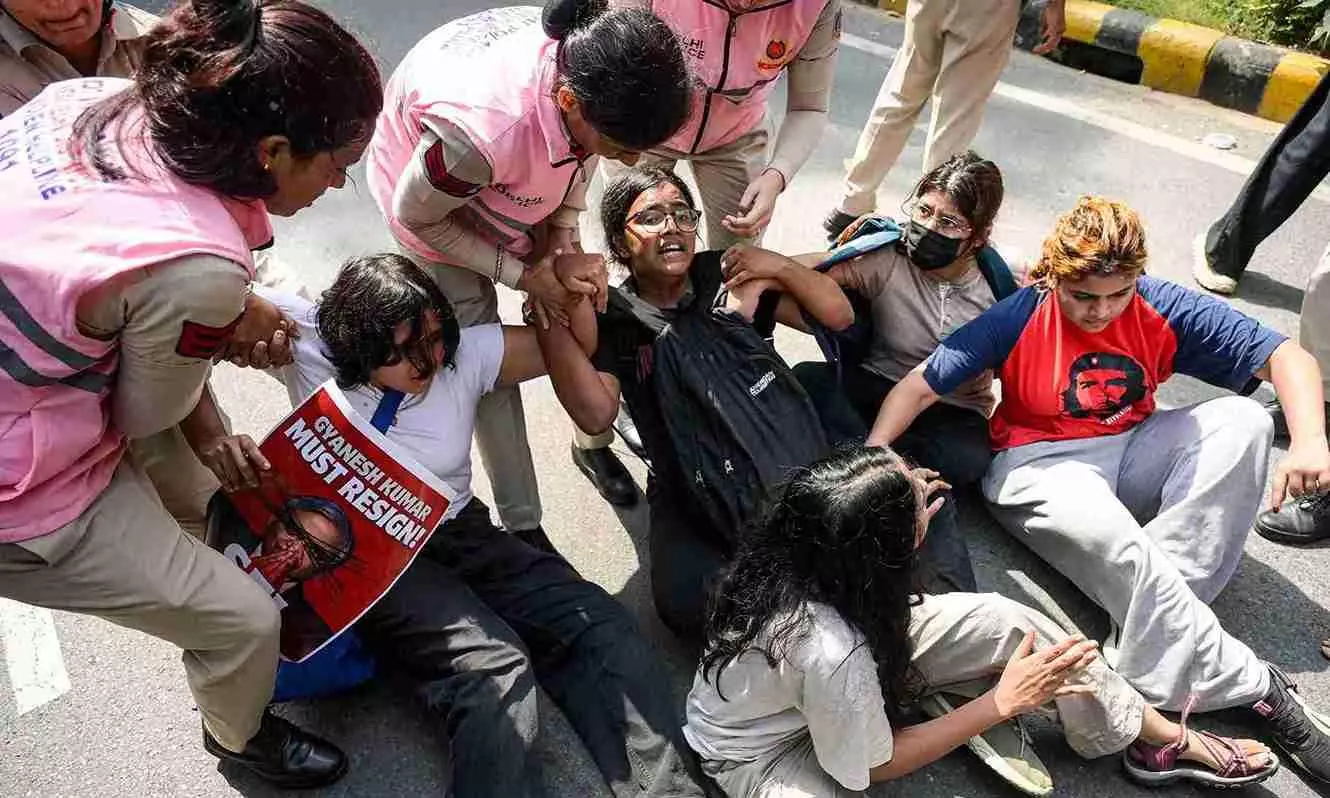
The strongest language used by international media was reserved for the Saturday (October 10) crackdown in Delhi.
Almost all the major news outlets, including The BBC and DW, reported that parts of the capital had been transformed into a “fortress”, with thousands of security personnel deployed, Metro stations shut, and transport links disrupted to prevent protesters from reaching Jantar Mantar.
NYT, which covered it LIVE, painted a dramatic picture of demonstrators encountering “walls of security forces” as they attempted to march towards Jantar Mantar. It highlighted the movement of protesters into detention buses and the extraordinary security arrangements across central Delhi.
The arrest of CJP leaders
Virtually every major international outlet focused on the detention of CJP founder Abhijeet Dipke and other leaders immediately after their flight landed in Delhi.
The NYT highlighted Dipke’s reaction, quoting him calling the police action a “dictatorship”.
Also read: CJP protests: Mass detentions, arrests, plea filed in SC | What happened in Delhi
BBC News carried Dipke’s message from inside the aircraft before his detention: “If you think you can stop us by threatening us with jail... you are mistaken. We are ready to go to jail.”
DW and Al Jazeera both have stressed the unusual nature of the operation, reporting that police intercepted party leaders directly on board their commercial aircraft upon arrival in the capital.
Protesters’ claims of an ‘Emergency’
Several international outlets have amplified comparisons between the crackdown and the Emergency era.
DW has prominently quoted CJP co-convener Saurav Das’s statement on social media: “We are under a State of Emergency.”
Al Jazeera has repeatedly referenced similar claims by protest organisers and highlighted allegations that student groups arriving from other states were detained before they could reach demonstration sites.
The broadcasters framed these statements as evidence of a growing perception among protesters that preventive detentions and restrictions on assembly were eclipsing the original debate over electoral rolls.
Media restrictions and censorship concerns
International coverage has also expanded beyond the protests themselves to concerns over media and online freedoms.
BBC News has reported that journalists attempting to cover the demonstrations were detained alongside protesters.
Also read: Detained Dipke says Ajinkya Shinde will lead CJP protest, urges supporters to follow him
Al Jazeera has devoted dedicated reports to what it described as efforts to suppress online mobilisation. The network highlighted allegations that protest-related social media accounts and satirical content linked to the CJP were being restricted.
DW has similarly carried claims from activists alleging that authorities had used legal and regulatory measures to remove protest content from digital platforms.
Together, international media coverage has presented the anti-CEC mobilisation not merely as a protest against one official, but as a broader contest over electoral integrity, democratic dissent and the future direction of India’s political institutions.