



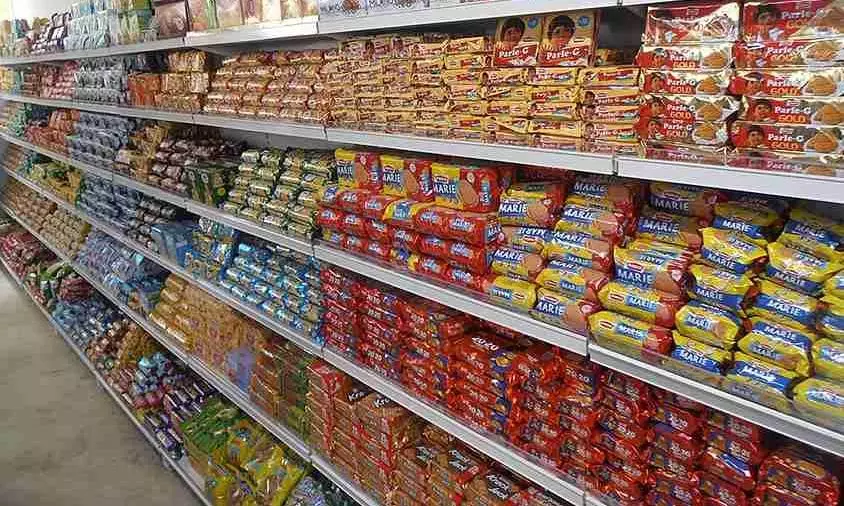
The question is now not what is inside the packet, but what consumers are told and why more junk food is sold in India compared with overseas markets. Representative image: Wikimedia commons
One product, same brand: Why does India get the ‘unhealthier’ version?
As the Supreme Court questions food labelling rules, the debate widens over why global brands formulate products differently for Indian consumers

A fresh debate has taken over social media over why ‘big products’ such as Fanta, KitKat and Maggi have different formulations in India and abroad. This comes against the backdrop of the Supreme Court questioning the Centre and the food regulator, the Food Safety and Standards Authority of India (FSSAI), over the delay in introducing stronger warning labels on the front of the pack. The apex court has asked the Centre to take a decision on the issue, amid concerns over high levels of sugar, salt and saturated fat in packaged foods.
So, the question is no longer just about what is inside the packet. It is also about what consumers are told and why more junk food is sold in India compared with overseas markets.
Same brand, different formulation
For instance, a can of Fanta sold in London contains about 63 calories, while the one available in the Indian market has nearly three times the sugar, according to a Reuters report. The Indian version also contains an artificial colour that attracts a prominent health warning in Europe, while in India its presence is disclosed in small print on the back.
Also read: To ensure poison-free plates, India needs institutional overhaul, not lone rangers
Another example is KitKat from Nestlé. The standard Indian version has about 4.5 per cent cocoa solids, compared with at least 22 per cent cocoa solids in the Australian milk-chocolate version. Nestlé's Australian product information confirms the 22 per cent cocoa threshold. Higher cocoa content is generally considered healthier.
And then there is everybody’s favourite Maggi. A Reuters report found that the Indian variants use palm oil, while many versions sold in Britain use sunflower oil. Interestingly, some of those British Maggi packets are manufactured in India but carry red front-of-pack warnings for high salt content.
Why the difference?
Food companies say formulations are shaped by local tastes, regulations, availability of ingredients and affordability. Former Mondelez executive Parul Sharma told Reuters that pricing and affordability are among the biggest reasons recipes differ across countries.
However, health advocates argue that Indian consumers are not getting the same level of information that shoppers in some overseas markets receive.
Also read: Protein intake myths: How much do Indians really need? | Second Opinion
In the UK, companies use red, amber and green indicators to make high levels of sugar, fat and salt clearly visible. India, however, does not currently have a mandatory equivalent front-of-pack warning system.
Instead, consumers have to turn the packet around, read the nutritional table and work out whether the numbers are high or low. The information is generally presented in a smaller font.
Not the first time
Notably, India’s packaged-food sector has faced several high-profile controversies over misleading claims, safety and labelling. In 2015, Nestlé’s Maggi noodles were banned nationwide after tests raised concerns over lead levels and labelling, triggering a months-long legal and regulatory battle before the product returned to shelves.
In 2023, Mondelez India’s Bournvita came under scrutiny after a viral video questioned its high sugar content and its positioning as a health drink for children. The controversy eventually drew the attention of regulators, with the company removing some health and nutrition comparison claims from online platforms.
Also read: FSSAI serves 9 notices to Swiggy Instamart over unsafe food allegations
The FSSAI has also stepped up action against food companies over misleading claims, including the use of terms such as “100% natural” and “100% pure”. Major brands have been asked to remove or modify claims that regulators found unsupported.
Supreme Court’s intervention
And this is where the intervention of the Supreme Court gains prominence.
The court has questioned why FSSAI has not introduced clear warning labels for products high in sugar, salt and saturated fat. It has also raised concerns about the health of children and whether the regulator has been influenced by industry pressure.
Red warnings
The controversy intensified after a report emerged that India’s proposed colour-coded warnings faced strong resistance from food companies. At a March meeting, industry representatives argued against the proposed red flags, after which FSSAI dropped the colour-coded approach and moved towards a black-and-white nutritional table.
Also read: Indian online grocery shoppers struggle to find product expiry dates: Survey
The industry has argued that such warnings could confuse consumers and unfairly classify a large proportion of packaged foods.
Regulatory standards
The debate has also raised questions over the different regulatory standards global food companies apply in markets where regulations are stricter.
Nestlé, for instance, changed its Cerelac formulation in India after years of criticism over added sugar. The company announced in 2024 that it would begin selling sugar-free Cerelac in India, while sugar-free versions had long been available elsewhere.
In the UK, nutrition information on most pre-packed foods is mandatory, with products required to provide standardised information on nutrients and energy. India’s system, meanwhile, has relied more heavily on conventional nutrition information and has not adopted a mandatory traffic-light warning system like that of the UK.
This means the same global brand can formulate a product differently to meet the requirements, pricing and consumer expectations of each market. The regulatory gap, therefore, is not just about what goes into the packet; it is also about how clearly consumers are told what they are eating.