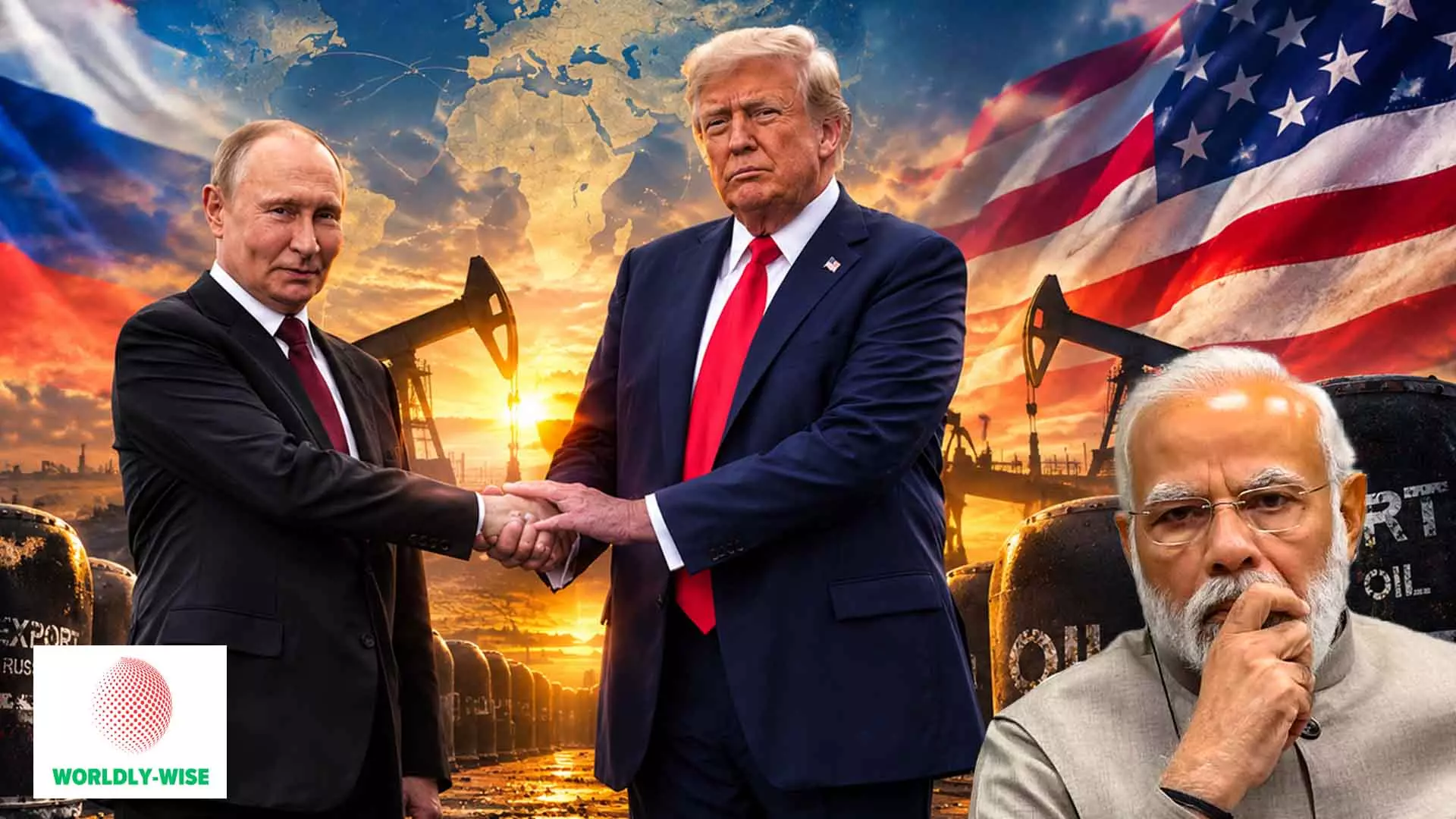
Trump’s Russia energy pivot raises questions for India and oil markets
Trump’s Russian oil deal, the Iran war and disruptions in the Strait of Hormuz are reshaping global energy markets. Can India weather the crisis?

US President Donald Trump’s decision to strike an energy agreement with Russian President Vladimir Putin has raised fresh questions about Washington’s Russia policy at a time when wars in Ukraine and West Asia are threatening global energy security. For India, which relies heavily on imported crude oil, the changing geopolitical landscape presents both an opportunity and a risk.
The development comes amid growing concerns over disruptions to energy supplies caused by the Russia-Ukraine war, the conflict involving the US, Israel and Iran, and uncertainty surrounding critical global shipping routes. Political considerations in Washington, including the approach of the US midterm elections, appear to be shaping decisions whose impact extends well beyond American borders.
Move makes global equations trickier
Trump’s engagement with Putin has prompted questions about the US commitment to economically isolating Russia following its invasion of Ukraine. The move has also unsettled Ukrainian President Volodymyr Zelenskyy and several European allies that have backed Kyiv throughout the conflict.
Also read: Trump strikes big diesel deal with Russia after talks with Putin
Rising oil prices and the need to contain domestic fuel costs have emerged as important factors behind the US approach. As the Americans prepare to vote in the midterm elections, keeping energy prices under control is expected to remain a key political priority.
For India, the shift is likely to evoke mixed reactions. New Delhi may welcome Washington’s willingness to engage with Russian energy supplies after facing sustained pressure for years to reduce oil purchases from Moscow. At the same time, continued volatility in global energy markets threatens to drive up costs for one of the world’s largest oil-importing economies.
Escalating uncertainty
The Russia-Ukraine war has already disrupted energy markets and shipping networks. Tensions in West Asia have added another layer of uncertainty, with the conflict involving the US, Israel and Iran raising fears of supply disruptions and wider regional escalation.
Concerns have also intensified over renewed hostilities involving Saudi Arabia and Yemen’s Houthi movement, also known as Ansar Allah. The vulnerability of the Strait of Hormuz and the Bab el-Mandeb strait has heightened anxiety over potential disruptions not only to crude oil shipments but also to broader international trade flows.
Also read: With 'friends' like America, India is learning the cost
The consequences of an energy crisis extend far beyond the oil sector. Sharp increases in fuel prices raise transportation and manufacturing costs, creating inflationary pressures that can affect households and businesses around the world.
Lasting solution still elusive
India remains particularly exposed to such shocks because it imports nearly 90 per cent of the crude oil it consumes. The country has built strategic petroleum reserves to absorb supply disruptions, with stocks estimated to cover more than two months of consumption.
Major economies have attempted to stabilise markets through coordinated releases from strategic reserves. The G7 countries have released around 100 million barrels of crude oil and petroleum products into the market, while the International Energy Agency's 32 member countries earlier announced the release of 400 million barrels following the US-Israel attack on Iran.
These measures have helped ease immediate pressure on supplies and prices, providing time for diplomatic efforts and alternative sourcing arrangements. However, reserve releases are unlikely to offer a lasting solution if military conflicts continue to disrupt production and shipping.
India’s balancing act
India has sought to diversify its crude imports, increasing purchases from suppliers such as Venezuela and the United States while also expanding imports from Iraq and Saudi Arabia. At the same time, sanctions-related pressures have contributed to a decline in purchases of Russian crude.
India’s imports of Russian oil fell to about 1.82 million barrels per day in September, down from roughly 2.6 million barrels per day in June and July. Imports stood at around 2.02 million barrels per day in August.
Also watch: Why is India keen to end Ukraine-Russia war? Will its plan work?
Competition from China has added to the challenge. Beijing’s efforts to secure additional Russian supplies amid disruptions to Iranian exports and concerns over the Strait of Hormuz have increased pressure on the availability of Russian crude.
What’s Washington’s position?
The scale of the disruption has led some energy experts to compare the current turmoil with the combined impact of the oil shocks of the 1970s and the fallout from Russia’s invasion of Ukraine. International Energy Agency Executive Director Fatih Birol has described the present crisis in similarly stark terms.
The handling of both the Ukraine war and the conflicts in West Asia has further complicated the global energy picture. Questions continue to be raised about the effectiveness of Western efforts to support Ukraine, while various diplomatic initiatives, including attempts to negotiate an end to the conflict, have failed to produce a breakthrough.
The latest US-Russia energy arrangement has added another layer of uncertainty by raising questions about Washington’s position between Moscow and Kyiv.
Signs of relief
There are, however, signs of limited relief. Reports indicate that Russian crude production has continued to rise despite Ukrainian attacks on refineries, increasing by around 65,000 barrels per day in September. Oil exports have also reportedly recovered to roughly 75 per cent of pre-war levels as alternative routes and logistical adjustments keep supplies moving.
Also read: Russia backs India’s permanent UNSC bid at UNGA
Yet these arrangements remain fragile. Countries involved in the conflicts appear to have tolerated continued energy shipments because a major global supply shock would also damage their own interests. That accommodation, however, could collapse quickly if hostilities intensify.
Particular concern surrounds Iran’s threats against freight traffic through the Strait of Hormuz, one of the world’s most critical energy corridors. Any disruption there could erase recent gains in market stability and trigger another surge in prices.
The central question
For India, adherence to US restrictions while expanding purchases from alternative suppliers has helped limit the immediate impact of the crisis. Nevertheless, continued wars or further disruptions to shipping routes could expose vulnerabilities in the country's energy security framework.
Even if the conflicts were to end immediately, the global energy system would require considerable time to recover from the damage caused by Russia’s invasion of Ukraine in February 2022 and the subsequent conflicts in West Asia. The central question remains whether current supply arrangements can hold long enough for a durable political settlement to emerge.