



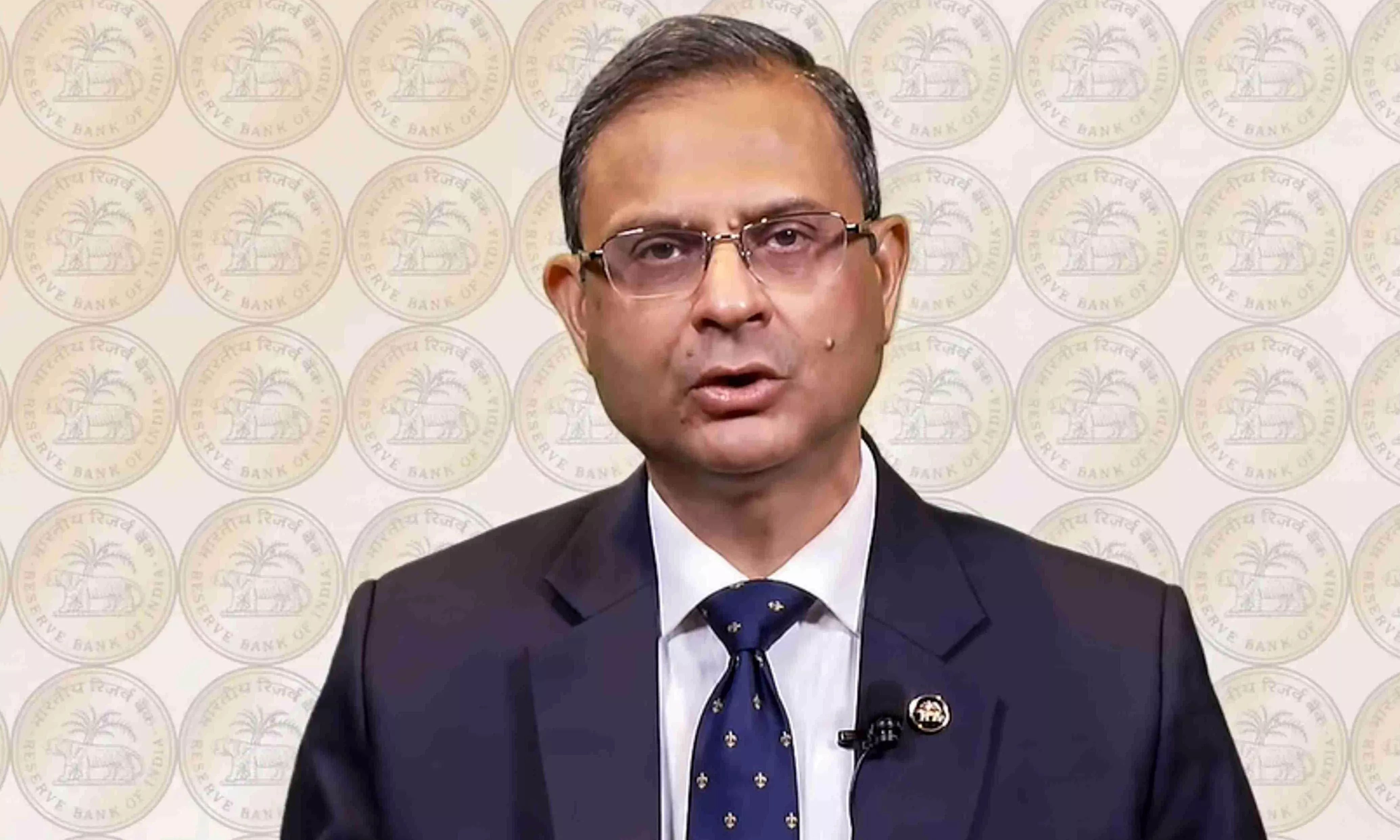
RBI Governor warns of fuel price rise if the West Asia conflict prolongs
RBI Governor Sanjay Malhotra says that the Centre may have to raise petrol and diesel prices if the West Asia conflict continues and crude oil costs remain elevated

RBI Governor Sanjay Malhotra has said that in case the West Asia conflict, which has caused a global supply chain disruption, continues for a longer time, it would not be possible for the Centre to keep absorbing the burden of the increasing crude oil prices, and it was just a matter of time before the government would “pass on” some of it to consumers.
Absorbing the oil shock
Addressing the 12th High-Level Conference on the International Monetary System, jointly convened by the International Monetary Fund and the Swiss National Bank, Malhotra further stated that the Centre has so far absorbed the high international crude oil prices by keeping the cost of petrol and diesel unchanged while allowing only marginal increases in some controlled prices such as gas.
Also Read: PM Modi orders 50 per cent cut in convoy, BJP CMs follow suit amid West Asia crisis
However, he indicated that if the West Asia crisis drags on for a longer time, the government’s current strategy may not be sustainable.
Warning on price rise
"But if this is to continue for a longer period of time, it's already, you know, about 75 days... I believe that the government, it's, you know, it's a matter of time that the government will actually pass on some of these price increases," he added as quoted by ANI.
Also Read: Why PM Modi's 'austerity' plea undermines India's stature on global stage
The Reserve Bank of India Governor further stated that the Centre has continued to maintain fiscal discipline while remaining committed to the path of consolidation, bringing the fiscal deficit down sharply from 9.2 per cent of GDP during the pandemic years to around 4.3 per cent at present.
Policy amid uncertainty
Addressing the broader macroeconomic environment, he said monetary policy frameworks continue to play a critical role in anchoring inflation expectations, though he noted that policy rate actions alone may not always be sufficient to address large supply-driven disruptions.
Malhotra said that central banks are increasingly required to function amid persistent uncertainty, whether arising from economic models, behavioural shifts or incoming data flows. He said that gradualism, clear communication and institutional independence remain essential for policy credibility.
Referring to India’s exposure to external shocks, he said the country’s economic linkages with the Middle East leave it particularly sensitive to developments in the region.