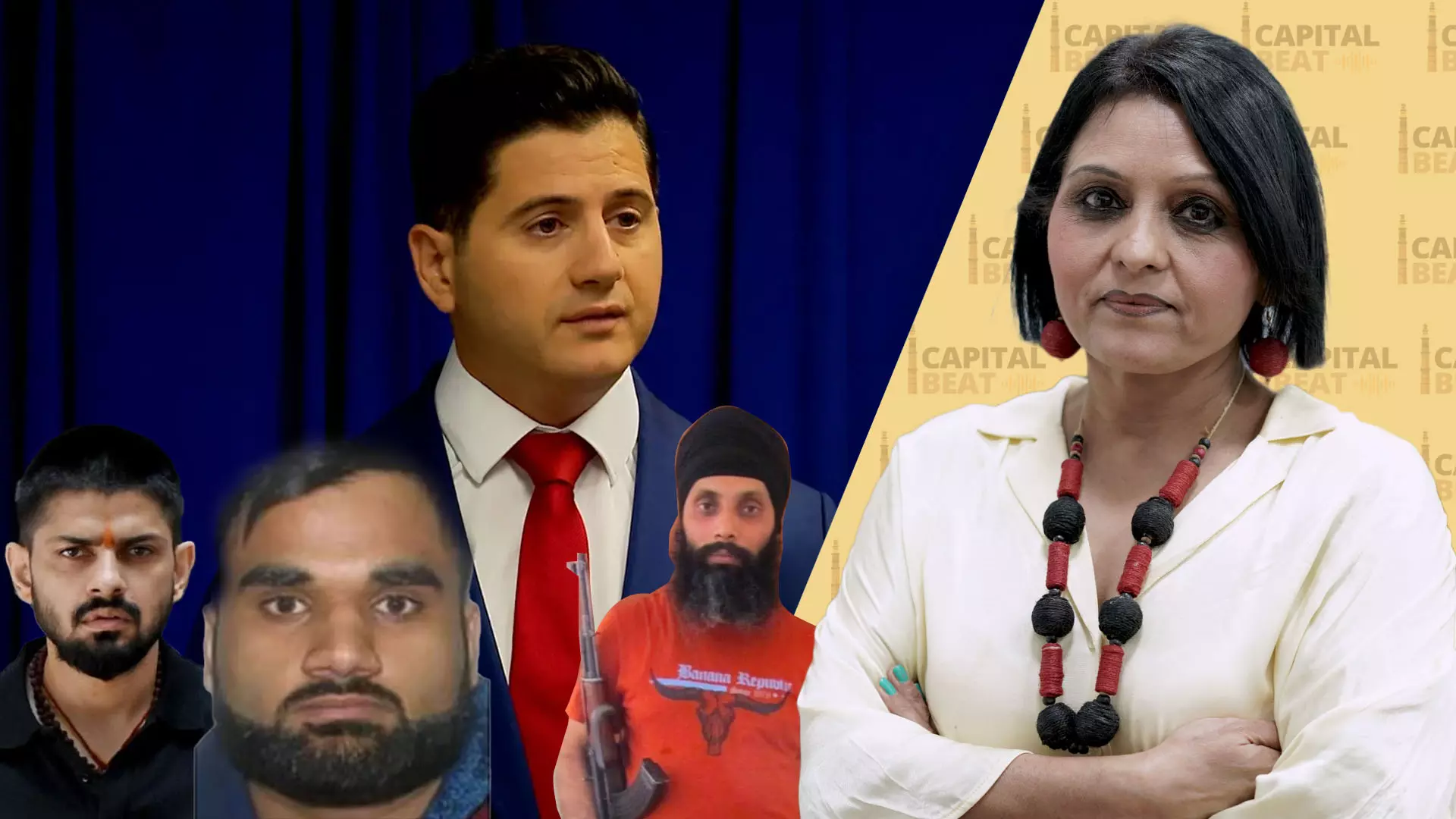
Operation Hardball: Why FBI's crackdown is a wake-up call for New Delhi
Panel discusses the US probe into alleged India-linked crime syndicates, diplomatic fallout, drug trafficking, and implications for India's global image

The extensive international crackdown by the Federal Bureau of Investigation (FBI) on India-based crime syndicates is an indictment of India’s justice system, exposing how incarcerated criminals spearhead transnational operations with total impunity.
This controversial warning set the tone for an intensive discussion on the staggering scale of global criminal networks operating directly out of high-security Indian prisons.
The Federal spoke to Professor Aftab Kamal Pasha, Middle East and international affairs expert; Pushparaj Deshpande, author and policy expert; and Sanjay Kapoor, senior journalist, to unpack the massive geopolitical and diplomatic fallout facing New Delhi.
The panel discussion followed a sweeping announcement by US federal prosecutors revealing the arrest of 24 suspects across the United States, Canada, and Europe linked to three India-based organised crime groups, including the notorious Lawrence Bishnoi gang. A total of 37 defendants have been charged across three unsealed indictments stemming from a multi-year federal investigation dubbed "Operation Hardball". Among the most explosive findings in the US chargesheets is the allegation that the Bishnoi syndicate orchestrated the 2023 assassination of Sikh separatist leader Hardeep Singh Nijjar outside a temple in British Columbia, Canada.
'Deep-rooted institutional complicity'
Analysing the scale of the international crackdown, professor Pasha emphasised that this represents an unprecedented global intelligence coordination effort spanning from North America to Europe and Australia. He remarked that the three identified India-based syndicates were heavily entrenched not just in narcotics trafficking across borders, but also in human smuggling, weapons transfers, and systemic extortion.
A major focal point of the discussion was how Lawrence Bishnoi managed to oversee a sprawling international syndicate despite being held inside the Sabarmati Central Jail in Ahmedabad, Gujarat.
Also Read: US charges Bishnoi, Brar in Nijjar assassination case; 24 arrested
'Public embarrassment for domestic security framework'
Deshpande delivered a sharp assessment of the institutional failures exposed by the FBI's findings, calling the indictments a public embarrassment for India's domestic security framework. He argued that when jailed criminals can run a global enterprise involving targeted assassinations, extortion, and human trafficking, it demonstrates a severe breakdown in the domestic rule of law. He stated that jail houses funded by taxpayer money are effectively being transformed into secure operational headquarters for transnational mafias.
Deshpande pointed accountability towards the home department of Gujarat, led by Harsh Sanghavi, who serves as the state's Home Minister and Deputy Chief Minister. He noted that because top political leaders micro-manage the governance of their home state, the institutional failure to secure the prison facility cannot be brushed aside as a minor administrative lapse.
Also Read: Two Lawrence Bishnoi-Harry Boxer gang members killed in police encounter in Haryana
'Structural threats to national security'
Sanjay Kapoor shifted the analytical lens towards the shifting dynamics of global narcotics trafficking and its structural threats to India's internal stability. Kapoor pointed out that the FBI’s investigation is distinct from routine intelligence sharing because it is built entirely on verifiable forensic and digital evidence designed to stand up in international courts.
Historically, India has been surrounded by major drug-producing regions like the Golden Crescent and the Golden Triangle, acting primarily as a transit corridor rather than a primary operational hub for syndicates resembling Colombian or Mexican cartels.
Also Read: Canada lists Lawrence Bishnoi gang as a terrorist entity
'Lack of Parliamentary oversight'
The concluding segment of the discussion focused heavily on the lack of institutional oversight governing India's security and intelligence frameworks compared to Western democracies. The panellists noted that while countries like the US, Canada, and the UK have established parliamentary committees to supervise intelligence activities in-camera, India lacks a joint parliamentary committee dedicated to holding its security apparatus accountable.
Also Read: Can Bishnoi position himself as Don of Mumbai? Is that what he wants?
Looking ahead to upcoming political shifts, the panellists debated whether these international disclosures would have any tangible impact on forthcoming domestic elections, particularly in Punjab. Pasha noted that central authorities might attempt to weaponise the findings politically to claim local state governance is incapable of handling organised crime. The consensus among the experts remains clear: India stands at a critical diplomatic crossroads where it can no longer afford to ignore the intersection of domestic organised crime and transnational security. If left unchecked, the global perception of India as a stable, law-abiding partner will continue to erode under the weight of international indictments.