500 years of Battle of Panipat: Why the Mughals still shape India | Interview
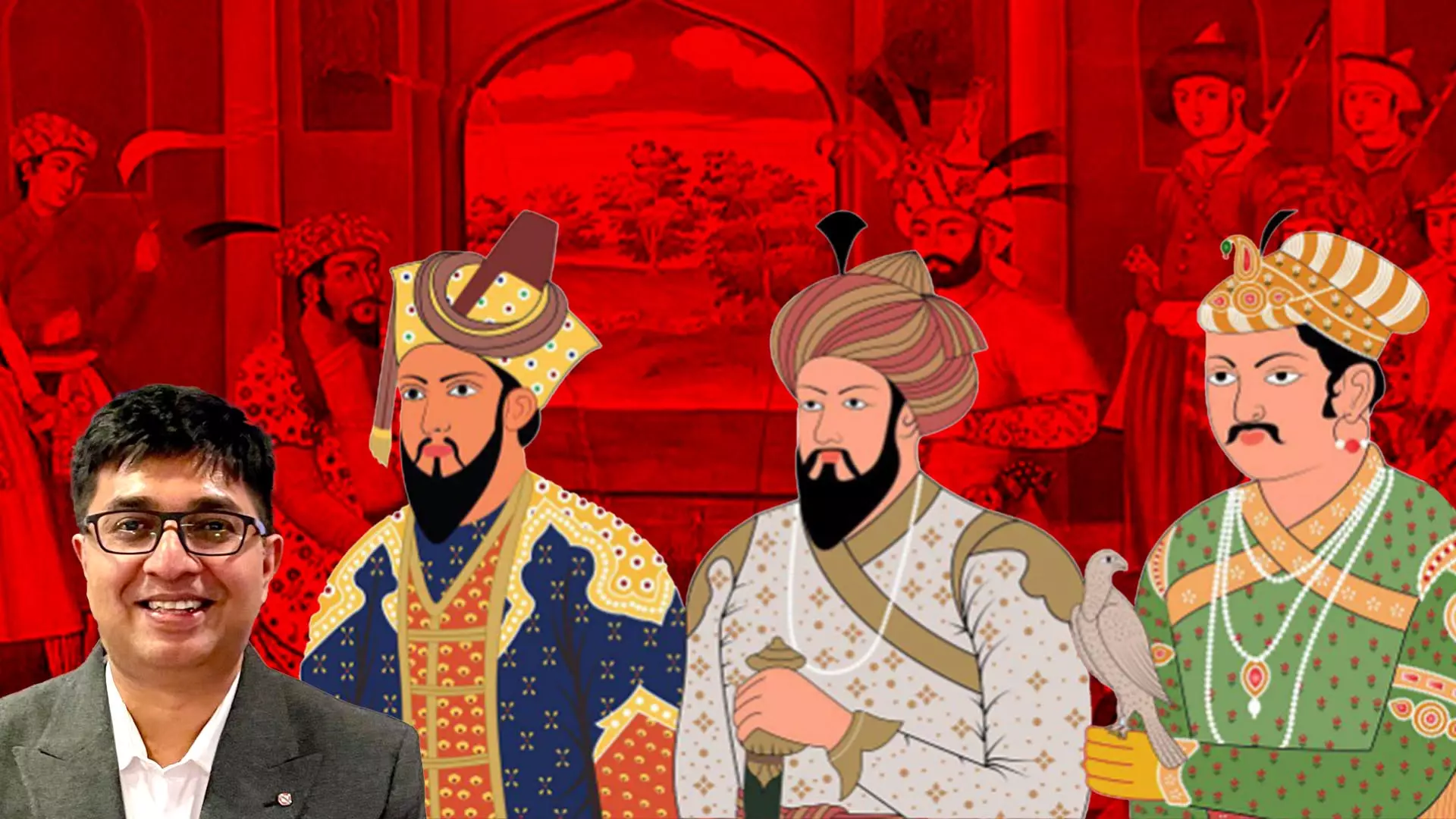
Author and historian Manimugdha S Sharma tells The Federal how the Mughal Empire transformed India’s identity and way of life and why it's impossible to erase its history

“Any government that calls itself nationalist in the truest sense would have celebrated the Mughal Empire because we make the fundamental mistake of comparing the Mughals to other Indian powers instead of comparing them to global empires of their time,” says author and historian Manimugdha S Sharma.
Also read: ‘Exactly why India attracts so few tourists’: Dalrymple on Mughal site’s demolition
His remarks come at a time when India marked 500 years since the First Battle of Panipat, fought between Babur and Ibrahim Lodhi, with the former emerging victorious and laying the foundation of the Mughal Empire. The occasion is also observed when debates over the Mughals, their legacy, and their place in Indian history have intensified. The Federal spoke with Sharma on how the Mughals shaped India’s political structures, military systems, culture, language, and global identity, and why attempts to erase them from history are deeply flawed.
Here are excerpts from the interview:
How do you view the role and contribution of the Mughal dynasty in contemporary India?
The Mughals have made a phenomenal contribution to India’s history, society, and culture. They remain massive on the cultural landscape and also on the physical landscape because we can still see Mughal monuments across much of North and West India. These monuments are physical reminders of an era gone by.
The modern Indian state has also benefited economically from the Mughal legacy. The monuments left behind by the Mughals generate enormous tourism revenue and attract visitors not just from India or South Asia, but from across the world.
The Mughal influence exists in food, attire, literature, and language. Many Indian languages underwent formative development during the 300 years of Mughal rule. The Mughal state actively patronised translation projects, converting texts from regional languages into Persian, and from Persian, those works travelled to Europe, where they were translated into English and French before eventually returning to India through other languages.
Before 2014, the memory of 1857 was promoted as a story of Hindu-Muslim unity. Today, the dominant political narrative has shifted toward portraying medieval Muslim rulers as oppressors of Hindus. This shows how memory changes with politics.
If those 300 years had not existed, this entire process of cultural exchange would not have happened.
I would say that any government that calls itself nationalist in the truest sense would have celebrated the Mughal Empire because we often make the mistake of comparing the Mughals to other Indian dynasties.
Also read: Travellers in the Golden Realm review: How Mughal India captured European traders’ attention
Instead, historians compare them with other global empires of their time — the Ottomans, Safavids, Uzbeks, French, and Spanish empires. When viewed in that context, the Mughal achievement was extraordinary.
The Mughals were a very Indian dynasty. They lived here, died here, and are buried here. Their memory survives strongly even today. Ask most people to name the first five or six Mughal emperors, and they can do so easily. That is not possible with most other dynasties in Indian history.
The fact that 500 years after Babur’s arrival, we are still debating the Mughals shows how deep they run in public memory.
What military changes did the Mughals bring to India after the First Battle of Panipat?
The Mughals were not actually the first rulers to use gunpowder in India. Historian Iqtidar Alam Khan demonstrated that firearms had already been in use among other dynasties before Babur arrived.
What Babur introduced in a major way was field artillery deployment. At the First Battle of Panipat on April 21, 1526, he deployed artillery and matchlock men very effectively. He had learned these tactics from the Ottomans.
Babur used a military formation he himself called “Rumi dasturi”, indicating Ottoman influence. He combined Ottoman artillery techniques with Central Asian cavalry tactics.
Babur brought large cannons and also used carts tied together with chains — a tactic derived from the “wagon laager” formations used in Europe and adapted by the Ottomans. Cannons were placed between the carts, infantry stood behind them, and chains could be raised to stop cavalry charges from overrunning the artillery.
He also employed the Tulughma tactic, a Central Asian mounted cavalry manoeuvre. Light horse archers attacked enemy flanks repeatedly, forcing the enemy army inward into a concentrated mass. At that point, heavily armed cavalry charged the centre.
Babur himself had suffered from these tactics earlier in Central Asia and learned from those defeats. At Panipat and later at Khanwa in 1527, Indian powers had no immediate answer to these methods.
However, within a decade, Indian powers adapted quickly. Sher Shah Suri defeated Humayun, and rulers like Bahadur Shah also resisted the Mughals. That shows the knowledge of firearms already existed in India; Babur simply demonstrated a more effective way to use them.
Also read: Conversations with Aurangzeb review: The lament of a Mughal emperor
The Portuguese, too, were using cannons earlier, especially in naval warfare. The Battle of Cochin in 1506 is an example where the Portuguese defeated the Zamorin of Calicut using artillery.
How did the Mughals shape India’s composite or syncretic culture?
The Mughals did not arrive in a vacuum. Earlier Delhi Sultanate rulers had already contributed to a composite culture. The Mughals entered that evolving landscape and expanded it dramatically.
Persian was already the language of courtly culture before the Mughals arrived. It had been used for nearly 200 to 300 years. The Mughals adopted Indian practices very quickly — in clothing, food, and everyday customs.
When Humayun took refuge in the Safavid court, Shah Tahmasp requested Indian food from him. Humayun’s cooks prepared dishes like khichdi and dal khushka, which had already become part of the Mughal culinary world through India.
At the same time, the Mughals brought Central Asian influences with them. Artists, cooks, painters, masons, and craftsmen came from Iran and Central Asia and settled in India. This created a unique Indo-Persian or Hindustani culture.
The Mughals expanded into larger territories than earlier sultanates had managed to control. As a result, their court culture spread widely. Smaller regional courts in Bengal, Bihar, and elsewhere began imitating Mughal administrative systems, courtly etiquette, and artistic styles.
Even powers that resisted the Mughals adopted Mughal traditions. Titles like “Padishah” became influential. Chhatrapati Shivaji himself used imperial terminology inspired by Mughal political culture.
Delhi also emerged as the symbolic heart of Hindustan during this period. Babur himself described Delhi as the heart of Hindustan. Even rulers outside Mughal control referred to the emperor in Delhi with reverence.
A great deal of this composite culture emerged not because the Mughals consciously planned it, but because they ruled successfully for such a long period and became immensely influential.
How did the Mughals negotiate with the British and other European powers?
The Portuguese arrived before the Mughals established themselves firmly in India. Goa was conquered by the Portuguese in 1510, even before Babur’s victory at Panipat.
By Akbar’s time, the Portuguese controlled major sea routes. Mughal trading ships often relied on Portuguese naval protection and paid duties to them.
The British arrived later during Jahangir’s reign. Sir Thomas Roe came to the Mughal court in 1615 seeking permission for trade. Initially, the Mughals did not take the British seriously because they viewed the Portuguese as the dominant European power.
The turning point came when the British defeated a Portuguese fleet. After that, the Mughal court allowed the English East India Company to establish a factory in Surat.
Also read: How Taj Mahal, the Mughal monument of love, has become a bee in BJP’s bonnet
Over time, the British expanded to Madras and Calcutta. Calcutta itself emerged in the 1690s during Aurangzeb’s reign, when villages were granted to the East India Company.
The British consciously projected themselves as successors to the Mughals. Until 1857, the East India Company ruled nominally in the Mughal emperor’s name.
How much of modern India’s administrative system has roots in Mughal governance?
There are clear Mughal influences in taxation, administration, and legal systems.
The British retained many Mughal structures because they did not initially dismantle the existing framework. Persian remained the language of administration until the 1830s.
Land revenue systems continued along Mughal lines. Even today, parts of Bengal and Assam still use revenue terminology derived from Mughal administration.
British officials depended heavily on Mughal administrators after the Battle of Plassey (1757). Figures like Muhammad Reza Khan and Shitab Rai were central to early colonial governance in Bengal.
The British simultaneously claimed legitimacy from the Mughal system while also portraying themselves as liberators from “Muslim tyranny”. This dual approach became central to colonial historical narratives.
The colonial state also institutionalised divisions between Hindus and Muslims through separate legal systems and educational narratives.
Why are Akbar and Aurangzeb constantly compared in Indian history?
The Akbar-versus-Aurangzeb binary is largely a colonial construction.
The British promoted Akbar as the “good Muslim” ruler who was tolerant and secular, while his great-grandson Aurangzeb became the “bad Muslim” who supposedly destroyed composite culture.
But modern historiography no longer studies history primarily through “great men”. Contemporary historians focus more on systems, structures, governance, and social processes.
Also read: Parchin Kari: Why the gem-studded Mughal legacy of Taj Mahal is facing an existential crisis
Akbar and Aurangzeb ruled under completely different circumstances. Akbar governed during the formative years of empire-building and needed to negotiate alliances constantly. Aurangzeb inherited a consolidated imperial system and faced very different challenges.
Akbar was personally a remarkable negotiator. Aurangzeb was very different in temperament and style. Comparing them simplistically does not help us understand history.
What about the debate around temple destruction by Mughal rulers?
Temple destruction certainly happened. Historians like Richard Eaton and Audrey Truschke have written extensively about it.
But temple destruction needs to be understood in the context of empire-building. Temples were not merely places of worship in medieval India — they were also political and economic institutions tied to royal legitimacy.
Kings targeted temples associated with rival rulers because destroying them weakened the political legitimacy of those rivals.
This was not unique to Muslim rulers. Hindu kings also destroyed temples linked to rival Hindu dynasties. Tipu Sultan, for instance, spared some temples while targeting others associated with opposing political powers.
Religion was certainly invoked in Mughal chronicles. Court historians often framed wars as jihad or holy struggles because they wanted to legitimise imperial campaigns.
But the core motivation behind empire-building remained political power.
There is no need to deny that temple destruction happened. At the same time, there is also no justification for blaming contemporary Muslims for actions carried out centuries ago by medieval rulers.
Every ruler in history acted according to political motivations and the standards of their own time.
Why do you believe the Mughals cannot be erased from Indian history?
The Mughals were an Indian dynasty. They lived here, died here, and are buried here.
Their monuments, culture, and political systems continue to shape India even today. Their influence remains so powerful that films, books, and television serials continue to revolve around them.
Even criticism of the Mughals demonstrates the enduring appeal of the Mughal legacy.
Also read: Qutub Minar has nothing to do with Mughals, built 300 years before Babur: Experts
Figures like Rana Pratap and Shivaji gained much of their historical prominence precisely because they resisted the Mughal Empire. Without the Mughals, their stories would also lose much of their context.
History and memory are different things. Memory can be reshaped very easily. History is a disciplined process of reconstructing the past.
Before 2014, the memory of 1857 was promoted as a story of Hindu-Muslim unity. Even Vinayak Damodar Savarkar wrote about it in those terms. Today, the dominant political narrative has shifted toward portraying medieval Muslim rulers as oppressors of Hindus.
This shows how memory changes with politics.
But it is impossible to erase the historical reality of the Mughals and their role in shaping India.
(The content above has been transcribed from video using a fine-tuned AI model. To ensure accuracy, quality, and editorial integrity, we employ a Human-In-The-Loop (HITL) process. While AI assists in creating the initial draft, our experienced editorial team carefully reviews, edits, and refines the content before publication. At The Federal, we combine the efficiency of AI with the expertise of human editors to deliver reliable and insightful journalism.)