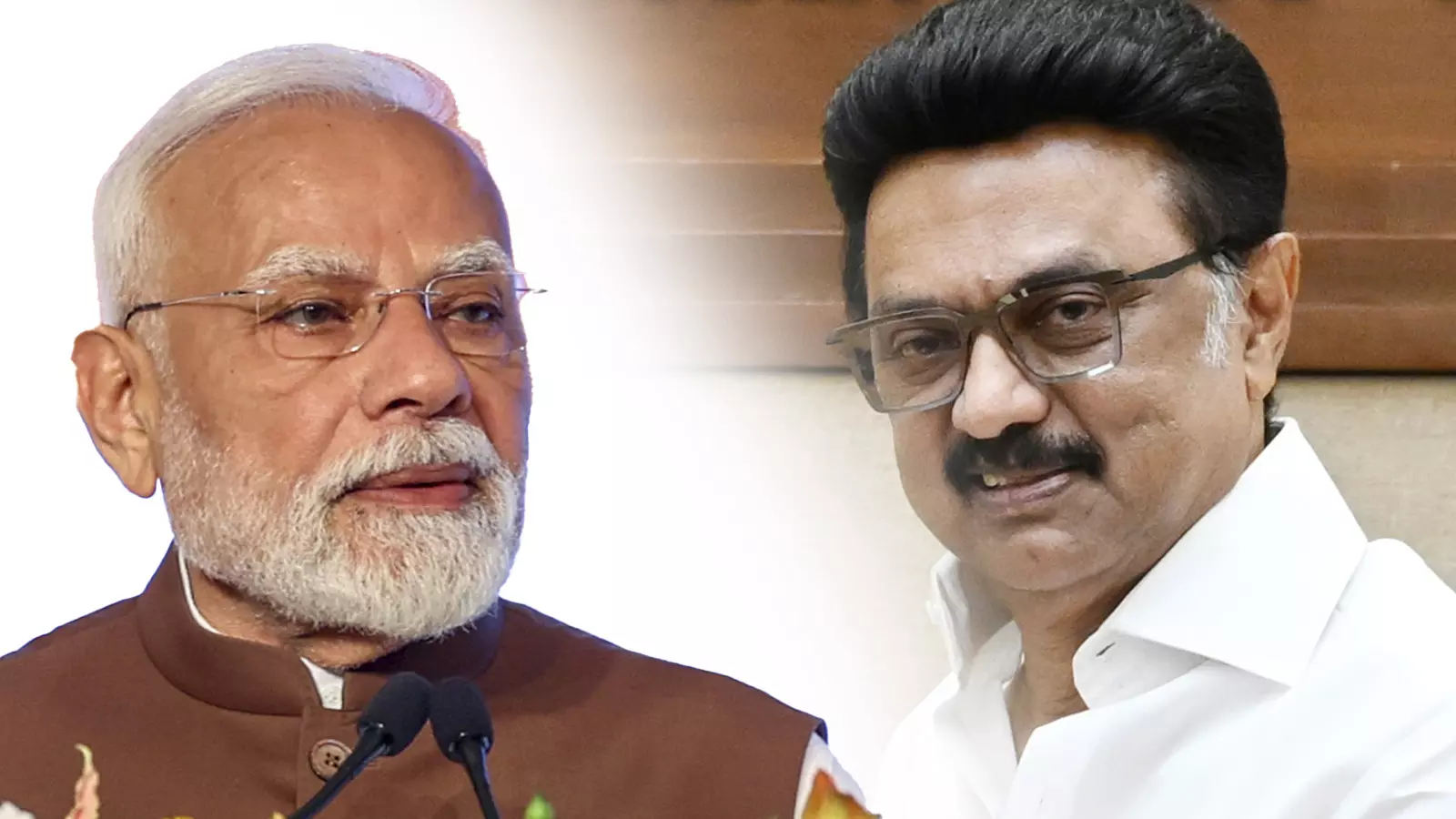
Delimitation | The 34-vote gap: Who BJP is counting on, and who could still say no
The Centre is learnt to have accepted DMK's demands on Tamil Nadu's 7.18% share and a 25-year freeze on the inter-state ratio as the INDIA bloc meets on Saturday

Prime Minister Narendra Modi’s cabinet on Friday (November 27) cleared the legislative package to reconfigure the Lok Sabha’s composition and alter geographic boundaries of constituencies (delimitation) for re-introduction in Parliament during its special sitting scheduled to commence on November 30.
The Bills had failed to get Parliament’s approval seven months back as the Centre’s Constitution (131st Amendment) Bill, the enabling legislation for delimitation and early roll-out of women’s reservation, was negatived in Lok Sabha for lack of a two-thirds majority. That the Modi regime is ready for a fresh attempt to get the Bills passed suggests that it is now confident of securing a two-thirds majority – 360 MPs – in the 540-member Lok Sabha for the passage of its proposed amendments to the Constitution.
Officially, the Centre continues to be tight-lipped about where it has secured additional votes. There is, however, no denying that the ruling NDA coalition’s bench strength in both Houses of Parliament has shot up significantly since the humiliation it suffered in April with the Constitution (131st Amendment) Bill being negatived.
In April, the government had secured 298 votes in the Lok Sabha for the constitution amendment, against the required 360 votes. The NDA’s own numbers now stand at 326 MPs, thanks to mass defections from Mamata Banerjee’s Trinamool Congress (20 of its 28 Lok Sabha MPs have merged with the NCPI and extended support to the NDA) and Uddhav Thackeray’s Shiv Sena-UBT (six of its nine Lok Sabha MPs have joined the rival Shiv Sena of Eknath Shinde). Additionally, the BJP’s own strength has since gone up by one MP following the Nagaon bypoll while the party has also rekindled its old alliance with the Shiromani Akali Dal, gaining another MP in the NDA-fold in the Lok Sabha.
Where the shortfall of 34 votes might come from
On paper, that leaves the NDA with a shortfall of 34 votes to reach the 360-mark required to amend the Constitution. Sources in the BJP say they are confident of not just securing 360 votes but also of breaching that mark. The additional 34 votes, sources say, are expected to come from MK Stalin’s DMK and Sharad Pawar’s NCP-SP, which have 22 and 8 MPs, respectively, in the Lok Sabha. The NDA is also banking on votes from at least five of seven independent MPs and four MPs from the YSRCP of former Andhra Pradesh chief minister YS Jagan Mohan Reddy. BJP insiders say the possibility of cross-voting by individual MPs from various constituent parties of the Opposition’s INDIA bloc is also being explored.
Also Read: Delimitation: Can NDA reach 360? Here is the breakup
The DMK and the NCP-SP, which had both opposed these Bills in April on multiple grounds, have visibly softened their resistance to the Centre’s delimitation plans in recent weeks. The DMK, whose support is crucial for passing the constitution amendment, had demanded that delimitation must not alter the state’s current 7.18 per cent share of seats in the Lok Sabha, and that the inter-state ratio of seats in the Lok Sabha must be frozen for another 25 years.
The Modi cabinet is learnt to have approved both these changes in the text of the Bills to win over Stalin’s support. The assurances given to the ailing Sharad Pawar in exchange for support from the NCP-SP are, as yet, unclear. But the wily Maratha’s daughter, Baramati MP Supriya Sule, has dropped enough hints of her party’s impending support for the Bills, repeatedly asserting that the NCP-SP would “support the Bill if it is in the interest of the country” while maintaining that she is yet to receive a draft of the proposed laws.
INDIA bloc rattled by developments
Understandably, these frenetic developments have rattled the INDIA bloc, particularly its largest constituent – the Congress party. The passage of these Bills would come not just at the expense of Opposition unity, which is bound to get jolted if the NCP-SP backs the Bills along with former INDIA bloc constituent DMK. It will also, arguably, deal a lethal blow to the electoral prospects of the remaining INDIA bloc constituents as their candidates may find their existing constituencies redrawn beyond recognition once the delimitation exercise concludes.
The Congress party, which remains stridently opposed to the Bills even if reports of the Centre weaving into the text of the legislation assurances of freezing the inter-state ratio for Lok Sabha representation for 25 years are true, has called a meeting of the INDIA bloc on Saturday (November 28) at 11.30 am. It would be interesting to watch whether the NCP-SP participates in the meeting, and if it does, then whether it endorses the stand collectively taken by the alliance against delimitation.
Also Read: Modi, Shah’s real intention behind delimitation is to change Constitution: Congress
The Samajwadi Party, which has been giving the Congress leadership sleepless nights over seat-sharing negotiations for the upcoming Uttar Pradesh elections, has declared it would oppose the Bills. Other prominent INDIA bloc constituents – Mamata’s Trinamool faction, Hemant Soren’s JMM, the CPI, CPM, and CPI-ML(L), Lalu Yadav’s RJD, the SS-UBT, and others – have, for now, decided to back the INDIA bloc’s collective stand on the Bills. However, given that their collective strength now is much smaller than what it was back in April, the Congress realises that its coalition with its present numbers will simply fail to prevent the passage of the Bills if the Centre has, indeed, managed to strike a deal with the DMK and the NCP-SP.
Congress leaders Jairam Ramesh and KC Venugopal have dubbed the Centre’s legislative package as a ploy for gerrymandering constituencies to the electoral advantage of the BJP and its allies. That the exercise will be given effect to by a commission comprising a Supreme Court judge appointed by the Centre and the Chief Election Commissioner (the highly controversial Gyanesh Kumar), inspires little confidence among INDIA bloc constituents about delimitation being executed with fairness.
Sources said this is also expected to be the crux of the Congress’s argument when it meets with its allies on Saturday to formulate the INDIA bloc’s official position on the Bills and its floor strategy in Parliament against them.
DMK’s stand will be crucial
Having burnt its bridges with the DMK ever since it dumped the long-standing Dravidian ally for two ministerial berths in Joseph Vijay’s TVK-led Tamil Nadu government, the Congress party is now desperately imploring Stalin to stand with the INDIA bloc against the Centre’s legislative agenda. However, with Stalin taking the Congress’s switching alliances from the DMK to the TVK as a personal betrayal, the Congress, sources said, has been unable to have any direct communication with the former Tamil Nadu chief minister.
Also Read: Delimitation push: Centre clears 50 pc increase in Lok Sabha seats, 25-year freeze
The Congress high command is now attempting to reach out to Stalin through Trinamool’s Mamata Banerjee with a plea to oppose the Bills. Whether Mamata has better luck where the Congress leadership failed will ultimately decide the fate of the Centre’s contentious legislative agenda.
More importantly, the DMK’s stand will also determine whether the 2029 Lok Sabha polls, to be conducted after fresh delimitation if these Bills are passed when Parliament sittings conclude on December 3, will give the combined Opposition a fighting chance to defeat Modi or fall prey to a gerrymandering exercise touted to tilt the electoral landscape further towards the BJP.