







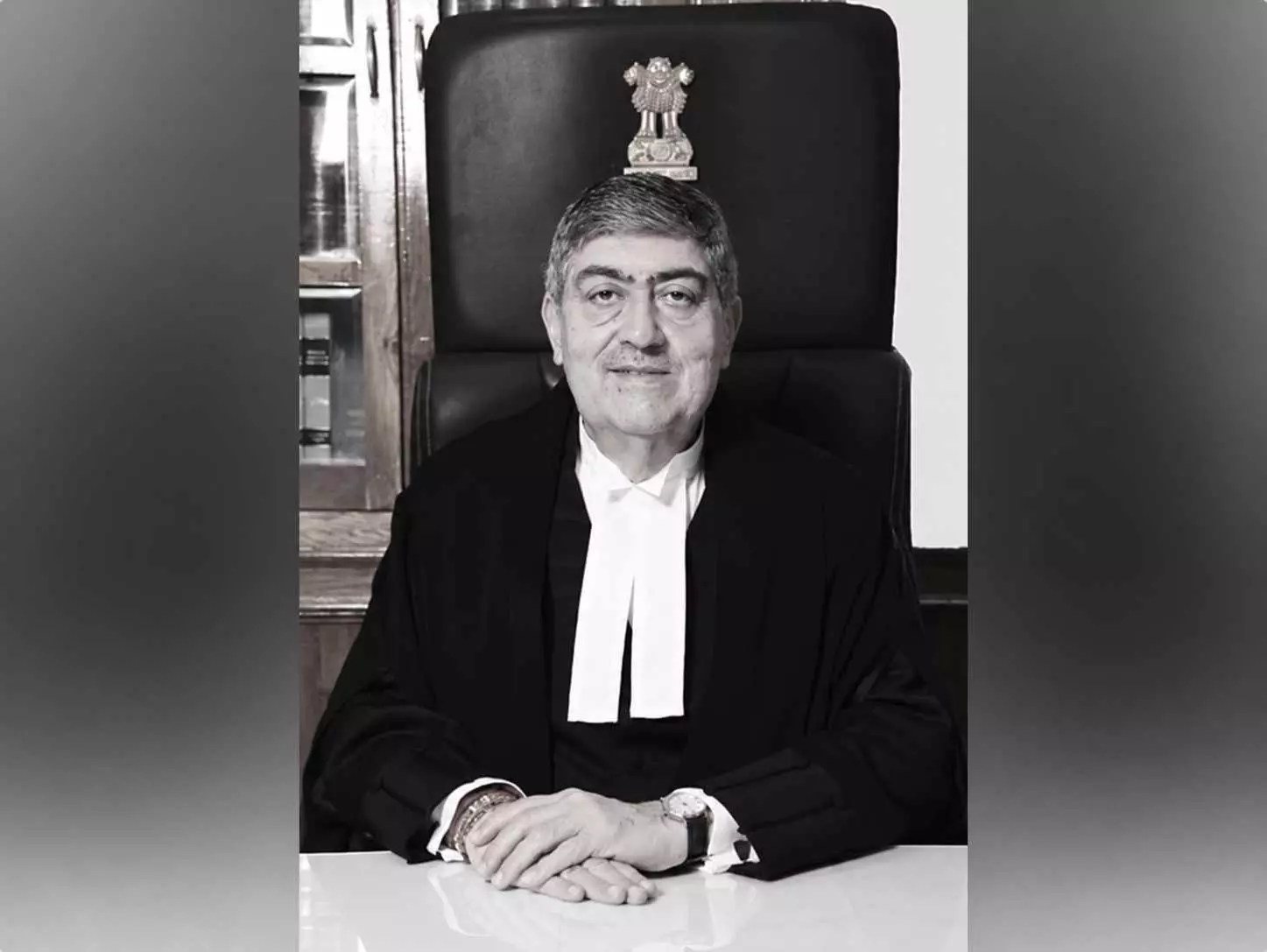
Justice Kaul said he did not oppose discussions with the government but objected to their timing. Screengrab: ANI
Justice Kaul questions govt consultations on judicial appointments under Chandrachud
In his forthcoming memoir, the former Supreme Court judge recalls a Collegium dispute over a sixth candidate and says Chandrachud was ‘too deferential’ to the government

Former Supreme Court judge Justice Sanjay Kishan Kaul has reportedly said that former Chief Justice of India DY Chandrachud discussed names proposed for judicial appointments with the government before the Collegium formally considered them. Kaul objected to the practice, raising concerns about discussions with the government before the Collegium had reached a decision.
Kaul recalls dispute over judicial appointments
In an interview with The Wire, Justice Kaul recalled an incident from his forthcoming memoir, Without Fear or Favour. He said Chandrachud had taken him aside during a Collegium meeting and asked whether he should call the government to seek its views on the proposed appointments.
Also read | Justice Dipankar Datta flags instances where SC Collegium failed to protect upright judges
Kaul said he opposed the move while the Collegium was still considering the names. According to his account, the members had agreed on five candidates, while Chandrachud wanted a sixth name, proposed at the last minute, to be approved as well. Kaul said neither he nor the other Collegium members found this acceptable.
"Maybe he had already taken some kind of approval [from the government] for the other names, including the sixth name," Kaul reportedly said.
"This has become unfortunately a practice of names being discussed, and some kind of previous discussion with the government. That used to happen. It has been happening, I think, before [CJI Chandrachud] and after. That is why it troubles me,” he added.
Objection centres on timing of govt consultations
Kaul drew a distinction between prior discussions with the government and consultations after the Collegium had made its decision.
He said he did not oppose discussions with the government but objected to their timing. "I don't think the concept of discussions is bad, but at what stage and in what manner it takes place is the problem," he added.
'Chandrachud was too deferential to govt'
Kaul said he believed Chandrachud was troubled by the Collegium's refusal to approve the sixth name. "I think that was troubling him," he said.
Also read | SC collegium recommends Sanjay K Agrawal as chief justice of Rajasthan HC amid row
"There is a judicial side and an administrative side to a Chief Justice. I would not be concerned with the judicial side. I believe he had the intellectual heft, capacity and the hard work to do so. But in consultation with the government, I felt he was too deferential [to the government] than necessary. On administrative issues, there was too much of a discussion with the government,” he added.
According to a report in The Indian Express, Kaul writes in his forthcoming memoir that he found the government had "far more respect for judges with a spine" and that "the government respects judges who respect themselves".
Congress flags judicial independence concerns
Meanwhile, citing Justice Kaul's yet-to-be-released memoir, the Congress on Sunday flagged "serious questions" regarding the independence of the judiciary under the Modi government and asserted that the institution tasked with upholding the Constitution must remain free from the pressures of those in power.
Congress general secretary in-charge communications Jairam Ramesh shared a media report which quoted the pre-publication manuscript of Kaul's memoir as stating that Chief Justice of India Justice DY Chandrachud was "too deferential to the government" when it came to appointments.
In his post in Hindi on X, Ramesh said, "A book by former Supreme Court judge Justice Sanjay Kishan Kaul has raised serious questions regarding the independence of the judiciary during the tenure of the Modi government."
Justice Kaul highlights several concerning incidents - government interference in the appointment of judges, attempts to secure government approval prior to Collegium meetings, and the government's absurd questioning regarding the caste of a judge belonging to a minority community, he said.
Matters that many were previously hesitant to discuss openly have now been documented by Justice Kaul with measured, deliberate language, Ramesh said.
"Strikingly, a former Chief Justice of India (CJI) has not denied that discussions with the government take place prior to judicial appointments. When former CJI Justice Chandrachud acknowledges that the government engages with the CJI and plays a role in the appointment process, the concerns surrounding judicial independence become even more profound," Ramesh said.