



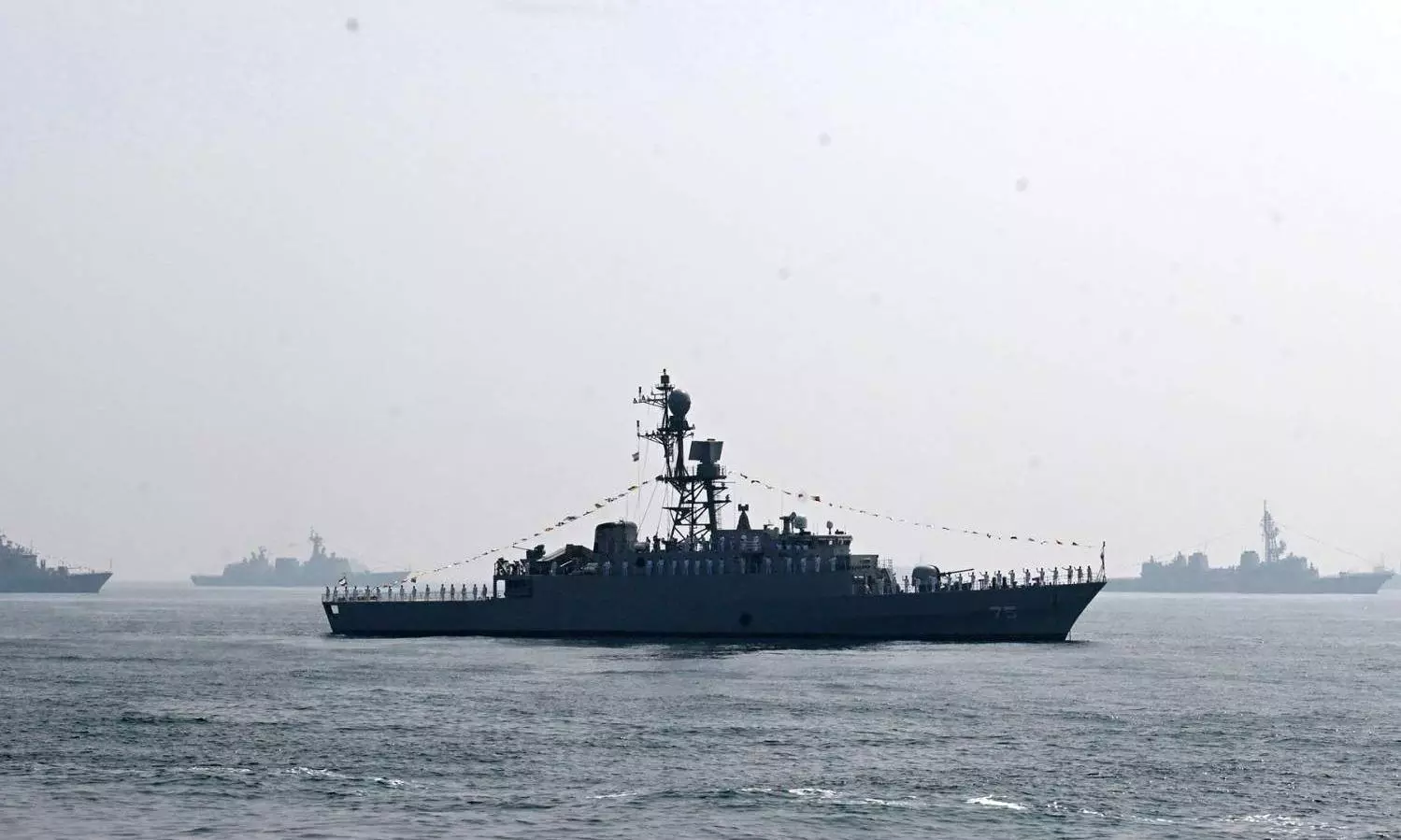
Iranian warships in Indian Ocean: How India responded as US-Iran conflict escalated
India allowed one Iranian naval vessel to dock in Kochi while another frigate, IRIS Dena, was sunk by a US submarine near Sri Lanka, Jaishankar said, explaining India’s response

In the aftermath of a US submarine sinking an Iranian frigate in the Indian Ocean near Sri Lanka, External Affairs Minister S Jaishankar on Saturday (March 7) explained India’s decision to allow another Iranian naval vessel to dock, describing the presence of foreign military assets in the region as part of the “reality of the Indian Ocean”.
Speaking at the Raisina Dialogue 2026 in New Delhi, Jaishankar outlined the sequence of events involving the Iranian ships. “Here's the situation. We got a message from the Iranian side that one of the ships, which presumably was closest to our borders at that point of time, wanted to come into our port. They were reporting that they were having problems. On the 1st March, we said you can come in and it took them a few days to sail in and then they docked in Kochi. There were a lot of young cadets.”
Also read | Explained: What is IRIS Dena and how the US-Iran conflict reached the Indian Ocean
“When the ships had set out and when they came here, the situation was totally different. They were coming in for a fleet review and then they got in a way caught on the wrong side of events,” he added.
Jaishankar explains India’s position
The remarks came amid developments involving three Iranian naval vessels that drew attention during the escalating tensions between Iran, the United States and Israel in the first week of March. The ships – IRIS Dena, IRIS Lavan and IRIS Bushehr – had been operating in the Indian Ocean and had earlier taken part in the International Fleet Review and the MILAN 2026 naval exercise hosted by the Indian Navy in Visakhapatnam in February.
Jaishankar said India’s approach in the matter was guided by humanitarian considerations. “One obviously had a similar situation in Sri Lanka, they took the decision which they did and one of them unfortunately didn't make it... We approached the situation from the point of view of humanity, other than whatever the legal issues were and I think we did the right thing,” he added.
“There are a lot of social media debates going on over this. Please understand the reality of the Indian Ocean," he said, noting that foreign military presences in the region have existed for decades. He cited the long-standing US military base at Diego Garcia and the presence of foreign forces in Djibouti, while also referring to infrastructure developments such as Sri Lanka’s Hambantota port.
Docking request and aftermath
Earlier on Friday, government sources said Iran had approached India seeking urgent docking for a naval vessel in Kochi after it developed technical problems, days before a US submarine sank an Iranian frigate in the Indian Ocean near Sri Lanka.
Also read | Did India provide intelligence inputs on Iranian warship to US?
Iran approached India on February 28, the same day the United States and Israel carried out joint strikes on Iranian targets, seeking permission for its naval vessel IRIS Lavan to dock at Kochi after it reportedly developed technical problems requiring urgent attention. The ship had been deployed in the region for the International Fleet Review.
Sources said India approved the request on March 1, and the vessel arrived in Kochi on March 4. The ship’s 183-member crew is currently being accommodated at naval facilities in the southern port city.
However, another Iranian vessel did not meet the same fate. IRIS Dena, which had been returning to Iran after taking part in a naval exercise in Visakhapatnam, sank in the Indian Ocean on March 4 after a torpedo strike from a US submarine. The warship issued a distress call at dawn reporting an explosion but had already sunk by the time Sri Lankan rescue ships reached the scene. More than 80 sailors perished when the frigate went down.
India clarifies naval response
Amid criticism that India had failed to assist the Iranian vessel despite it having been a recent guest, the Indian Navy outlined the events surrounding the sinking of IRIS Dena. In a statement issued on Thursday, the Navy said it initiated search-and-rescue operations after receiving a distress signal from the frigate.
A long-range maritime patrol aircraft was dispatched to reinforce search efforts already being conducted by Sri Lankan authorities, while another aircraft carrying air-droppable life rafts was kept on standby.
Also read | Rahul Gandhi slams PM Modi’s silence on sinking of Iranian ship IRIS Dena
INS Tarangini, which was operating nearby at the time, was redirected to support the rescue operation. In addition, INS Ikshak sailed from Kochi to aid the search efforts and continues to remain in the area to help locate missing personnel as part of humanitarian assistance, the Navy said.
Meanwhile, The Indian Express reported that India had also offered safe harbour at one of its ports to the Iranian frigate IRIS Dena before it was sunk by a US submarine near Sri Lanka.