







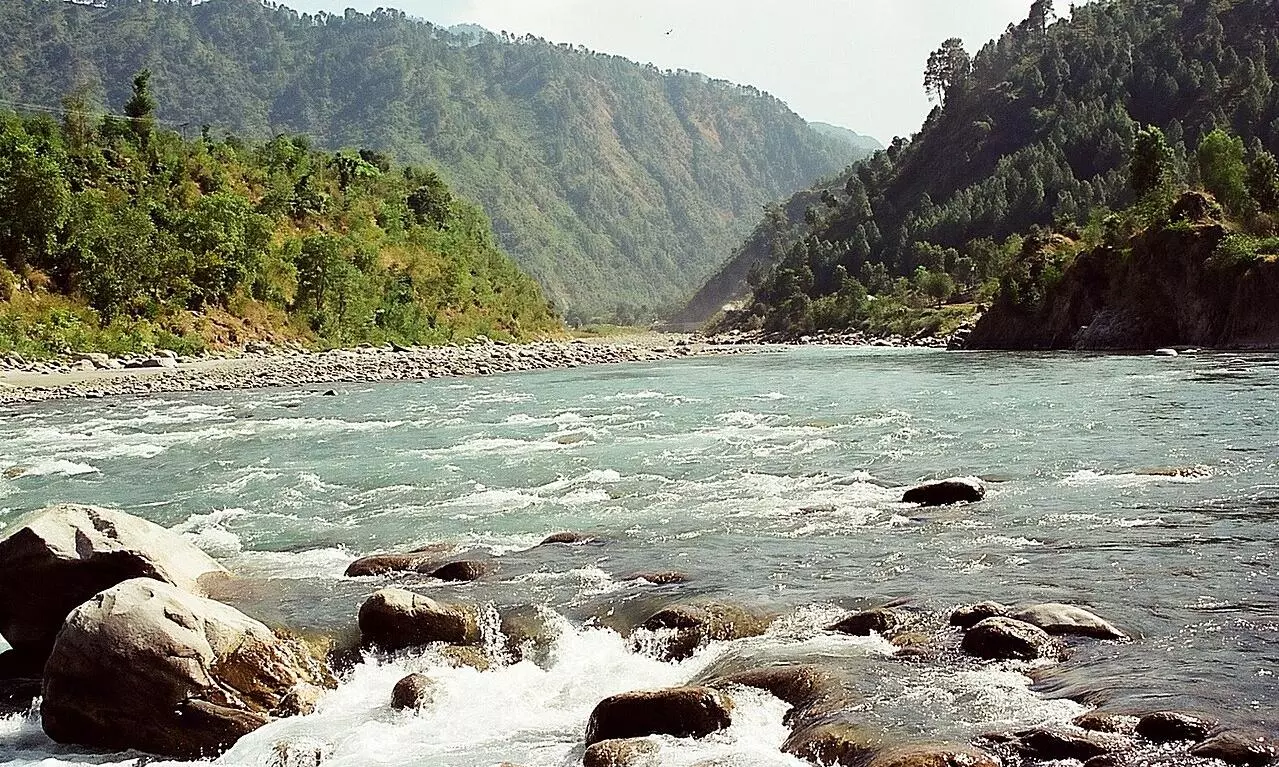
Pakistan’s water woes to deepen as India may restrict Ravi’s flow across border
India has exclusive rights over the Ravi, an eastern river of the Indus system; dam will enable India to divert excess water to drought-prone districts

As summer approaches, Pakistan’s water concerns could deepen with India reportedly preparing to stop the flow of surplus water from the Ravi river across the border. The move comes as the long-delayed Shahpur Kandi Dam project on the Punjab-Jammu and Kashmir border nears completion.
Jammu and Kashmir minister Javed Ahmed Rana told reporters the dam, expected to be completed by March 31, will enable India to block excess water from flowing into Pakistan and instead divert it to drought-prone districts such as Kathua and Samba.
“Excess water to Pakistan will be stopped. It has to be stopped. Kathua and Samba districts are drought-hit areas, and this project is our priority,” Rana said.
Currently, surplus water from the Ravi flows through Madhopur into Pakistan due to inadequate storage and diversion infrastructure on the Indian side. Once operational, the dam will redirect these waters for irrigation and power generation within India.
A project decades in the making
The Shahpur Kandi Dam Project was first envisaged in 1979, with the foundation stone laid by former Prime Minister Indira Gandhi in 1982. However, construction was repeatedly stalled due to disputes between Punjab and Jammu and Kashmir.
Declared a national project in 2008, the dam is being built at a cost of Rs 3,394.49 crore, with Punjab contributing 80 per cent and the Centre funding the remaining 20 per cent. Standing 55.5 metres high, the project includes a 7.7-km hydel channel and is expected to irrigate around 5,000 hectares in Punjab and over 32,000 hectares in Jammu and Kashmir.
Also Read: India stops Ravi water flow into Pakistan with barrage after 45-year wait
Former irrigation minister Taj Mohideen has said the dam’s operation does not violate the Indus Waters Treaty, as India has exclusive rights over the Ravi, one of the eastern rivers of the Indus system.
Treaty in abeyance after Pahalgam attack
India placed the Indus Waters Treaty “in abeyance” on April 23, 2025, a day after 26 civilians were killed in Pahalgam in an attack linked to Pakistan-based terrorists. The decision marked a significant shift in bilateral water cooperation, explicitly tying it to Islamabad’s actions on terrorism.
Also Read: India cuts flow through Jammu dam after suspending Indus treaty: Report
Under the 1960 treaty, brokered by the World Bank, India has rights over the Ravi, Beas, and Sutlej rivers, while Pakistan controls the Indus, Jhelum, and Chenab. Nearly 80–90 per cent of Pakistan’s agriculture depends on the Indus river system, and its limited storage capacity makes it particularly vulnerable to disruptions.
With the Shahpur Kandi dam set to become operational, India appears poised to fully utilise its eastern river waters — signalling a decisive recalibration of its water strategy amid strained ties with Pakistan.