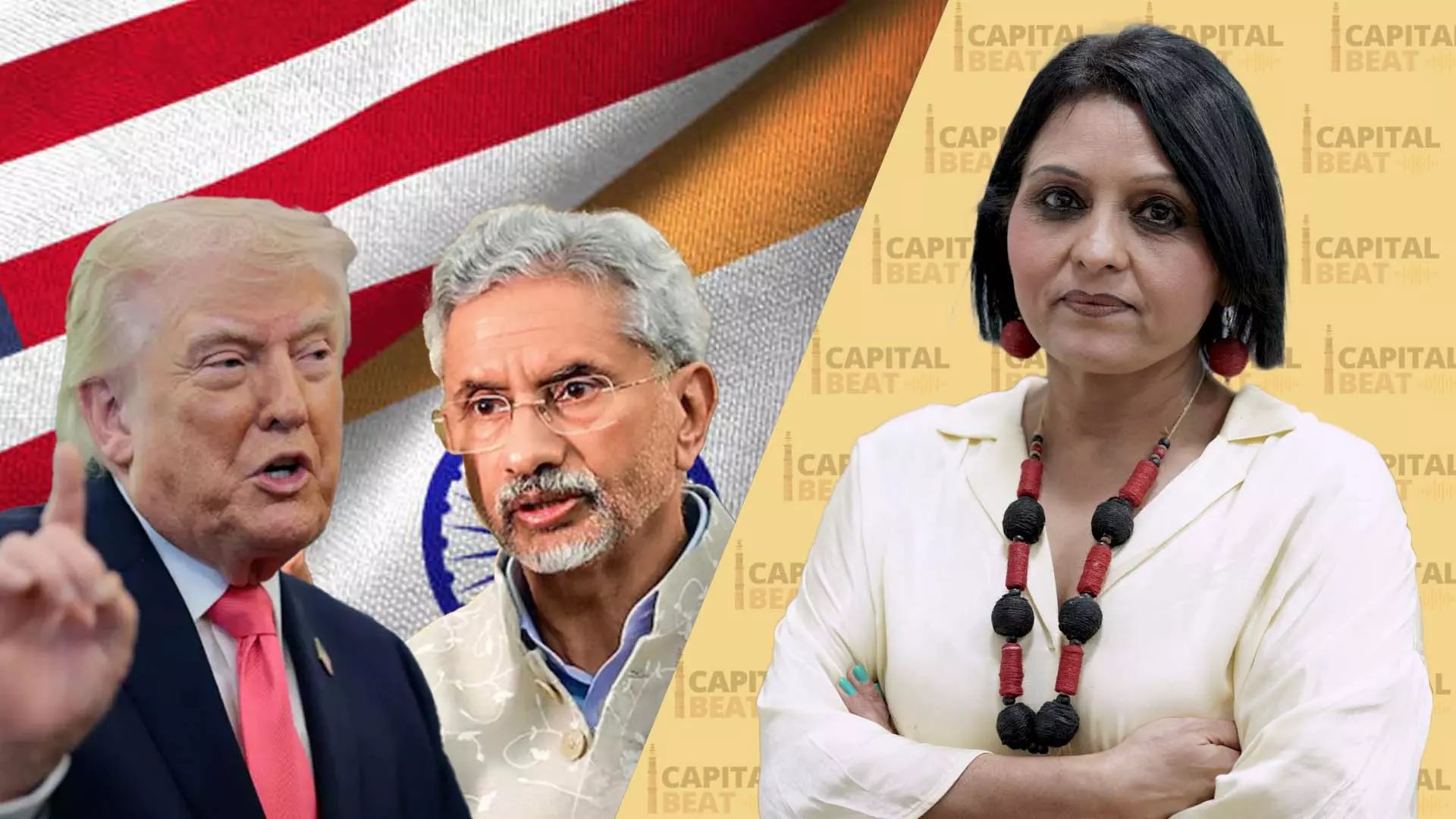
India’s Iran stance sparks debate: Pragmatism or missed mediation role?
Debate is on whether India should have acted as a mediator in the Iran conflict or adopted a pragmatic foreign policy approach

“India has missed the bus; it no longer has the credibility to act as a mediator,” said international affairs expert Aftab Kamal Pasha, igniting a sharp debate on India’s role in the ongoing Iran crisis.
As tensions escalate in West Asia, questions are being raised about whether India’s cautious stance reflects strategic pragmatism or a lost diplomatic opportunity.
The Federal spoke to Professor Pasha, former diplomat Veena Sikri, and political commentator Pushpraj Deshpande on whether India should have stepped in as a mediator.
Mediation debate
Professor Pasha argued that India’s close ties with the United States and Israel have complicated its ability to act as a neutral mediator.
According to him, Iran perceives these countries as aggressors, especially in light of ongoing attacks and civilian casualties. “You must keep a balance between both parties, and we have elbowed ourselves out,” he said.
Also Read: A crumbling Iran could turn out more dangerous
He added that India’s diplomatic positioning has weakened its credibility in the eyes of Iran, making mediation efforts difficult in the current scenario.
Lost opportunity
Pasha described the situation as a “very big loss” for India, especially given its aspirations to play a global leadership role.
He pointed out that India could have at least convened discussions within BRICS to build consensus or issue a joint statement. “Even a minimum common programme was not articulated,” he noted.
He also suggested that external pressures, particularly from the United States, may have influenced India’s restrained approach.
Pragmatic approach
However, former ambassador Veena Sikri strongly disagreed, rejecting the idea that India had missed an opportunity.
“This does not amount to a lost opportunity,” she said, emphasising that crisis negotiations are complex and evolve over time.
Sikri maintained that India enjoys strong relations with all sides involved, including Iran, and has been actively engaging through diplomatic channels.
Global engagement
Highlighting India’s outreach, Sikri said that Prime Minister Narendra Modi and External Affairs Minister S. Jaishankar have been in constant touch with global leaders.
Also Read: Are India’s ties with Israel based on hype rather than reality?
She stressed that diplomacy does not always happen publicly. “It doesn’t have to happen in the open. Discussions are ongoing,” she said.
India could have at least convened discussions within BRICS to build consensus or issue a joint statement
Sikri also dismissed claims that Pakistan has gained a strategic advantage, calling such conclusions premature and unsupported by facts.
Strategic autonomy
Pushpraj Deshpande offered a more critical perspective, arguing that India’s actions may have undermined its long-standing foreign policy principles.
He pointed out that India did not publicly condemn key developments, including alleged violations of international law. “Our commitment to a rules-based order has not been clearly demonstrated,” he said.
Deshpande also raised concerns about energy security, noting disruptions in oil supplies and rising costs as potential consequences of the crisis.
Policy criticism
Deshpande questioned whether India’s strategic autonomy is being effectively upheld.
“It is not in our national interest to leave our energy security vulnerable,” he argued, citing reports of disruptions in maritime routes and oil supply chains.
He further suggested that perceptions in global capitals may have shifted due to India’s diplomatic positioning.
Sharp exchanges
The discussion saw sharp exchanges between panelists, particularly on the interpretation of India’s foreign policy stance.
Sikri criticised what she termed “ideological arguments,” insisting that India’s approach remains consistent with its national interest.
She reiterated that strategic autonomy is fundamentally about safeguarding India’s interests through balanced engagement with all sides.
Call for unity
Sikri also expressed concern over the lack of bipartisan consensus on foreign policy issues within India.
“In times of global crisis, we need a unified approach,” she said, recalling earlier traditions of political consensus on international matters.
She urged stakeholders to focus on common ground rather than political differences when addressing global challenges.
The content above has been transcribed from video using a fine-tuned AI model. To ensure accuracy, quality, and editorial integrity, we employ a Human-In-The-Loop (HITL) process. While AI assists in creating the initial draft, our experienced editorial team carefully reviews, edits, and refines the content before publication. At The Federal, we combine the efficiency of AI with the expertise of human editors to deliver reliable and insightful journalism.