







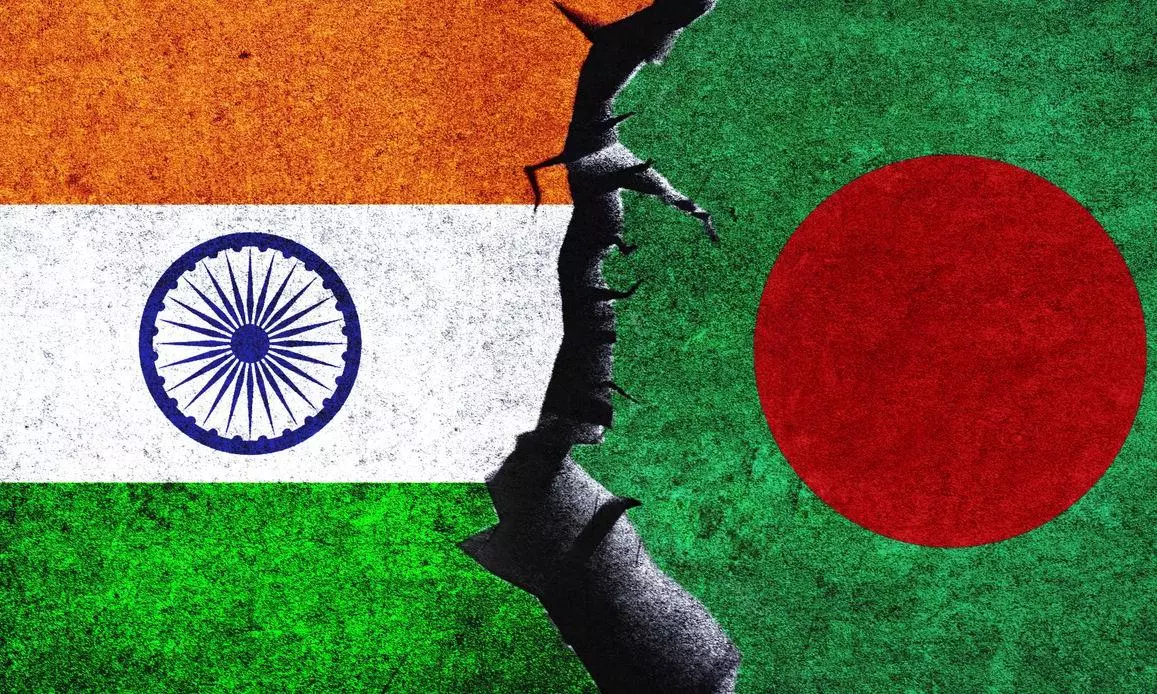
India marks Bangladesh as ‘non-family posting’ for diplomats, asks their kin to return
In a move reflecting heightened security concerns and strained bilateral ties, India has asked families of its diplomats in Bangladesh to return home

India has classified Bangladesh as a "non-family posting" for its diplomats, asking the families of all Indian officials stationed in the country to return to India. The decision marks a significant shift in diplomatic posture amid growing security concerns and deteriorating relations between the two neighbours.
According to media reports, the advisory was issued as a precautionary measure in view of potential threats from extremist elements. Despite the move, India’s High Commission in Dhaka and the four Assistant High Commissions in Chattogram, Khulna, Rajshahi, and Sylhet will continue to function normally.
Also Read: Bangladesh downplays attacks on minorities, says most incidents were non-communal
“As a precautionary measure, we have advised the dependents of officials at the high commission and four assistant high commissions to return to India,” Hindustan Times quoted a source as saying.
What is a ‘non-family posting’?
A non-family posting refers to a diplomatic assignment where officers are not permitted to be accompanied by their immediate family members, including spouses and children, for the duration of the posting. Such designations are typically made in regions facing security risks, political instability, or conflict.
For example, Indian postings to Pakistan are categorised as ‘no-children’ assignments, allowing diplomats to be accompanied by spouses but not children.
What does the move indicate?
The decision comes against the backdrop of worsening India-Bangladesh relations since the caretaker government assumed office in Dhaka in 2024, following the collapse of the Sheikh Hasina-led government. Nobel laureate Muhammad Yunus currently heads the interim administration.
Ties have remained tense since Bangladesh’s International Crimes Tribunal sentenced Sheikh Hasina to death. She is currently in India and is not expected to return to Bangladesh in the near future.
Also Read: Should India send Sheikh Hasina back to Bangladesh? What experts say
The situation has been further complicated by heightened communal tensions in Bangladesh. New Delhi has repeatedly raised concerns over attacks on religious minorities, accusing Dhaka of failing to adequately address the issue.
India raises minority safety concerns
India has criticised the Bangladesh government over a perceived rise in violence against minorities, particularly Hindus. One such incident involved Dipu Das, who was allegedly beaten and set on fire in Bhaluka over accusations of blasphemy.
Also Read: Hindu man dies in Bangladesh after mob chase over theft allegation
The killing of Islamist youth leader Sharif Osman Hadi also added to tensions after initial reports—later disproved—claimed that the accused had fled to India, triggering unrest.
In a separate but related fallout, Bangladeshi cricketer Mustafizur Rahman was dropped from the Kolkata Knight Riders squad ahead of the IPL 2026 season. Subsequently, the Bangladesh Cricket Board (BCB) announced its reluctance to play scheduled matches in India during the ICC Men’s T20 World Cup 2026, which India is set to co-host with Sri Lanka. The International Cricket Council is currently in discussions with the BCB to resolve the issue.