



'If you don't take a decision, we will': SC slams Odisha govt over Dara Singh's remission
The Supreme Court urged Odisha to decide Dara Singh’s remission plea, warning it would take its own decision if the state failed to act

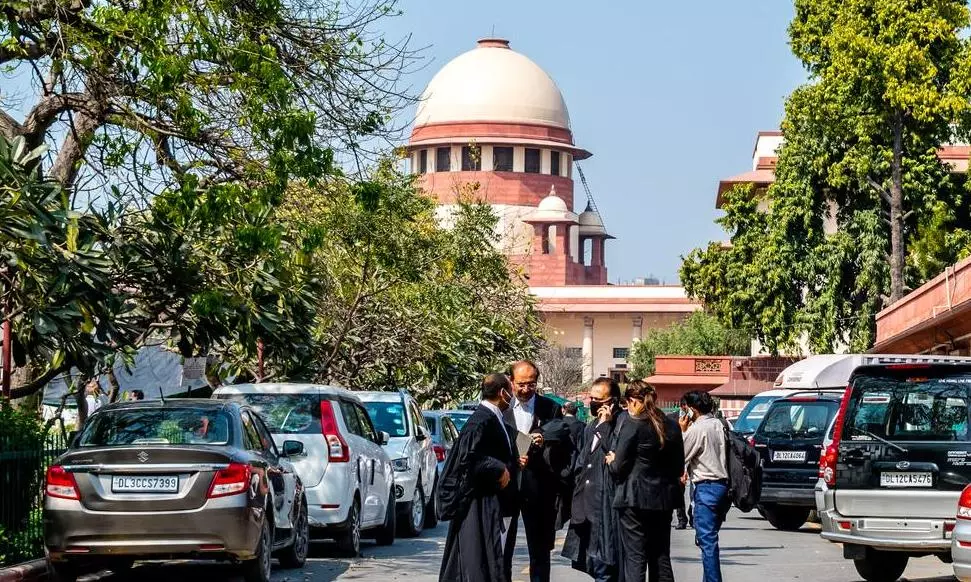
The Supreme Court on Wednesday (August 19) expressed strong displeasure with the Odisha government for not deciding the plea by Ravindra Pal alias Dara Singh, who is serving a life sentence for the murder of Australian missionary Graham Stuart Staines and his two minor sons in 1999, for remission of his sentence.
During the hearing, the bench of Justices Manoj Misra and Vijay Bishnoi told the state government that if it fails to decide on the plea, then the court will take a call on its own, adding that it would not tolerate “avoiding: taking a decision.
"You take a decision whatever you want to. Otherwise we will take our own. If you don't take a decision, we will… We can't tolerate this avoiding taking a decision.” It added.
Court seeks decision on remission
Pointing out that the matter has been repeatedly adjourned to enable the concerned authority to decide on the plea of remission of sentence given to Singh, who has been incarcerated for a period exceeding 26 years, the bench stated that when the matter was adjourned on July 14, the State Sentence Review Board was in the process of deciding on Singh's plea.
Also Read: Staines murder case: SC gives Odisha govt one month to consider Dara Singh's remission plea
The top court further stated that the counsel representing the state has now placed before it a letter of the Directorate of Prisons and Correctional Services addressed to the lawyer and stating that a report from the Keonjhar district jail is yet to be received.
"We are not informed about the decision of the Sentence Review Board," the top court said.
Odisha board under pressure
While posting the matter for September 2, the bench said the board should take a decision and apprise the court.
"We are not concerned about how you are communicating, to what authority you are communicating. You just take a decision," the bench observed. The bench said, "But don't try and dodge us by giving us the letter... How is it relevant? It is the board which has to take a decision."
Also Read: Supreme Court seeks NTA report on steps to implement NEET exam reforms
Singh, 63, approached the top court in 2024 seeking premature release on the ground that he has served over 24 years in jail and "repented" for his action taken in a fit of "youthful rage".
He said in his plea that he believes in karmic philosophy and prays for an opportunity to reform his character in order to cure the effects of bad karma he has gained through his actions.
Singh's plea for early release
While hearing the matter in July, the top court had given the Odisha government a month to decide on Singh's remission plea.
A mob led by Singh attacked Staines and his two sons -- 11-year-old Philip and 8-year-old Timothy -- while they slept in their station wagon and set the vehicle on fire in Manoharpur village of Keonjhar district on the intervening night of January 22-23, 1999.
Also Read: SC to form committee to probe claims of police excess, protest violence
Singh, the main accused in the triple murder, was convicted and sentenced to death by a CBI court in 2003.
The Orissa High Court commuted his death sentence to life imprisonment in 2005, and it was upheld by the Supreme Court in 2011.
Seeking the court's mercy, Singh assured that he would give back to society through "service-oriented actions".
What petition says
He also sought a direction to the state government to consider his case in accordance with the guidelines for premature release of life convicts issued in 2022 in the three cases in which he was convicted.
Singh, who is lodged in the Keonjhar district jail, said he had undergone more than the qualified period of sentence of 14 years under the April 19, 2022, policy and spent over 24 years of actual imprisonment without remission.
Also Read: Supreme Court dismisses plea to end hanging, leaves door open for review
He also submitted that the appropriate authorities were under legal obligation to consider his case for premature release under the "Guideline for Premature Release 2022" passed by the Odisha government.
The authorities, he said, failed to act in accordance with the rules due to which his right to liberty, as enshrined in Article 21 of the Constitution, was jeopardised.
(With agency inputs)