Deadly summer: Heat wave crisis deepens as water shortages grip India
Extreme heat and vanishing water are pushing millions across India into a double crisis. Is this the country’s most dangerous summer yet?

Is India facing its most deadly summer yet?
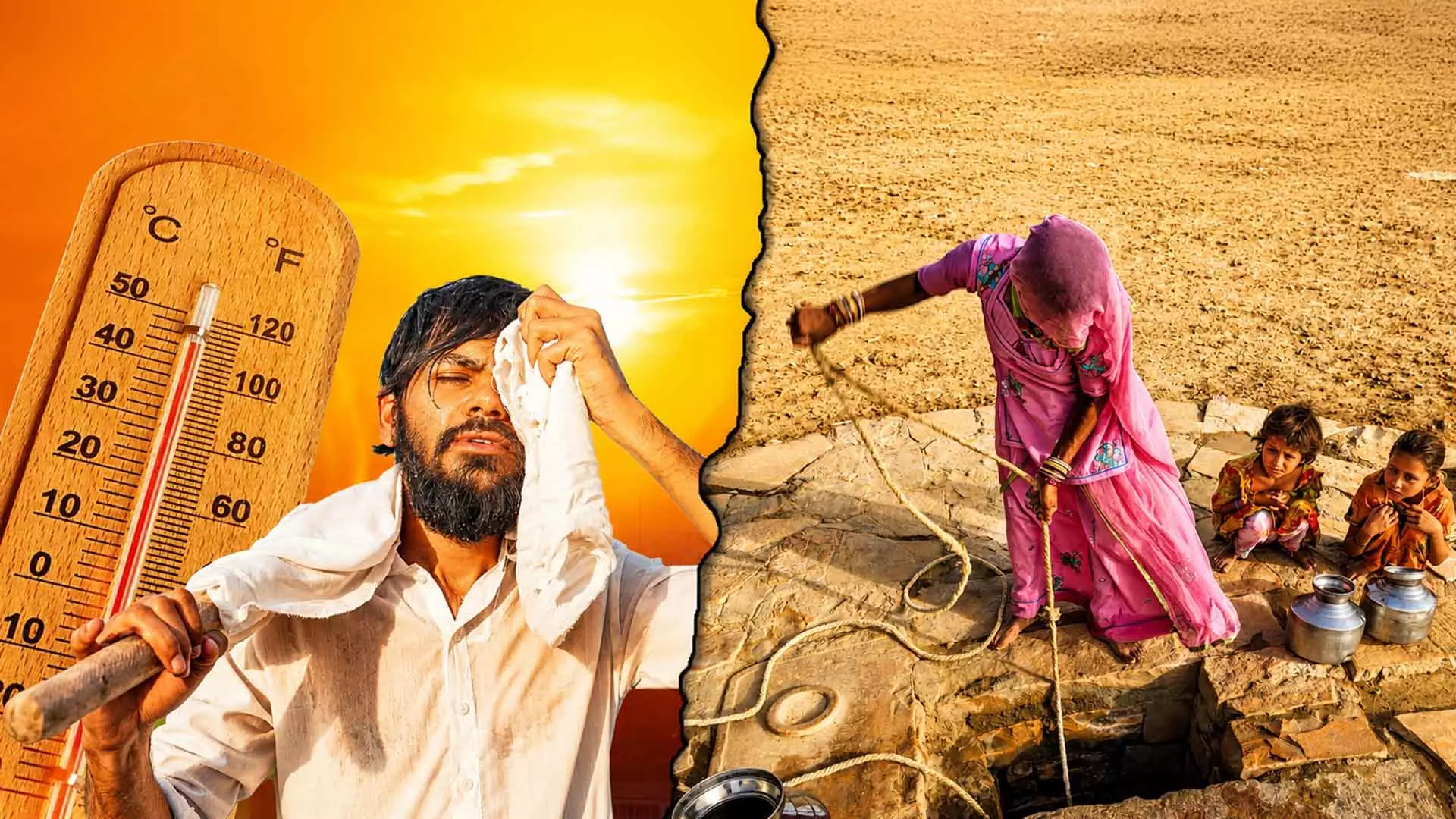
A brutal heat wave has tightened its grip across large parts of India, with temperatures crossing 45 degrees Celsius in several northern and central states.
Rajasthan has recorded temperatures nearing 48 degrees Celsius, while Delhi, Uttar Pradesh, Punjab and Haryana continue to face relentless heat during the day as well in the night.
But this summer, the crisis is no longer just about rising temperatures. Water scarcity is rapidly emerging as an equally severe emergency, leaving millions struggling to cope with extreme heat and shrinking access to drinking water.
Meteorologists say a combination of heat-dome conditions, weak western disturbances, El Niño-linked dry weather, urban heat island effects and long-term climate change has intensified this year’s summer. With limited rainfall and rapidly drying soil, land surfaces are heating faster and retaining heat for longer durations.
The result is a dangerous combination of extreme temperatures and disappearing water resources across several states.
Water crisis
In Rajasthan’s Barmer district, villagers who once depended on canal water are now surviving on little more than a single hand pump after supply disruptions. Reports say several cattle and goats have died due to dehydration and heat stress.
Also read: Why are Indian summers becoming unbearable? | Raghu Murtugudde interview
Similarly, in Shankargarh block in Prayagraj district of Uttar Pradesh, residents are travelling kilometres under scorching temperatures just to fetch drinking water.
The worsening heat has also begun affecting livestock across northern India.
Animals suffer
In Uttar Pradesh, veterinarians are reportedly treating goats suffering from dehydration, diarrhoea and high fever. Some animals are being placed on saline and glucose support to keep them alive during the peak livestock trading season.
The environmental impact is also becoming visible in urban areas. In Delhi, hundreds of fish died in a shrinking lake after water levels dropped sharply during the heat wave.
Hospitals across Delhi-NCR are also reporting a rise in cases related to dehydration, heat stroke, headaches, eye irritation and heat-triggered neurological problems.
Farm impact
India’s agriculture sector is also beginning to feel the pressure of the twin heat and water crisis. Mango growers across several states are reporting lower yields after prolonged heat, erratic weather patterns and worsening water scarcity damaged flowering and fruit development.
Also read: India holds all 50 spots on world's hottest cities list
India remains the world’s largest mango producer, with output estimated at nearly 28 million tonnes last year. However, farmers now fear repeated heat waves and shrinking water availability could severely impact future harvests.
Governments across states have announced emergency measures to deal with the crisis.
Emergency steps
Delhi authorities have deployed GPS-tracked water tankers, while Maharashtra has initiated round-the-clock water supply operations in affected areas.
Punjab hospitals have activated dedicated heat-stroke management units, with ambulances carrying ice packs and cold IV fluids for emergency cooling treatment.
At Shri Darbar Sahib in Amritsar, authorities have installed tents, fans, continuous water sprinklers and cool drinking water facilities to protect devotees from the extreme heat. However, despite emergency measures, long queues for water continue to define daily life for millions across the country.
As temperatures remain above normal with no immediate relief in sight, India’s summer of 2026 is revealing a deeper crisis — because extreme heat becomes far deadlier when even water begins to disappear.
The content above has been transcribed from video using a fine-tuned AI model. To ensure accuracy, quality, and editorial integrity, we employ a Human-In-The-Loop (HITL) process. While AI assists in creating the initial draft, our experienced editorial team carefully reviews, edits, and refines the content before publication. At The Federal, we combine the efficiency of AI with the expertise of human editors to deliver reliable and insightful journalism.