Everyone — political parties, media, and civil society — needs an Election Commission of India that is clean, independent, and impartial.
'Rome was not built in a day, but it can be destroyed in a day': Lavasa on EC after SIR row
Former Election Commissioner Ashok Lavasa flags procedural flaws in SIR, questions voter deletions, and calls for greater transparency and consultation to restore ECI's credibility

In over 76 years of the history of the Election Commission of India, the current period represents an unprecedented era of intense public criticism and popular protests over decisions that are “largely of the ECI's own making”. Widespread agitations demanding Chief Election Commissioner Gyanesh Kumar's resignation and a complete rollback of the Special Intensive Revision (SIR) process have brought institutional neutrality under severe scrutiny.
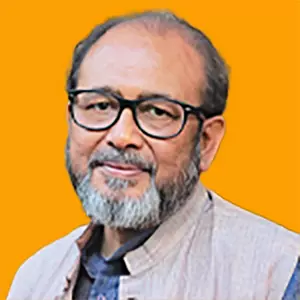
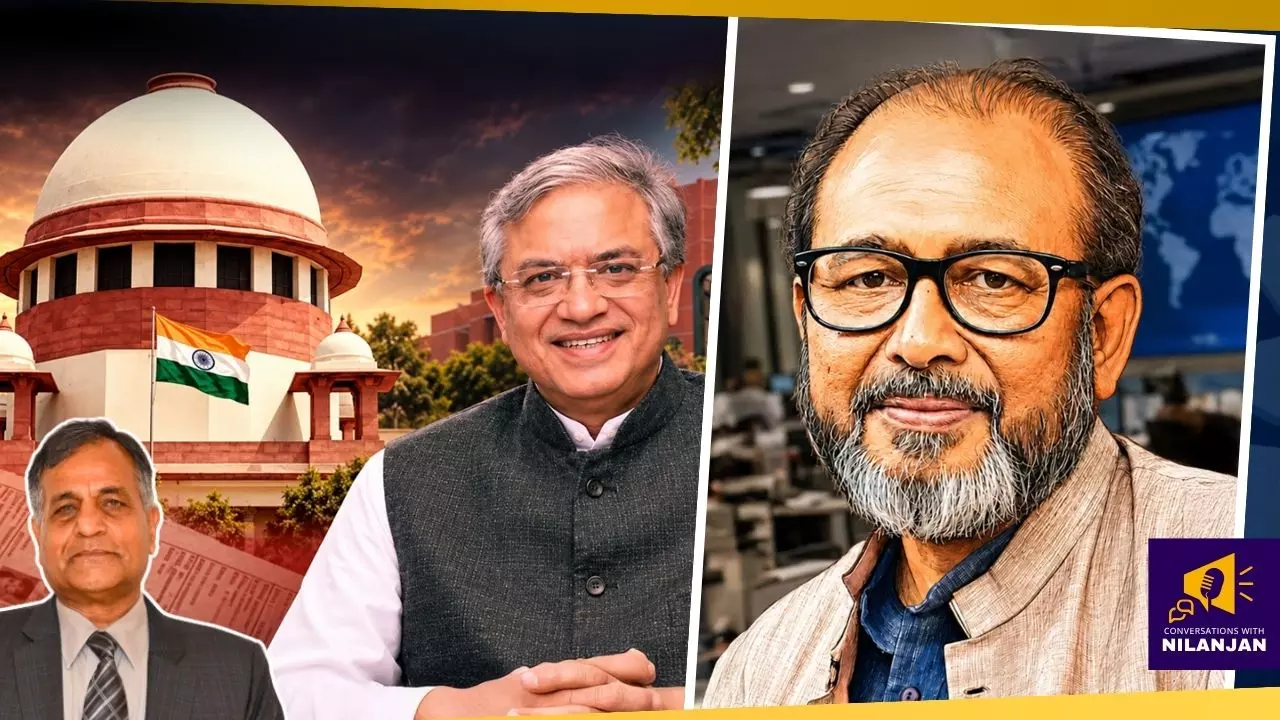
The Federal spoke to Ashok Lavasa, former Election Commissioner of India, to unpack allegations of voter deletion, internal dissent, procedural infirmities, and the steps required to restore public trust in the country's electoral process.
Given the growing public protests and doubts surrounding the Election Commission's neutrality, is this the worst crisis of faith the institution has ever faced?
There have been controversies in the past when dealing with political parties and political personalities. Politics is about creating or finding issues and taking them to the popular court. In that process, controversies are created. But this particular phase is different from every other phase because, I am sorry to say, the controversy is largely of the ECI's own making.
How do you evaluate the recent internal disclosures regarding dissent among Election Commissioners and the ECI's subsequent responses in the Supreme Court?
I will have to read the latest affidavit in detail to comment on its specifics. I look at this entire situation from two standpoints: pre-Sept 23 and post-Sept 23.
The controversy around the Election Commission has its roots in the conduct of the Special Intensive Revision (SIR). The notification on June 24, 2025, announcing a nationwide SIR starting with Bihar, contained the seeds of the dispute. It was an abrupt decision because the electoral roll of Bihar had already been finalised and published in January 2025 as per routine rules ahead of the state assembly polls.
Also Read: Supreme Court to hear pleas seeking suspension of CEC Gyanesh Kumar today
The seeds of the controversy lay in phrases implying that those on the 2003 Bihar electoral roll carried a presumption of citizenship, while those enrolled after 2003 had to re-establish their eligibility through citizenship tests.
Post-September 23, the media report brought to light two major issues: whether the ECI was functioning as laid down in the law, and alleged irregularities or illegalities pointed out by the fellow commissioners themselves.
What must the Election Commission do to restore its image as a neutral umpire in India's democracy?
Rome was not built in a day, but it can be destroyed in a day.
It would be a pity if the Election Commission of India, or any constitutional authority, were to align its working to assist any political executive in pursuing their agenda. Their job is delineated in the Constitution: to prepare electoral rolls and conduct free and fair elections, which enabled it to build a massive reputation in the past.
Eligibility is strictly defined in Article 326. The figure of 13.4 crore removals being bandied around includes deceased voters, duplicate entries, and those marked absent or shifted. Being shifted from Kolkata to Delhi does not make a person ineligible; it means they are eligible in Delhi.
Also Read: Gyanesh Kumar row puts EC’s credibility to test in five state Assembly elections
Projections estimate India's adult population at around 102 crore, yet general election rolls dropped from 98 crore to around 88 crore post-deletions.
Look at West Bengal, where 38 lakh appeals were filed. Is the ECI satisfied with an adjudication process that might take a decade to determine people's voting rights?
Critics argue that protests over the SIR are politically motivated because concerns are raised primarily in non-BJP states like West Bengal rather than states like Tamil Nadu or Kerala. How do you view this criticism?
I have consistently maintained that the integrity of the SIR process should not be viewed through the lens of electoral outcomes. I am more worried about procedural infirmities and system unfairness than political outcomes.
The focus on West Bengal arises because it presents a unique situation where the Supreme Court had to set up an unprecedented apparatus involving 700 judicial officers to adjudicate logical discrepancies. In that judicial scrutiny, 53 per cent of the questioned voters were found to be eligible and re-admitted.
When the election schedule neared, the ECI announced polls despite knowing the appellate process was incomplete, compromising the voting rights of lakhs of electors.
Do you agree with allegations that the SIR exercise resulted in targeted disenfranchisement of specific communities?
If any analysis shows targeted deletion, it is deeply worrisome. However, one cannot conclude it was targeted without breaking down the underlying algorithm used for logical discrepancies. I am primarily concerned with any procedure so irrational that it easily strips people of their voting rights.
When our Constitution was framed, Sukumar Sen, the first Chief Election Commissioner, spent a year and a half ensuring maximum inclusion, enrolling 17.32 crore voters out of an estimated 18.02 crore adults without requiring extensive documentation. This democratic imagination was beautifully captured by Ornit Shani in her book The Making of the Indian Republic.
Also Read: INDIA bloc eyes momentum for Ramlila rally with ‘public impeachment’ of CEC Kumar
An extra letter in a name or a clerical error in age should not lead to deletion or scrutiny by the ECI. As long as a person exists in physical form, their identity is clear, and they meet ordinary residence criteria, they should be allowed to vote.
Mapping votes to parents or requiring proof of registration from 2003 makes no sense. If a parent was not on the 2003 roll, why should their child lose the right to vote years later?
Looking ahead, what concrete steps must the Election Commission take to rebuild public trust and institutional credibility?
The ECI taking steps to make procedures less onerous for electors by returning to the Special Summary Revision (SSR) is a welcome shift back to original principles. But long-term institutional credibility requires structural effort. Trust, once broken, is difficult to restore.
The two core principles that sustained the ECI throughout its history are transparency and a consultative approach.
Also Read: Oppn protests across states seek CEC Gyanesh Kumar’s removal, turn up heat over SIR
Everyone — political parties, media, and civil society — needs an Election Commission of India that is clean, independent, and impartial. That is the fundamental requirement of a functioning electoral democracy, and we must support the ECI in regaining that status.