



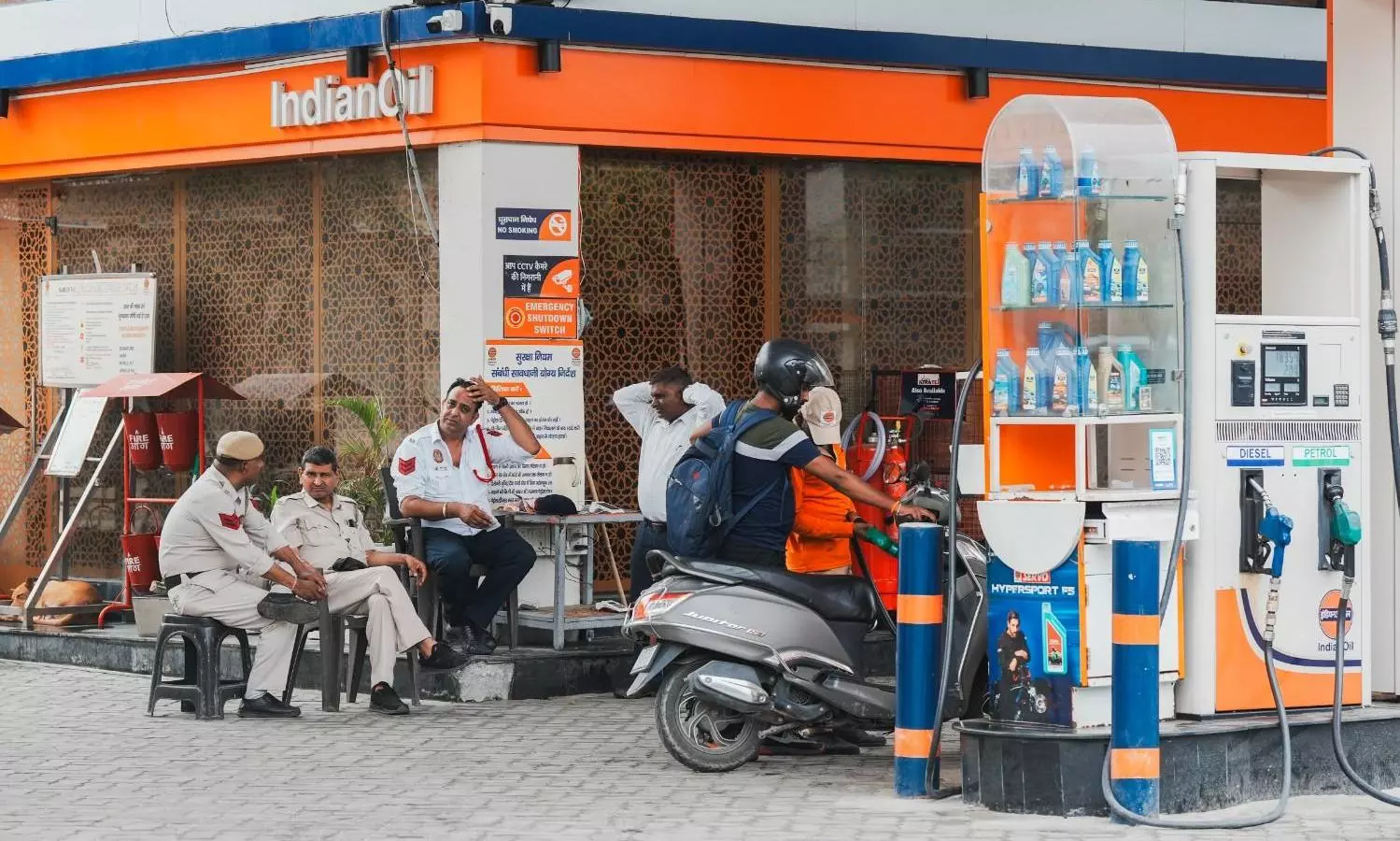
'E20 costlier to produce than pure petrol at current crude prices', says Centre in FAQ
The Centre says E20 petrol is costlier than pure petrol at current crude prices, defends ethanol blending, addresses mileage concerns, and rejects engine damage claims

Amid controversy over reported adverse effects of E20 petrol on performance and fuel efficiency of vehicles especially older ones, the Petroleum and Natural Gas Ministry stated on Friday (July 10) issued an FAQ stating that the fuel blend is currently costlier to produce than pure petrol at prevailing global crude oil prices. It pushed back against the perception that higher ethanol blending automatically makes fuel cheaper.
E20 'costlier' to produce
According to the ministry, maize-based ethanol is procured at around Rs 71.86 per litre even before GST, transportation, storage and depot handling costs are included.
Also Read: Are automakers misleading E20 consumers? | AI With Sanket
As the FAQ explains, "If international crude oil is trading at around USD 70 per barrel, E20 is actually costlier to produce than pure petrol." Only when crude prices climb to around USD 120-130 per barrel do "the economics naturally reverse and ethanol becomes even cheaper,” it added.
Why E20 matters
The ministry further stated that the ethanol blending programme was never designed to reduce petrol prices. Instead, its primary purpose is to reduce India's dependence on imported crude oil.
Also Read: E20 petrol row: India denies Bhutan export claim, documents tell different story
"The question should not be, 'Why isn't E20 cheaper?' The real question is, 'How did India manage to protect consumers from the full impact of volatile global crude prices?'" stared the FAQ.
According to the Centre, the programme has already saved more than Rs 1.97 lakh crore in foreign exchange, displaced nearly 316 lakh metric tonnes of crude oil imports, cut around 952 lakh metric tonnes of carbon dioxide emissions and transferred over Rs 1.66 lakh crore directly to farmers.
Mileage impact addressed
However, the ministry admitted that E20 can reduce fuel economy by around 3-5 per cent in some vehicles. But it argued that the trade-off is modest.
Also Read: Show me one vehicle damaged by E20 petrol: Nitin Gadkari challenges critics
"Mileage is only one parameter," the FAQ said, adding that E20 offers a higher octane rating, better anti-knock characteristics, faster combustion, smoother acceleration and cleaner engine operation. "In short, it is a cleaner, higher-quality and more efficient fuel than either E10 or pure petrol."
Rollout defended
Responding to criticism that the rollout was rushed, the ministry said India's ethanol blending programme has evolved over more than two decades.
It further stated that pilot projects began in 2001, followed by the introduction of 5 per cent blending in parts of the country in 2006. Blending remained low until 2014 before accelerating under the National Policy on Biofuels, 2018.
Also Read: Kejriwal writes to 29 automakers, seeks assurance on E20 fuel impact, customer compensation
India achieved 10 per cent blending in 2022 and reached the 20 per cent target during the 2025-26 ethanol supply year after expanding ethanol production, storage and distribution infrastructure.
No engine damage: Govt
Dismissing claims that E20 damages compatible vehicle engines, the ministry stated that the fuel underwent extensive testing for durability, corrosion, material compatibility and emissions before its nationwide rollout.
Feedback from manufacturers, including Maruti Suzuki and Hero MotoCorp, has not found evidence of E20-related corrosion, abnormal wear or reduced engine life.
It also rejected calls to sell pure petrol alongside E10 and E20 nationwide, saying multiple parallel supply chains would sharply increase logistics costs and complicate fuel distribution.