







DMK backs Centre’s delimitation Bill, slams Congress
The party's decision follows the Centre's proposed safeguards on seat redistribution, with A Raja saying Tamil Nadu's share of Lok Sabha representation will increase from 7.18 per cent to 7.21 per cent

The Dravida Munnetra Kazhagam (DMK) on Saturday (November 28) announced its decision to support the Centre's proposed delimitation legislation, with party leader A Raja saying Tamil Nadu's share of Lok Sabha representation would increase from 7.18 per cent to 7.21 per cent under the proposed arrangement.
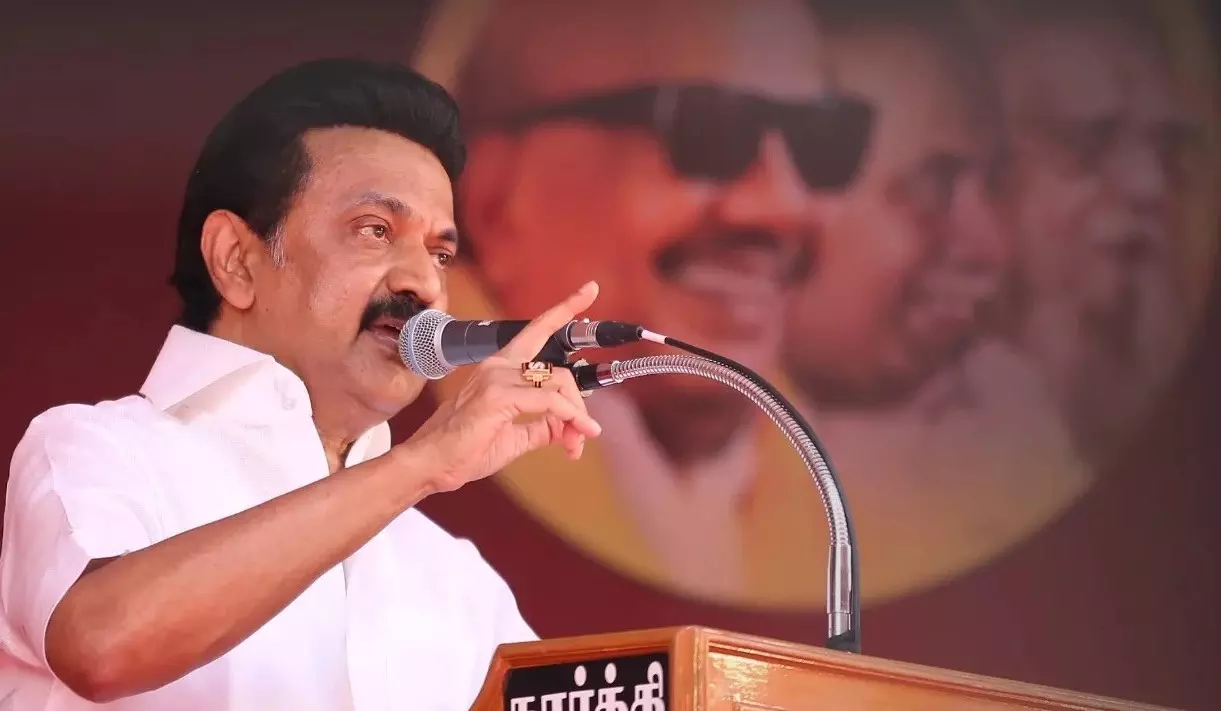
The decision was taken at a meeting of the party's MPs chaired by DMK president MK Stalin at Anna Arivalayam in Chennai. Speaking after the meeting, Raja said the party would support the fresh delimitation Bill. DMK MP Dayanidhi Maran also confirmed the party's decision.
DMK slams Congress
"We have decided to extend the DMK's support to the proposed (Bills) being introduced to provide a 50 per cent increase in seats across all states from the existing level," said the former Union minister.
Earlier, the DMK Parliamentary Party adopted a comprehensive resolution vowing to safeguard Tamil Nadu’s existing 7.18 per cent share of parliamentary constituencies and demanding a 25-year extension of the constitutional freeze based on the 1971 Census.
Also read: Delimitation: ‘Only BJP gaining; it may target smaller parties'
While outlining the party's consistent stand for "Fair Delimitation," the resolution launched a scathing attack on DMK's former ally, the Congress, accusing it of political opportunism, "surreptitiously jumping ship" for the sake of office, and making an "impracticable U-turn" on the delimitation issue.
Highlighting that the issue of delimitation has reached a "crucial juncture" with the 25-year freeze introduced by the 2002 constitutional amendment nearing its end, the Dravidian party warned that implementing delimitation based on the completed 2011 Census via a simple majority would drastically reduce Tamil Nadu's parliamentary representation.
DMK's earlier stance
The announcement marks a significant development in the debate over delimitation, an exercise that has drawn opposition from several southern states over concerns that a population-based redistribution of parliamentary seats could reduce their relative representation.
The DMK had earlier insisted that any expansion of the Lok Sabha should not come at the expense of Tamil Nadu's existing share of seats. Stalin reiterated these demands in a post on X on Friday, stating that the state's 7.18 per cent share must be protected and that the existing proportion of representation among states, based on the 1971 Census, should remain frozen for another 25 years.
The party's position appears to have been addressed in the Centre's revised legislative proposal, which provides for a uniform 50 per cent increase in the number of Lok Sabha seats across states and a freeze on the distribution of seats until 2051.
Also read: Delimitation: Can NDA reach 360? Here is the breakup
The Centre's proposal comes ahead of a special session of Parliament scheduled from November 30 to December 3, during which the government is expected to take up the delimitation-related legislation and the proposed implementation of 33 per cent reservation for women in legislatures.
The DMK, which has 22 MPs in the Lok Sabha, has been among the prominent voices opposing delimitation based on population growth. The party has maintained that its support for the exercise is tied to protecting Tamil Nadu's political representation and ensuring that states which have controlled population growth are not disadvantaged.
The decision comes amid speculation over the DMK's political equations following its separation from the Congress in Tamil Nadu. The party has rejected suggestions that its position on delimitation has changed because of its altered political alignments.