



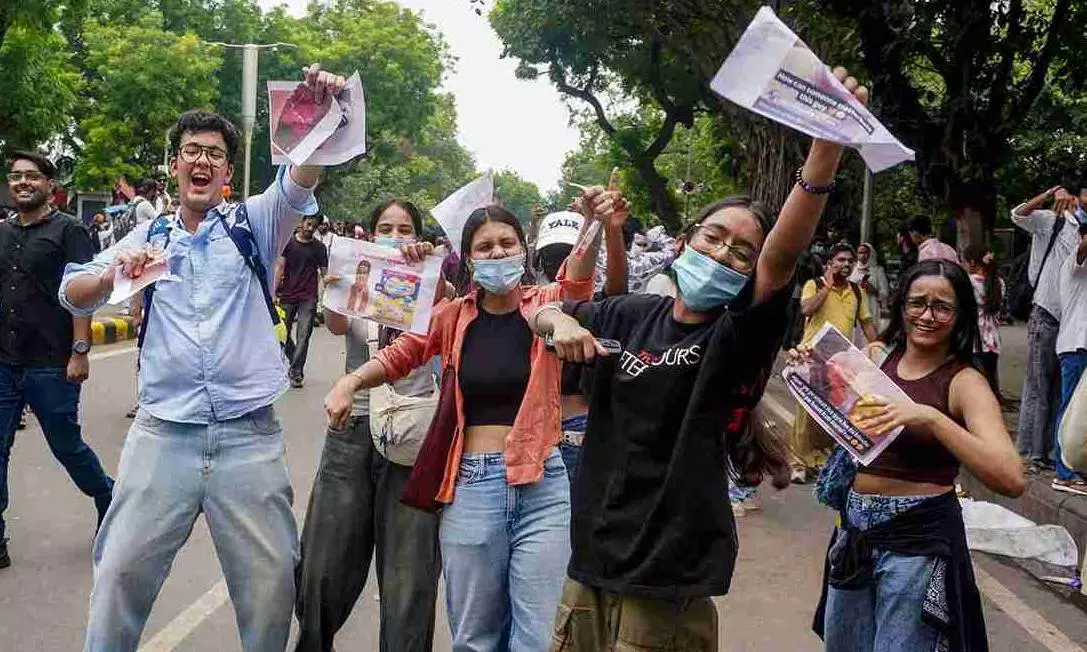
‘After Pradhan’s exit, protecting students from retaliation next big challenge’
Activists and experts say Pradhan’s resignation is only the first step, calling for NTA reforms, institutional autonomy and safeguards for student protesters

Union Education Minister Dharmendra Pradhan’s resignation has not settled several fundamental questions raised by the month-long student agitation over alleged NEET paper leaks, Anchal Gupta, a researcher with Yuva Halla Bol, said.
Gupta questioned why peaceful student protesters were allegedly branded negatively despite exercising their democratic rights. He also raised concerns over reported police action against protesters, including allegations of assault and excessive force, arguing that these incidents demanded independent accountability rather than administrative silence.
Exam reforms need autonomy
According to Gupta, the larger challenge is ensuring that activists, students and organisers are protected from any future retaliation. Gupta further questioned the functioning of India’s education system during Pradhan’s tenure, asking why examination controversies had recurred over several years without resolution. He was critical of the National Testing Agency’s structure, arguing that a body responsible for conducting nationwide examinations needed far greater institutional autonomy and academic oversight.
Also read | Minister's resignation, PM's midnight reels: Why CJP protest is a rare political spectacle
He also highlighted the plight of families who lost their children following the alleged NEET paper leak, saying political leaders needed to engage with them directly instead of confining the government’s response to administrative announcements.
Gupta was speaking at a Capital Beat discussion soon after Pradhan’s resignation.
Resignation not movement’s end
Puneet Nicholas Yadav, The Federal’s Political Editor, described the resignation as an immediate victory for the students’ movement, calling it a major political embarrassment for a government that had resisted calls for ministerial accountability for weeks.
However, he cautioned against treating the resignation as the conclusion of the movement, saying the coming weeks would reveal whether the government pursued genuine reforms or adopted a more confrontational approach towards protesters.
Momentum must not fade
Policy expert and author Pushparaj Deshpande agreed it was a victory, but said it should be seen as only the start of a larger struggle. He said the episode showed for the first time in over a decade that sustained public pressure could force the Union government to respond, and urged protesters not to let the momentum fade.
Deshpande called for structural reforms across the education sector, arguing that universities, institutional autonomy and public funding had steadily weakened over recent years. He urged protesters not to allow the momentum to dissipate after securing Pradhan’s resignation, maintaining that the minister's exit should not become a substitute for broader institutional reforms.
Also read | From JP to CJP: How Delhi remains the epicentre of India’s power-shifting protests
He also praised the younger generation for sustaining the movement despite police action, saying their creativity and persistence had transformed the protest into a wider democratic campaign.
Call for NTA overhaul
Senior journalist TK Rajalakshmi pushed back against calling the resignation merely symbolic, describing it as a substantive political development. However, she agreed that reforms could not stop at replacing one minister. Instead, she called for a fundamental restructuring of the National Testing Agency (NTA) and greater decentralisation of examinations to reflect India’s federal structure. She also credited student groups and other organisers for maintaining discipline through the protests.
