



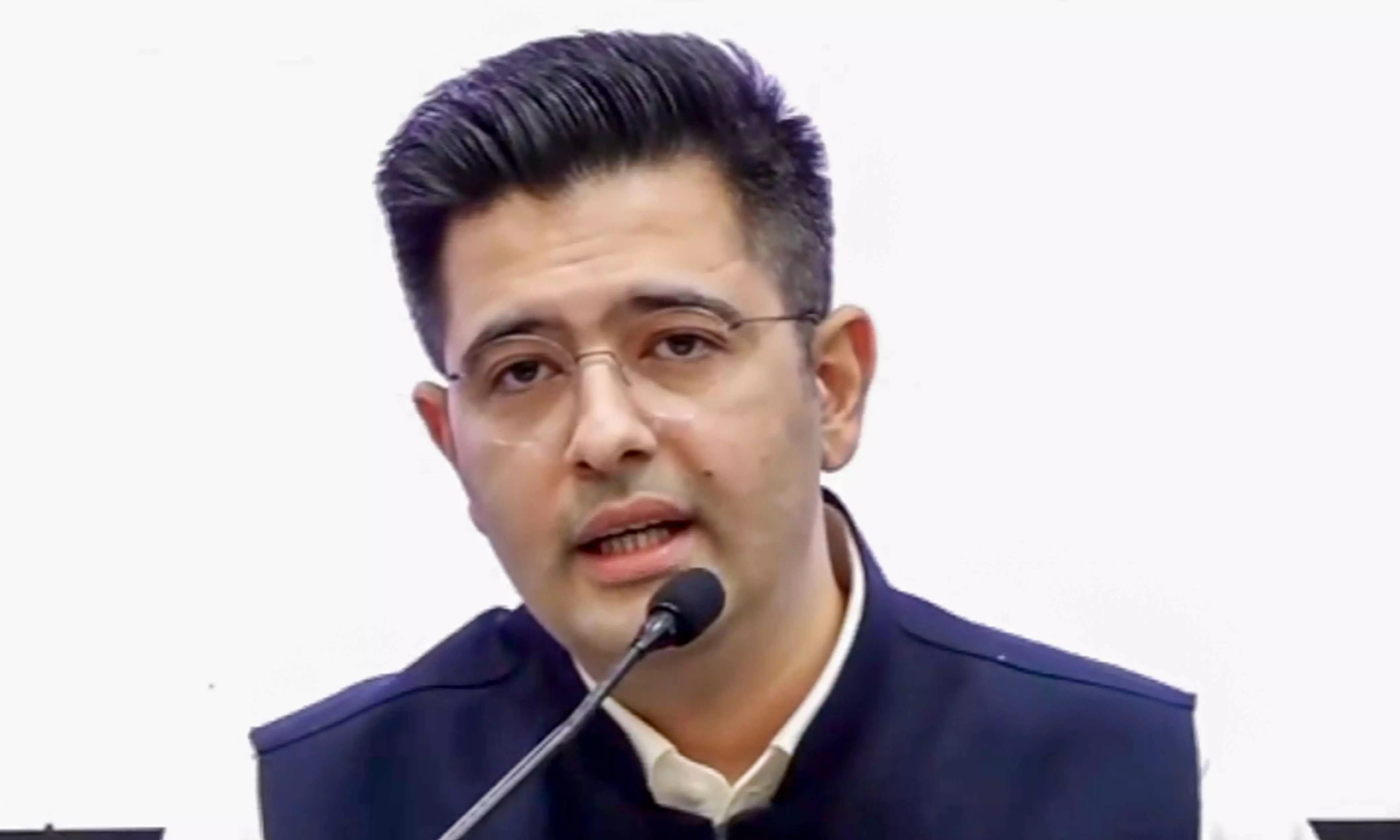
Raghav Chadha had carved out a niche for himself as a youth-centric politician, especially among Gen Z users. File photo: PTI
Delhi HC says public figures shouldn't be thin-skinned over criticism in Raghav Chadha case
Delhi High Court says public figures should accept criticism and satire while ordering removal of six objectionable posts in MP Raghav Chadha's defamation case

A public figure should not be so “thick skinned” so as to complain about any criticism of his or her decisions and such criticism should be viewed with humility, observed the Delhi High Court on Wednesday (July 1) while dealing with a petition filed by MP Raghav Chadha seeking protection of his personality rights and removal of several allegedly offensive social media posts.
Although, Justice Subramonium Prasad declined to issue a blanket removal order on all the social media posts flagged by Chadha, he ordered the removal of content in six documents submitted by the MP as the Court found them to objectionable.
On criticism and politics
“Majority of the allegedly defamatory content appears to be satirical expressions of the Plaintiff’s decisions in the political sphere, and such decisions are likely attract both bouquets and brickbats at the same time. As observed in a catena of judgments, a public figure should not be so thin-skinned so as to complain about any criticism of his decisions and such criticism ought to be viewed with humility,” stated the Delhi High Court in its order.
Also Read: Why Raghav Chadha lost nearly 1 million followers in 24 hours after joining BJP
It further stated that “humour” about changes about political party alliances were a part of politics adding that any action by a politician, regardless of his party affiliation, will invite criticism in most cases, but that does not by default make such content offensive.
"This Court observes that humor about change in political party alliances, governance, policies, etc. are a part and parcel of politics. Any action by a politician belonging to any political party will, in most, if not all circumstances, invite criticism from, upset, or create turmoil amongst, the general public or members from rival political parties, which may at times be expressed in the form of satirical humour. However, that does not automatically make such content offensive or defamatory,” stated the order.
‘Satire must be tolerated’
Justice Subramonium further stated that public figures holding positions of power must “accept being at the receiving end of the satirical humour as a necessary and inevitable aspect of their profession, though unpleasant”.
Also Read: Raghav Chadha cites ‘toxic work environment’ in AAP for exit
“Majority of the allegedly defamatory content appears to be satirical expressions of the Plaintiff’s decisions in the political sphere, and such decisions are likely attract both bouquets and brickbats at the same time. As observed in a catena of judgments, a public figure should not be so thin-skinned so as to complain about any criticism of his decisions and such criticism ought to be viewed with humility,” stated the order.
Stand on AI deepfakes
The Court made it clear that it does not endorse AI-generated deepfakes or morphed content that damages a person’s dignity.
"In this context, this Court believes that at least till the time most of such content is not regulated by a stringent legislation, it becomes a judicial duty upon receipt of grievances such as those in the present Suit, to examine whether the use of AI has reached the threshold of infringing upon an individual’s fundamental right to dignity or not. Needless to state, a fair balance is to be struck with an individual’s freedom of speech and expression which is also granted under the Constitution of India," stated the High Court.
Chadha's petition
The order came on a petition filed by Chadha before the Delhi High Court alleging that unidentified persons had used artificial intelligence and machine learning to create hyper-realistic deepfake videos, morphed images and voice-cloned content portraying him in a negative light. Through the petition, he sought protection of his personality rights and the removal of several social media posts contained in 52 documents annexed to the suit.
Also Read: Raghav Chadha, 6 other MPs quit AAP, join BJP
Chadha contended that the alleged campaign began after he and several other AAP parliamentarians joined the BJP.
Justice Subramonium Prasad made a prima facie observation that the suit did not, in any manner, relate to the protection of personality rights, reported the Bar and Bench.
The Court, however, took note of the submission made on behalf of Chadha that the claim for protection of personality rights would not be pressed and that the grievance would be confined to the allegedly defamatory content.
The High Court thereafter examined the 52 documents annexed to the suit and observed that a majority of them primarily concerned political decisions taken by Chadha.