



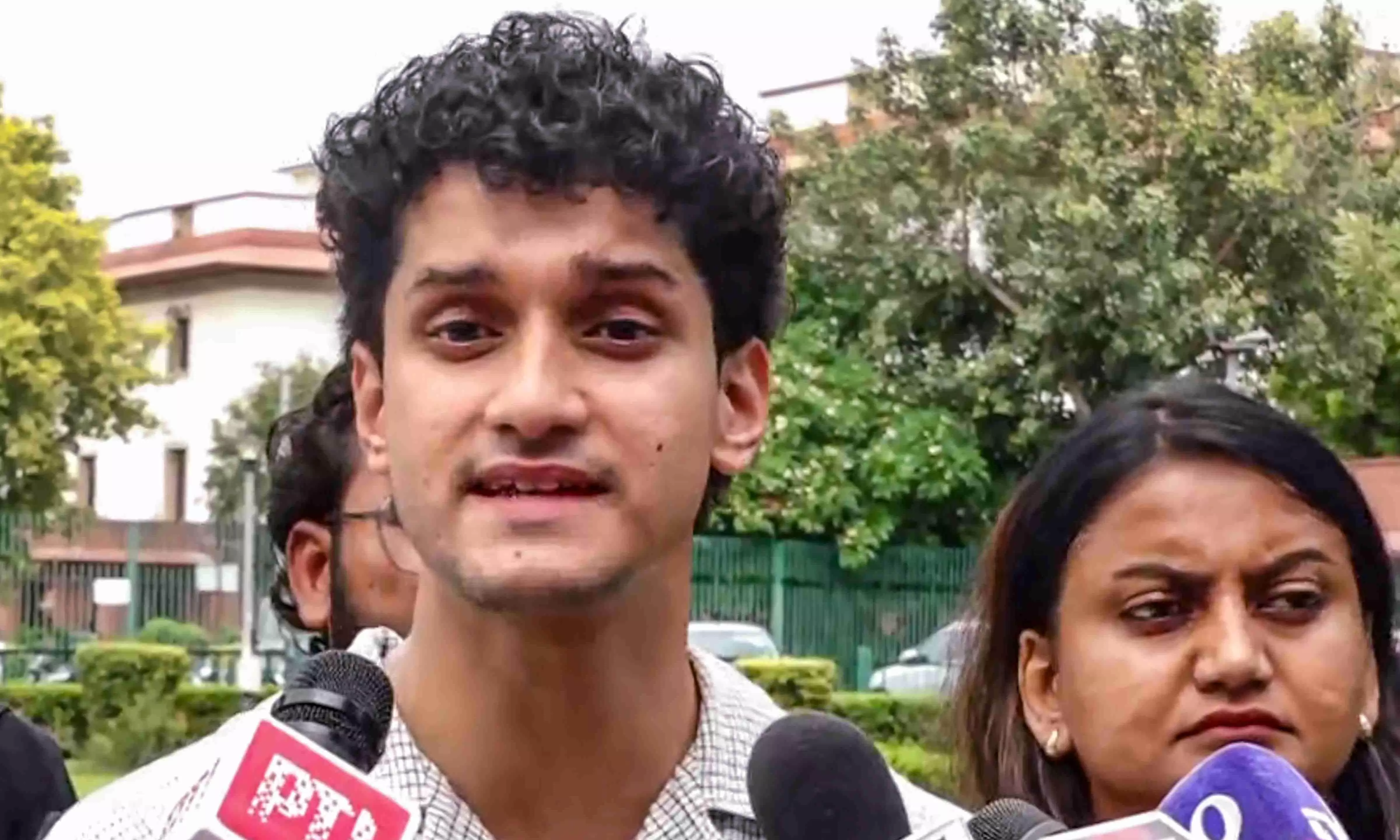
Cockroach Janta Party (CJP) spokespersons Saurav Das (left) and Ratna Singh (right) address media after a hearing over the recent NEET protests, at the Supreme Court, in New Delhi on Monday (August 3). Photo: PTI
CJP seeks withdrawal of FIRs against protesters after SC's clarification
The organisation said merely closing cases is insufficient, seeks complete withdrawal of FIRs and a written assurance against future action on peaceful protesters

The Cockroach Janta Party (CJP) on Monday (August 3) urged the Union government and BJP/NDA-ruled states to withdraw criminal cases against student protesters after the Supreme Court clarified that its earlier order on the release of detained protesters excludes only those accused of "grave and heinous" offences.
Welcoming the clarification, CJP spokesperson Saurav Das said the top court had removed any ambiguity surrounding its July 28 directions and called on governments to immediately honour the assurances they had earlier given to students.
Withdraw FIRs, says CJP
"Now that the Supreme Court has removed all confusion, we expect the Government of India and every BJP/NDA-ruled state to honour the assurances made to the youth on July 25 by withdrawing cases against students and implementing the court's directions without delay," Das said.
Expressing dissatisfaction with reports that the Delhi government may merely close or not pursue certain cases, Das argued that such a course would not provide adequate legal protection to the students.
Also read: CJP protest aimed to subvert democracy while using its privileges: RSS leader
He said the government should take steps to withdraw the FIRs, rather than simply allowing the cases to remain dormant, so that peaceful protesters are not exposed to future legal uncertainty.
Das also demanded a written assurance from the government guaranteeing that no retaliatory action would be taken in the future against students who participated peacefully in the demonstrations.
‘Will continue supporting protesters’
Das said the organisation had stood by the protesters since the beginning of the agitation by providing legal aid, medical assistance and other support to students detained or injured during the demonstrations.
"We continue to closely monitor developments across states and remain in regular touch with senior representatives of the Union government. The youth kept their promise. It is now for the government to fulfil its own commitments, both in letter and spirit," he said, while thanking lawyers across the country who have represented the protesters.
CJP spokesperson Ratna Singh said the Supreme Court had also indicated that it could invoke Article 142 of the Constitution to quash FIRs if required.
Also read: CJP's Dipke dares 'emperor' to reveal degree after BJP targets his education funding
She said the organisation was in touch with the family of the teenager protester, who had alleged harassment, and reiterated that the CJP would extend legal assistance to women protesters who were allegedly harassed.
SC clarifies 'criminal antecedents'
Das' remarks came after the Supreme Court, while hearing petitions alleging police excesses during the nationwide student protests, explained the scope of its July 28 interim order directing the release of arrested protesters.
A Bench headed by Chief Justice of India Surya Kant clarified that the term "criminal antecedents" used in its earlier order refers only to persons accused of "grave and heinous" offences, addressing concerns that the expression could otherwise be interpreted broadly.
The court also observed that the Delhi government and other state governments were at liberty to close or withdraw criminal proceedings against protesters in accordance with law.
Court weighs probe mechanism
The Bench also indicated that it was considering setting up an independent mechanism to examine allegations of police excesses during the protests. It said two options were under consideration: a probe by a senior police officer or an inquiry headed by a retired judge, though it suggested the body may not formally be called a Special Investigation Team (SIT).
Also read: After Centre, CJP confronts BJP-ruled states, warns Bihar, Bengal over protesters' arrests
According to the court, the proposed mechanism would examine allegations against both the police and the protesters to ensure a balanced inquiry.
The Bench further suggested that authorities first compile details of all FIRs registered across states and in Delhi, classify them based on the seriousness of the alleged offences and the accused persons' criminal records, and then decide on the closure or withdrawal of cases involving those who do not fall within the category of serious offenders.
Growing demand for legal relief
The Supreme Court's clarification comes amid growing demands from student groups and civil society organisations for the withdrawal of criminal cases registered against participants in the protests, many of whom maintain they were exercising their democratic right to dissent.
CJP said it expects governments to implement both the spirit and the letter of the Supreme Court's observations, arguing that the clarification leaves little room for delay in extending full legal relief to students who are not accused of serious offences.