



Centre’s plan to increase Lok Sabha size by 50 pc will disadvantage southern states: Cong
Jairam Ramesh claims proposed 50 per cent hike in House strength could widen regional imbalance in South, Northeast, and West; no official confirmation from Modi govt

The Congress on Wednesday (April 1) claimed that the Modi government is proposing to "bulldoze" a bill to increase the size of the Lok Sabha by 50 per cent with the number of seats allocated to each state also to be increased by 50 per cent, and said such a move would "disadvantage" smaller states in the South, Northeast, and West.
There was no official word on the Opposition party's claims.
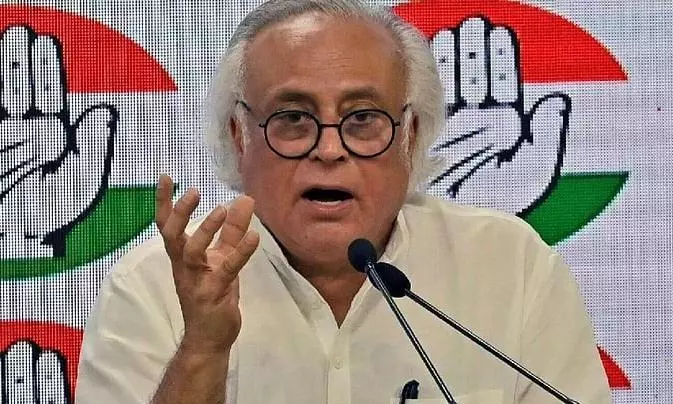
Congress general secretary in-charge communications Jairam Ramesh said Telangana Chief Minister A Revanth Reddy has already raised an alarm over the issue, and others may very well follow as this proposal becomes officially public.
"The Modi government is proposing to bulldoze a Bill to increase the size of the Lok Sabha by 50 per cent. The number of seats allocated to each state is also proposed to be increased by 50 per cent," Ramesh claimed on X.
‘Deeper implications’
The argument that a 50 per cent increase in seats across-the-board is equitable is deceptive, he said. Proportions may not change for the present but there are deeper implications that cannot be wished away, the Congress leader said.
"Any increase in the gap in the existing strengths of different states in the Lok Sabha will place South Indian states at a disadvantage. For instance, currently Uttar Pradesh has 80 seats and Tamil Nadu has 39. With the proposed Bill, UP's strength will zoom to 120 while Tamil Nadu will crawl up to at best 59. Similarly, Kerala will increase from 20 Lok Sabha seats to 30 seats, while Bihar will move from 40 to 60 seats. Overall, the southern states will gain 66 seats while the northern states will gain 200 seats," he argued.
Also Read: ‘Delimitation by stealth’: Opposition sees Centre’s ploy in early women reservation rollout
Prime Minister Narendra Modi is unilaterally preparing a law which will disadvantage smaller states in the South, Northeast, and West, Ramesh claimed.
‘Weapon of mass diversion’
Last week, taking a swipe at Prime Minister Modi, the Congress had claimed that the "U-turn Ustad" now wants to implement the women's reservation law without completing the delimitation and census exercises by passing amendments at a "special two-day session" of Parliament.
Also Read: Congress targets BJP's south push, raises delimitation concern ahead of polls
The opposition party had alleged that this was a "weapon of mass diversion" to change the narrative from the government's "foreign policy failures and setbacks and from the LPG and energy crisis facing the country".
Ramesh had said the Modi government is also planning to increase the size of the Lok Sabha and the Vidhan Sabhas by 50 per cent, which also needs careful deliberation.
Women’s reservation bill
In September 2023, the new Parliament House was inaugurated with the passage of the women's reservation bill - or Nari Vandan Adhiniyam, 2023 - that amended the Constitution to provide for one-third reservation of women in the Lok Sabha and Vidhan Sabhas and also provided for one-third reservation for women in seats reserved for scheduled castes and scheduled tribes, Ramesh had pointed out.
Both these reservations were to become operational after the delimitation and census exercises were completed.
Also Read: How Census 2027 could alter India's political landscape
The government has been considering bringing amendments to the women quota law for its implementation without the delimitation and census exercises. Union Home Minister Amit Shah had last month discussed the matter with some NDA constituents and some non-Congress opposition floor leaders. But consultations with the principal opposition party, Congress, and another major party, TMC, were yet to take place.
In September 2023, President Droupadi Murmu gave her assent to the Nari Shakti Vandan Bill. The law is officially known as the Constitution (106th Amendment) Act.
(With agency inputs)