







ASEAN summit begins in Manila: What’s on agenda? What’s in it for India?
Prime Minister Narendra Modi will visit the Philippines from November 16 to 17 to participate in the 23rd ASEAN-India Summit and the 21st East Asia Summit

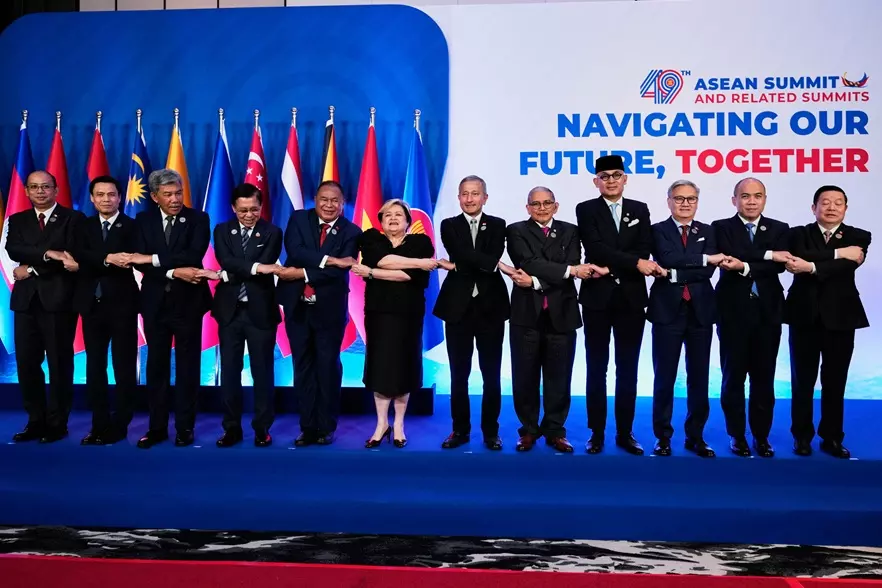
The 49th Association of Southeast Asian Nations (ASEAN) Summit officially got underway in Manila on Sunday (November 15), with Philippine President Ferdinand R Marcos Jr presiding over the opening ceremony as chair of the 11-member bloc.
The three-day summit is being hosted by the Philippines under the theme, “Navigating Our Future, Together”. Leaders of ASEAN member countries and dialogue partners are expected to discuss regional security, economic cooperation and other issues of common concern.
Prime Minister Narendra Modi will visit the Philippines from November 16 to 17 to participate in the 23rd ASEAN-India Summit and the 21st East Asia Summit. His programme also includes a dinner hosted by Marcos for visiting leaders and bilateral meetings on the sidelines. His participation is expected to provide an opportunity to strengthen India’s Comprehensive Strategic Partnership with ASEAN and explore new areas of cooperation.
Also read: Beyond ASEAN: Will Manila deliver a Modi-Trump reset and Quad revival?
Why is it important for India?
ASEAN remains an important pillar of India’s Act East Policy, with maritime cooperation, regional connectivity and economic ties forming key areas of engagement.
Maritime security and countering China: With 2026 designated as the ASEAN-India Year of Maritime Cooperation, PM Modi is likely to push for deeper naval ties, maritime domain awareness, and information sharing with Indonesia, Singapore, Vietnam, and the Philippines. Protecting shipping lanes through the Strait of Malacca is vital for India’s energy and trade security. India has also insisted that any South China Sea code of conduct must comply with international law (UNCLOS) and respect the rights of non-negotiating nations.
Fixing the trade deficit: ASEAN accounts for roughly 10 per cent of India’s global trade, with bilateral merchandise trade reaching approximately USD 114 billion in 2025. However, India’s trade deficit with the bloc has reportedly ballooned from USD 7.5 billion in 2011 to USD 44 billion in 2023. India is using the ongoing review of the 2010 ASEAN-India Trade in Goods Agreement (AITIGA) to push Vietnam and Indonesia for the tariff reductions and market access originally envisioned.
Growing defence partnerships: India is increasingly emerging as a trusted defence partner for Southeast Asian nations seeking to bolster their military capabilities amid China's growing assertiveness. Anchored by the landmark BrahMos missile deal with the Philippines, India is expanding defence-industrial cooperation and military training with Vietnam, Indonesia, Singapore, and Malaysia.
Northeast connectivity: Southeast Asia serves as India’s gateway for developing its Northeast. In Manila, India will seek ways to keep vital infrastructure lifelines — specifically the India-Myanmar-Thailand Trilateral Highway and the Kaladan Multi-Modal Transit Transport Project — moving forward despite ongoing instability in Myanmar.
Watch: 'India, China unlikely to end row unless they overcome competing ambitions in Asia'
Other geopolitical issues
Opening the talks, Marcos warned that shifting geopolitical tides and global crises are reshaping Southeast Asia faster than any single nation can handle alone. Across the three days, leaders will be grappling with several urgent pressures.
West Asia conflict: The US-Israel war on Iran has severely disrupted West Asian oil and gas supplies, hitting the Philippines (which declared a national energy emergency in March), Vietnam, and Malaysia particularly hard. Leaders are also worried about the safety of millions of ASEAN citizens working in the Gulf and the risk of conflict spilling into the Strait of Malacca.
US tariffs: Having been slapped with 10 to 12.5 percent US tariff hikes during Donald Trump’s second term, ASEAN states are looking to diversify trade partnerships. Trump arrives Tuesday afternoon for a special ASEAN summit and bilateral talks with Marcos before heading to Shenzhen for the APEC summit.
South China Sea standoff: Despite 10 rounds of talks this year between China and ASEAN over a maritime "code of conduct," analysts doubt a final breakthrough will be reached in Manila.
Regional crises: Leaders are pressing for solutions to Myanmar’s ongoing civil war — where the junta remains barred from political representation amid a stalled five-point peace plan — alongside a fragile ceasefire on the Thailand-Cambodia border and devastating cross-border haze from Indonesian wildfires that have scorched 2.88 million hectares and killed at least 3,500 people.