



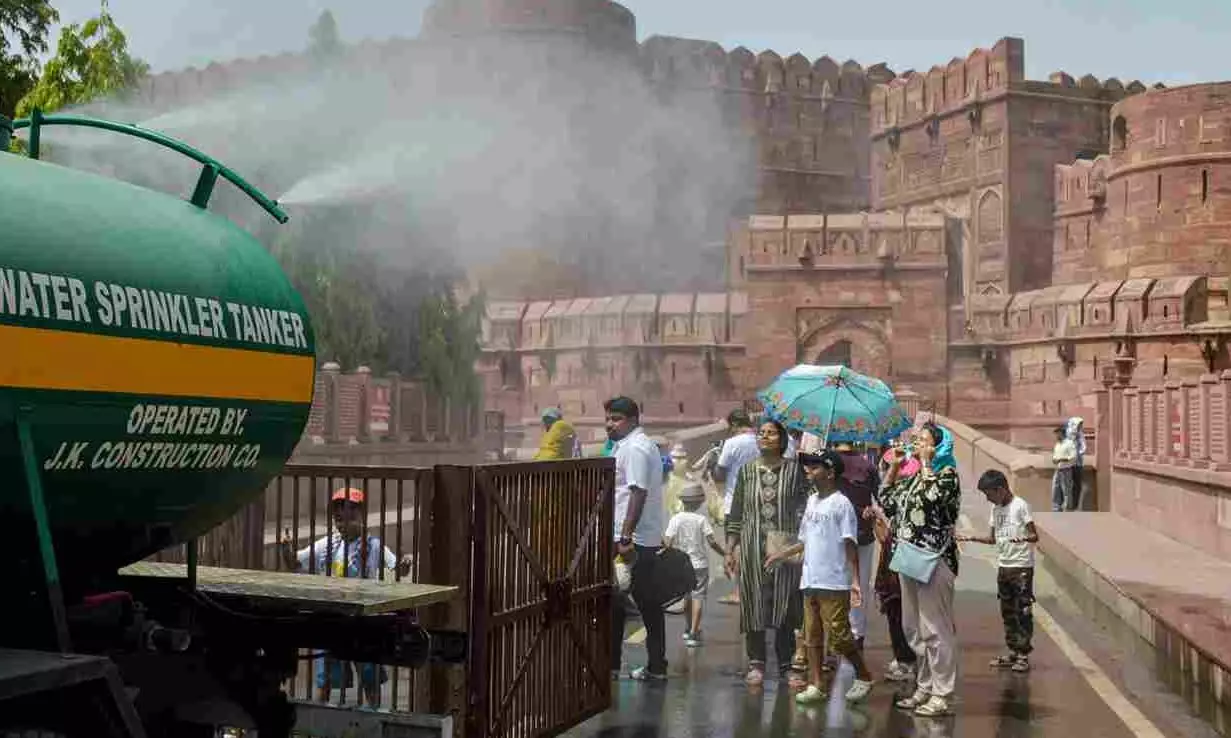
India emerges as the world’s hottest spot again; UP is the epicentre
Temperatures cross 44°C across several regions with 50 hottest cities in India; experts warn climate change, urban heat and dry weather patterns are intensifying conditions in UP

India dominated the global heat charts on Friday (May 23), with all 50 of the world’s hottest cities located in the country amid an intense heatwave sweeping across northern, central and eastern regions. India held this distinction in April, too.
Fresh data released by AQI.in showed Uttar Pradesh emerging as the worst-hit state, accounting for more than half the cities on the list as temperatures continued hovering between 43°C and 44°C across several districts.
Among the worst hit in UP were Moradabad, Akbarpur, Siddharthnagar, Etawah, Budaun, Banda, Firozabad, Hathras, Mainpuri, Prayagraj, Sitapur, Ghazipur, Mathura, Agra and Bareilly.
Uttar Pradesh bears brunt
Nagpur in Maharashtra topped the chart at 44°C alongside Raipur, Chandrapur and several Uttar Pradesh cities. However, the spread of cities from Uttar Pradesh across the rankings pointed to the state being at the centre of the heatwave.
Also read | World's heat capital: Why India is becoming the hottest place on Earth
Meteorologists say several atmospheric and geographical factors are driving the extreme conditions. One major reason is Uttar Pradesh’s location in the Indo-Gangetic plains, where hot continental winds from Rajasthan and central India travel freely across the flat terrain without major barriers to slow them down.
At the same time, the usual cloud cover expected in late May has largely remained absent. Normally, moisture from the Arabian Sea and Bay of Bengal begins increasing humidity and cloud activity over northern India ahead of the monsoon. This year, however, dry air has continued dominating the plains, leading to intense daytime heating and little cooling after sunset.
The India Meteorological Department (IMD) has issued red alerts for several districts in eastern and central Uttar Pradesh, warning of “severe to very severe” heatwave conditions.
Urban heat worsens crisis
Rapid urbanisation is worsening the situation. Cities including Agra, Prayagraj, Varanasi and Bareilly are witnessing strong urban heat island effects, where concrete structures and asphalt trap heat during the day and release it slowly at night, keeping temperatures elevated even after dark.
Dry soil conditions and declining vegetation cover in Bundelkhand and eastern Uttar Pradesh are reducing natural cooling caused by moisture evaporation.
AQI.in had earlier identified Uttar Pradesh as the worst-hit state within India’s expanding “interior heat belt”, warning that heatwaves are becoming longer and more widespread.
What has alarmed experts further is that the latest rankings were recorded in the evening, when temperatures usually begin to ease. Instead, much of north India continued to remain above 43°C.
For millions across Uttar Pradesh, the arrival of the monsoon is increasingly becoming a matter of survival rather than seasonal comfort.
Climate change fuels extremes
Meanwhile, a study by research consultancy Climate Trends, based on IMD data from 1961 to 2020, found that heatwaves across India’s Core Heatwave Zone have become more frequent and longer-lasting over the decades.
Researchers noted that severe heatwaves are also increasing in intensity and duration, driven by rising baseline temperatures linked to climate change.
The report highlighted that India’s heat crisis is no longer limited to high daytime temperatures alone. Rising humidity, urbanisation and warmer nights are making conditions more dangerous.
Also read | Two Indias, one weather: Heatwaves scorch North while rain drenches South
Night-time temperatures across India are increasing by around 0.21°C per decade, while humidity levels have also risen sharply in recent years. In many places, minimum temperatures are staying in the high 20s or even above 30°C, preventing homes and buildings from cooling down properly overnight.
Climate experts warn that these combined trends are turning heat into a major public health and economic challenge.
With no strong weather system currently active over mainland India, meteorologists say meaningful relief may only arrive when a fresh western disturbance changes the prevailing wind pattern.