



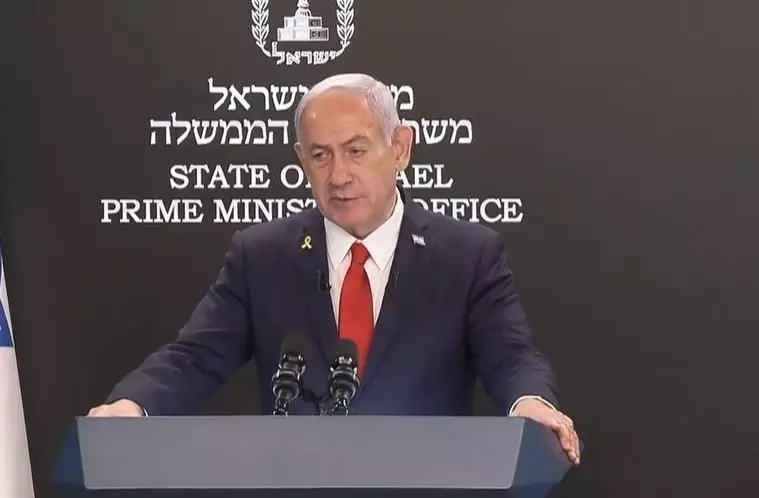
LIVE: Netanyahu denies dragging US into conflict, says Iran can’t enrich uranium now
Israeli PM claims Iran lacks missile and uranium capabilities after 20 days of war and expresses confidence in a swift resolution, following Trump’s request to hold off attacks

Here is the top, trending news of Friday, March 20, 2026, including Iran war, Indian politics, states’ politics, geopolitics, federal issues, economics, development issues, sports, entertainment, and so on.
Scroll below for updates.
Live Updates
- 20 March 2026 7:47 AM IST
Japan's Takaichi tries to reaffirm alliance with Trump as he seeks help securing Strait of Hormuz
Japanese Prime Minister Sanae Takaichi has sought to reaffirm her alliance with President Donald Trump after the president this week seemed to complain that Japan was among the nations that did not quickly join his call to help protect the Strait of Hormuz.
Takaichi, who met with Trump at the White House, told the Republican president that Japan has opposed Iran's development of its nuclear programme and appealed to his desire to be seen as a peacemaker, despite his launching a war of choice with Iran. She told the US president through an interpreter that in the Middle East and around the world now, there was “a very severe security environment,” but said, “Even against that backdrop, I firmly believe that it is only you, Donald, who can achieve peace across the world.” The two leaders had warm words for each other, including Trump calling the prime minister a “popular, powerful woman,” but there appeared to be some tension as they faced repeated questions from reporters about Japan's support for the Iran war.
As Trump fielded questions during the roughly 30-minute public appearance with the prime minister in the Oval Office before their closed-door meeting, Taikaichi could be seen checking her watch. And then Trump made a particularly uncomfortable remark -- invoking Japan's 1941 attack on Pearl Harbor -- when he was asked why the US didn't notify allies like Japan ahead of the strikes on Iran.
“We didn't tell anybody about it because we wanted surprise. Who knows better about surprise than Japan? Why didn't you tell me about Pearl Harbor, OK?” Trump joked. As Trump said that, Takaichi's slight smile appeared to drop, and she raised her eyebrows.
- 20 March 2026 7:07 AM IST
Brent crude briefly tops USD 119 per barrel, before receding, and shakes stock markets
A roller-coaster day for oil prices showed how they're dictating where financial markets and maybe even the global economy are heading. Stocks tumbled in Europe and Asia when oil prices shot higher early on Thursday, but US stocks pared their sharp losses as the day progressed and oil prices fell back.
The morning began with the shock of Brent crude, the international standard, briefly rising above USD 119 per barrel, up from roughly USD 70 before the war with Iran began.
The jump followed intensified attacks by Iran on oil and gas facilities around the Persian Gulf in response to an Israeli attack on an important Iranian natural gas field. They worsened fears that the war could knock out oil and gas production in the Middle East for a long time, which would mean high prices could last a while and cause inflation to rip higher around the world.
Stock indexes dropped 3.4 per cent in Japan, 2.8 per cent in Germany and 2.7 per cent in South Korea. But oil prices pared their big gains as the day progressed, the latest in their hour-to-hour swings since the war began.
Brent oil settled at USD 108.65, up only 1.2 per cent from the day before, and then eased further as trading continued. After briefly topping USD 101, a barrel of benchmark of benchmark US crude settled at USD 96.14 and then fell toward USD 94.
That helped stocks on Wall Street pare their own losses, which were already more modest than in Europe and Asia because US companies are less reliant on oil from the Middle East.
The S&P 500 finished with a dip of 0.3 per cent after coming back from an early loss of 1 per cent. It even briefly turned higher in the last hour of trading. The Dow Jones Industrial Average dropped 203 points, or 0.4 per cent, and the Nasdaq composite fell 0.3 per cent.
- 20 March 2026 7:03 AM IST
EU asks for reopening of Strait of Hormuz and no more strikes on energy, water sites
European leaders have demanded the reopening of the Strait of Hormuz and a moratorium on strikes on water and energy infrastructure in the Middle East as they met in Brussels to grapple with rising energy prices caused by the war.
All heads of the 27 European Union nations known collectively as the European Council issued a joint statement on Thursday calling for the stabilisation of energy shipments and “de-escalation and maximum restraint” from warring parties.
“The European Council deplores the loss of civilian life and is closely monitoring the far-reaching impact of the hostilities, including on economic stability,” the statement read. The leaders also asked Iran to stop striking neighbors across the Persian Gulf, sought international cooperation to prevent any large-scale refugee crises in the Middle East, and said some EU nations are exploring ways “to ensure freedom of navigation in the Strait of Hormuz.” European leaders have deflected entreaties from US President Donald Trump to send military assets to secure the Strait of Hormuz, a key waterway for the global flow of oil, gas and fertiliser. However, rising energy prices because of the war and fears in Europe of a new refugee crisis have pushed leaders to make the Middle East a priority at the summit.
“We are very worried about the energy crisis,” said Belgian Prime Minister Bart De Wever ahead of the summit. He said that energy prices were too high before the war, but that the conflict “created another spike.” “If that becomes structural, we're in deep trouble,” he said.
- 20 March 2026 6:47 AM IST
Netanyahu denies dragging US into Iran conflict, says Tehran can’t enrich uranium now
Israeli Prime Minister Benjamin Netanyahu on Friday rejected claims that Israel had dragged the United States into its conflict with Iran, calling such reports “fake news.” He also claimed that after 20 days of war, Iran has “no capacity” to make ballistic missiles or to enrich uranium.
During a press conference, Netanyahu added that Tehran’s threats to close the Strait of Hormuz would “not work” and expressed confidence that the war could end sooner than expected.
He also denied what he called "fake news" that Israel had dragged US President Donald Trump into war with Iran. "Does anyone really think that someone can tell President Trump what to do?" Netanyahu told a journalist at a press conference.
Following Donald Trump's claims earlier in the day, Netanyahu confirmed that he received a request from Trump to “hold off” any further attacks on Iran's natural gas field, and Israel will act accordingly.
He said that he believed the war in Iran could finish sooner than "people think." "I also see this war ending a lot faster than people think," Netanyahu said at the press conference.
Talking about Iran's threats of closing the Strait of Hormuz, Netanyahu said that "It won't work." He said that while Iran is trying to “blackmail the world by closing a key international maritime route,” it won't work.
Netanyahu also stressed on the need to have alternative routes to avoid chokepoints in the Strait of Hormuz and Red Sea. He envisioned oil and gas pipelines going West through the Arabian Peninsula, “right up to Israel and Mediterranean ports.”


